
Why Start with Yoga?
Many people think you need to be flexible to start yoga, but the opposite is true: you do yoga to become flexible. A regular practice doesn't just stretch muscles; it improves overall mobility, helps to release tension stored in the body, and promotes
better posture. For beginners, the key is starting with simple poses, known as asanas, that are safe and effective. Committing just ten to fifteen minutes a day can be more beneficial than one long, infrequent session. The goal isn't to force yourself into complex shapes but to move with your breath and listen to your body, gradually building a foundation for a more supple and comfortable physical state.
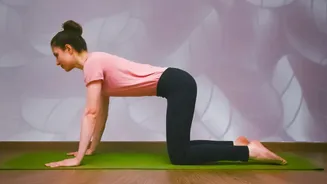
Cat-Cow Pose (Marjaryasana-Bitilasana)
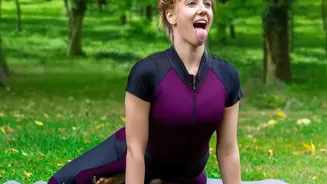
This is a perfect warm-up for the spine and a great starting point for any beginner. The gentle, flowing movement helps to increase spinal flexibility, relieve tension in the back and neck, and connect your breath to your movement. To begin, position yourself on your hands and knees in a 'tabletop' position, with wrists under your shoulders and knees under your hips. As you inhale, drop your belly towards the floor, lift your chest, and look forward in Cow Pose. As you exhale, round your spine toward the ceiling, tucking your chin to your chest, like a cat stretching its back. Flow between these two movements for several breaths.
Child's Pose (Balasana)
Child's Pose is a restorative posture that offers a gentle stretch for the entire back body, including the hips, thighs, and ankles. It is often used as a resting pose in yoga, making it perfect for beginners to take a moment and reconnect with their breath. From your hands and knees, bring your big toes to touch, spread your knees wide apart, and sit your hips back onto your heels. Fold your torso forward between your thighs and rest your forehead on the mat. You can extend your arms forward or rest them alongside your body. This pose helps calm the mind and can soothe the nervous system.
Downward-Facing Dog (Adho Mukha Svanasana)
One of the most well-known yoga poses, Downward-Facing Dog is a fantastic full-body stretch that targets the hamstrings, calves, and spine while building strength in the arms and shoulders. Start on your hands and knees. Exhale and lift your knees off the floor, reaching your hips up and back to form an inverted 'V' shape with your body. Spread your fingers wide and press firmly into your hands. If your hamstrings feel tight, it’s perfectly fine to keep a generous bend in your knees; the priority is a long, straight spine. You can gently pedal your feet, bending one knee and then the other, to deepen the stretch in your calves.
Bridge Pose (Setu Bandhasana)
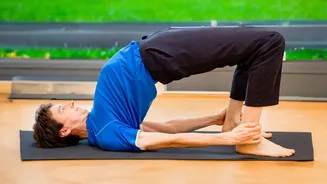
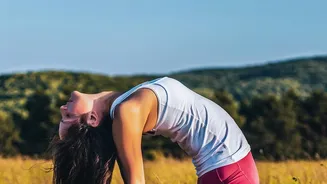
Bridge Pose is a gentle backbend that helps to open the chest, stretch the front of the hips, and strengthen the back, glutes, and thighs. It is an excellent posture to counteract the effects of prolonged sitting. To perform it, lie on your back with your knees bent and feet flat on the floor, hip-width apart. Place your arms alongside your body with your palms facing down. Press into your feet and lift your hips off the floor. Try to create a long line from your shoulders to your knees. Hold for a few breaths before slowly lowering your spine back down to the mat.
Seated Forward Bend (Paschimottanasana)
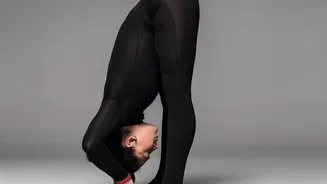
This pose provides a deep stretch for the entire back of the body, particularly the hamstrings and spine. Sit on the floor with your legs extended straight out in front of you. You can sit on the edge of a folded blanket to help tilt your pelvis forward. Inhale to lengthen your spine, and as you exhale, begin to hinge forward from your hips, not your waist. Walk your hands forward as far as is comfortable. It's not about touching your toes, but about maintaining a long spine. If your hamstrings are tight, keep a slight bend in your knees.