
Why You Should Map Your Breakers
Your electrical panel is the heart of your home's power system, but for many, it's a metal box of mysteries. A properly labeled panel is more than a convenience; it's a critical safety feature. In an emergency, like an electrical fire or a sparking outlet,
you need to shut off the correct circuit immediately. A clearly labeled panel allows anyone, including first responders, to act quickly, potentially preventing significant damage or injury. Beyond emergencies, a mapped panel simplifies maintenance and repairs. Instead of guessing which breaker controls the dishwasher, you can shut off the power with confidence, saving time and reducing diagnostic costs for electricians. It also helps prevent circuit overloads, which occur when too many high-power devices run on a single circuit. This simple organisational task provides peace of mind and makes managing your home's electrical system straightforward.
Gather Your Simple Tools
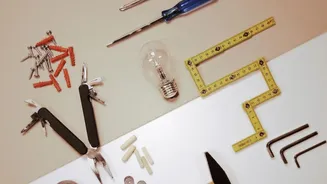
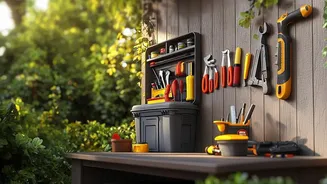
You don't need to be an electrician or buy expensive equipment to map your circuits. The process is safe, as you will only be flipping breakers and not touching any internal wiring. The most effective method involves a partner, but it can also be done solo. Here's what you'll need: a pen and notepad (or a printable circuit chart), tape for temporary labels, and a helper. If you're working alone, you can use a small radio turned up loud or a plug-in lamp with a long extension cord. A mobile phone can also work for communicating with your partner from different rooms. For a more high-tech approach, a circuit breaker finder is a tool that consists of a transmitter you plug into an outlet and a receiver you scan over the breakers.
The Mapping Process, Step by Step
First, if the breakers in your panel aren't already numbered, number them with a permanent marker or small stickers. Create a corresponding numbered list on your notepad. Start with all breakers in the 'on' position. If you have a partner: One person stays at the breaker panel while the other moves through the house, room by room. The person at the panel turns off one breaker. The other person then tests all lights, outlets, and fixed appliances in a room to see what has lost power. They should test both plugs in each outlet. Once an area is identified (e.g., "Master Bedroom Outlets, North Wall"), the person at the panel writes that description next to the corresponding breaker number. Turn the breaker back on and move to the next one, repeating the process until every circuit is identified. If you're working solo: Plug a loud radio into an outlet and turn it on. Go to the breaker panel and begin turning breakers off and on one by one until the radio goes silent. You've found the circuit for that outlet. Label it and repeat the process for other outlets and all your light fixtures.
Create a Clear and Durable Directory
Once your list is complete, the goal is to create a final, easy-to-read directory. Vague labels like "Bedroom" or "Outlets" are not helpful. Be specific. For example, instead of "Kitchen," write "Kitchen Counter Outlets," "Refrigerator," and "Dishwasher" on their respective lines. Good descriptions might include "Living Room Lights & East Wall Outlets" or "Guest Bathroom (Vanity Lights & Outlet)." You can neatly write your new directory on the label inside the panel door. Many modern panels come with pre-printed stickers you can use. For a cleaner look, you can type and print a new schedule on a label sheet and stick it to the inside of the panel door. Taking a photo of the completed directory with your phone is also a great backup.
Understanding Dedicated Circuits
As you map your panel, you'll notice that some breakers control only one appliance. These are called dedicated circuits, and they are required by electrical code for major appliances to prevent overloads and reduce fire risk. Items that need their own circuit include refrigerators, electric stoves and ovens, dishwashers, garbage disposals, electric water heaters, and HVAC systems. High-draw appliances like microwaves and chest freezers should also have their own circuit. If you find that your refrigerator shares a circuit with your kitchen lights, for example, it may be a sign that your home's wiring is outdated and should be inspected by a professional.