






What is the Orionid Meteor Shower?
Each October, Earth passes through a trail of cosmic dust left behind by one of the most famous comets in history: Halley's Comet. This debris, made of tiny particles of ice and rock, burns up upon entering our atmosphere, creating the brilliant streaks
of light we call meteors. The Orionids are known for being particularly fast and bright, travelling at about 66 kilometres per second. In 2026, the shower is active from early October to early November, with its peak expected in the pre-dawn hours of October 21 and 22. Under perfect, dark conditions, you could see 15 to 25 meteors per hour. They get their name because they appear to radiate from the famous constellation Orion, the Hunter.
The Problem: India's Bright Urban Sky
If you live in a major Indian city like Mumbai, Delhi, or Bengaluru, you've likely noticed that you can only see a handful of the brightest stars. This is due to 'skyglow', a form of light pollution. It's the dome of washed-out, orange-hued light that hangs over urban areas, caused by the collective glow of streetlights, buildings, and advertising billboards. This artificial light scatters in the atmosphere, brightening the night sky and dramatically reducing the visibility of fainter celestial objects. While a bright full moon can naturally wash out a meteor shower, light pollution creates a similar effect every single night, making the already faint streaks of a meteor shower nearly impossible to spot. In a suburban area, the number of visible Orionid meteors can drop to just three to six per hour.
Tips for Viewing From the City
While challenging, it's not entirely impossible to catch a few meteors from a city. The key is to find the darkest spot available. This could be a park, a large field, or even the rooftop of a tall building that is shielded from direct streetlights. Let your eyes adjust to the darkness for at least 20-30 minutes; this means putting your phone away completely. In 2026, the peak of the shower coincides with a bright waxing gibbous moon, which will interfere with viewing. However, the moon sets around 3 a.m. local time, leaving a window of dark sky until dawn. This will be your best time to look. Lie back on a blanket or reclining chair and simply look up, taking in as much of the sky as possible. You don't need a telescope or binoculars, as they limit your field of view.
For the Best Views: Escape the City
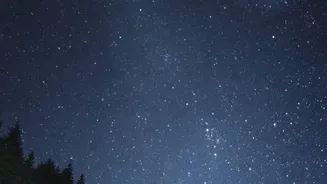
To truly experience the magic of the Orionids, you need to get away from city lights. Even a 80-100 kilometre drive out of a major city can make a dramatic difference, revealing thousands more stars and a clear view of the Milky Way on a moonless night. India has several locations known for their pristine dark skies. For those seeking the ultimate experience, Hanle in Ladakh is home to India's first official Dark Sky Reserve. Other renowned spots include the Spiti Valley in Himachal Pradesh, the Rann of Kutch in Gujarat, and desert camps near Jaisalmer in Rajasthan. For those in the south, areas in Coorg and the Western Ghats offer darker skies away from the main towns. Even a weekend trip to a hill station or a remote village can transform your meteor-watching experience from a few faint streaks into a memorable celestial show.