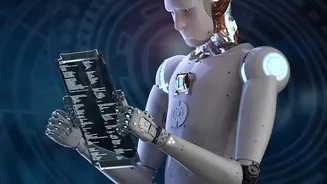







The Old Playbook Is Obsolete
The traditional path of mastering a programming language and steadily climbing the corporate ladder is quickly becoming a relic. AI-powered tools are now automating many of the routine tasks that once formed the bedrock of a junior engineer's career.
According to industry estimates, AI coding assistants can boost developer productivity by up to 55%, fundamentally changing how software is built, tested, and deployed. This isn't about AI replacing developers wholesale; it's about the nature of the job itself transforming. Instead of writing every line of code manually, the new expectation is for engineers to act as orchestrators—defining problems, guiding AI tools, and verifying the complex output.
The New Hierarchy of Skills
As automation handles the basics, a new set of high-value skills has emerged as the new benchmark for talent. Technical proficiency in Python, machine learning frameworks like PyTorch or TensorFlow, and cloud platforms remains fundamental. However, the real differentiator is now expertise in areas like prompt engineering, fine-tuning large language models (LLMs), and designing AI-native systems. According to a recent NASSCOM report, the demand-supply gap for specialized roles like ML Engineer can be as high as 70%. This intense demand for advanced skills is creating a significant salary premium, with some AI specialists earning 30-60% more than their peers. Job site data from 2026 shows that AI skills now appear in nearly half of all white-collar job descriptions in India.
How Indian IT Is Responding
India's major IT service giants are not standing still. Companies like TCS and Infosys have launched massive initiatives to reskill their workforces in generative AI and related technologies. The industry's focus has pivoted from hiring for volume to hiring for specific, high-end capabilities. However, a significant challenge remains. NASSCOM has warned of the risk of developing an 'AI-reliant' workforce that can use tools but lacks deep engineering judgment. While over 90% of early-career professionals use AI, only about 23% are considered truly 'AI-native'—able to build, orchestrate, and innovate with AI. This highlights a crucial gap between surface-level familiarity and the deep expertise companies desperately need. The demand for AI professionals in India is expected to surpass one million by 2026, creating a substantial talent deficit if the upskilling challenge is not met.
Passing the Test: A Guide to Upskilling
For the individual tech worker, this new landscape demands proactive adaptation. The message from the industry is clear: continuous learning is no longer optional. Workers can start by leveraging free national initiatives like the 'AI Skills Passport' backed by Intel and Skill India, or NASSCOM's 'AI Skills Yatra' program. The goal should be to move beyond theoretical knowledge to practical application. Building a portfolio of real-world AI projects is now considered more valuable by many employers than traditional degrees alone. Key areas to focus on include not just the technical skills, but also the ability to frame business problems that AI can solve and understand the ethical implications of AI deployment. This shift is not just about staying relevant; it's about seizing a significant opportunity, as AI is projected to create millions of new roles in India by 2028.