


A New Policy Universe
The foundation for this cosmic boom was laid by a series of forward-thinking government reforms, most notably the Indian Space Policy 2023. This policy framework effectively opened the entire space value chain to private companies, transforming the sector
from a government-led monopoly to a collaborative playground for innovators. The establishment of the Indian National Space Promotion and Authorisation Centre (IN-SPACe) as a single-window agency has been crucial. IN-SPACe facilitates access to ISRO facilities, streamlines approvals, and provides a predictable regulatory environment, drastically lowering the barrier to entry for new ventures. Further bolstered by a liberalised Foreign Direct Investment (FDI) policy, the sector has seen a surge in funding, with the number of space startups growing from just a handful a decade ago to over 400 today. This policy shift aims to expand India's space economy from approximately USD 8.4 billion to a projected USD 44 billion by 2033.
The Rocket Builders Reaching for Orbit
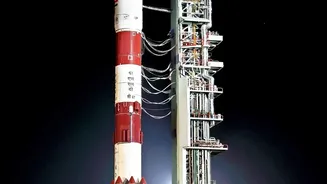
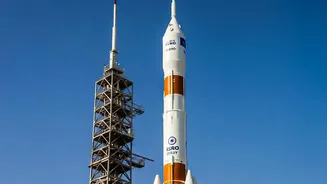
At the forefront of this new wave are the launch vehicle startups, building the rockets that serve as the highways to space. Hyderabad-based Skyroot Aerospace made history by becoming India's first private company to launch a suborbital rocket, the Vikram-S, in November 2022. The company followed this milestone with the successful orbital launch of Vikram-1 in July 2026, making India only the third country with a private orbital launch capability. Another key player, Chennai's Agnikul Cosmos, incubated at IIT-Madras, has also achieved significant firsts. Its Agnibaan SOrTeD (SubOrbital Technological Demonstrator) mission in May 2024 was a landmark test flight, showcasing India’s first semi-cryogenic engine and the world's first flight of a rocket with a single-piece 3D-printed engine. These companies are focused on providing cost-effective and on-demand launch services, primarily for the booming small satellite market.
Eyes in the Sky: Satellites and Data
Beyond just launching rockets, Indian startups are excelling in building and operating satellites. Pixxel is a leader in this domain, developing a constellation of the world's highest-resolution hyperspectral imaging satellites. Unlike standard cameras, hyperspectral technology captures light across hundreds of bands, providing incredibly detailed data that can be used for everything from tracking deforestation and monitoring crop health to identifying mineral deposits. The company has secured significant investment and contracts, including from the U.S. National Reconnaissance Office, underscoring the global competitiveness of its technology. Meanwhile, Dhruva Space has pioneered a full-stack 'satellite-as-a-service' model. It provides everything from satellite platforms and launch integration to ground station support, allowing clients to focus on their payload and application without needing to build a satellite from scratch. This approach drastically simplifies access to space for a wide range of customers.
The Power Behind the Push: Propulsion and Components
A robust space ecosystem also relies on a deep supply chain of critical components, especially propulsion systems. Bellatrix Aerospace is a standout in this area, pioneering eco-friendly alternatives to traditional, toxic satellite propellants. Its 'Rudra' green propulsion system uses a less toxic and easier-to-handle propellant, offering high performance and longer mission life for satellites. The company has successfully tested its systems in space, proving their viability. Other startups like SpaceFields are focusing on developing solid propulsion systems for various aerospace applications, further strengthening India's domestic manufacturing capabilities. By creating these foundational technologies in-house, these companies are not just supporting Indian missions but are also positioning themselves as key suppliers in the global space market, which is increasingly focused on sustainability.