





A New Strategy for the Red Planet
NASA is changing how it prepares for the future of Mars exploration by increasingly leveraging public-private partnerships. The latest example is the Science Transport and Robotic Innovation for Deployment and Exploration (STRIDE) initiative. Announced
in early July 2026, this program has selected seven companies to develop concepts for advanced robotic mobility on Mars. The goal is to design new systems—both on the ground and in the air—that can go farther and access more challenging terrain than ever before. With a total estimated value of around $17 million, STRIDE represents a focused investment in overcoming the physical limitations that have constrained previous missions and unlocking new scientific frontiers. This approach allows NASA to tap into the innovation and agility of the commercial sector, accelerating development while sharing the risks and rewards of deep-space exploration.
Meet the Trailblazers
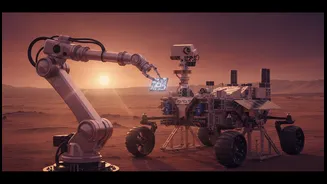
The seven companies chosen represent a mix of established aerospace giants and dynamic newcomers, each bringing unique expertise to the table. The selected firms are AeroVironment, Astrobotic, Venturi Astrolab, Ground Control Robotics, Honeybee Robotics, Intuitive Machines, and MEI Technologies (now part of Aegis Aerospace). Many of these names are already deeply involved in the modern space ecosystem. For instance, AeroVironment has a history with aerial systems, while Honeybee Robotics has provided crucial hardware for past Mars rovers. Intuitive Machines and Astrobotic are key players in NASA's commercial lunar payload services. This diverse portfolio of partners ensures a wide range of ideas, from advanced rovers to potential aerial platforms that could revolutionize how we survey the Martian landscape.
The Mission: Go Farther, Learn More
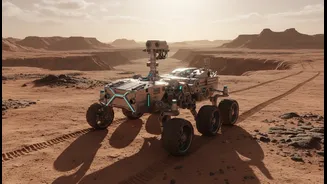
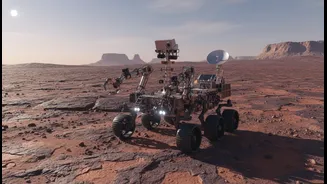
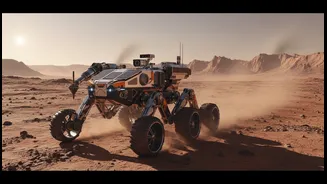
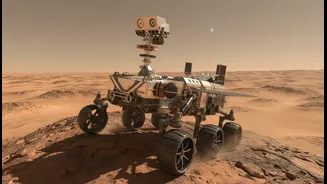
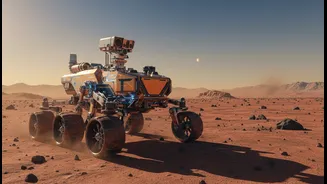
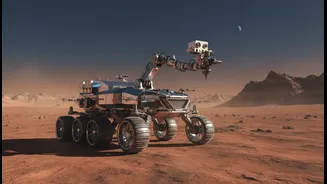
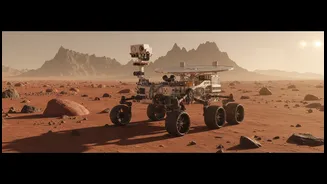
The core challenge of exploring Mars is mobility. While rovers like Curiosity and Perseverance have been incredibly successful, they have faced limitations. Navigating sandy regions and rugged landscapes has proven difficult, and dust storms can inhibit solar-powered vehicles. The STRIDE initiative directly addresses these problems by asking its partners to design systems that can carry scientific payloads to hard-to-reach areas. This could mean developing rovers with superior traction, longer range, or even autonomous drones that can scout ahead and analyze terrain from the air. By solving these mobility challenges, future missions could investigate scientifically valuable regions, such as ancient riverbeds or potential ice deposits, that are currently inaccessible. This will be crucial not only for scientific discovery but also for identifying resources ahead of planned human missions in the 2030s.
From the Moon to Mars
This collaboration is a key part of NASA's broader Moon to Mars strategy. The agency views its Artemis program, which aims to establish a sustainable human presence on the Moon, as a vital proving ground for the technologies and operational approaches needed for Mars. Lessons learned from developing lunar rovers and habitats will directly inform the designs for their Martian counterparts. In fact, many of the companies involved in STRIDE are also working on lunar projects, creating a powerful synergy between the two exploration programs. The development of next-generation mobility isn't just about better robots; it's about building a reliable, reusable, and commercially supported infrastructure that will eventually allow astronauts to live and work on another planet.