




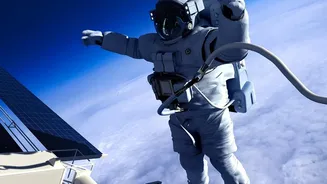
The New Space Race is Powered by Code
The modern space industry is no longer just about rockets and astronauts; it's increasingly driven by data and intelligence. Artificial intelligence is the critical engine behind this transformation. AI algorithms are used to navigate spacecraft autonomously,
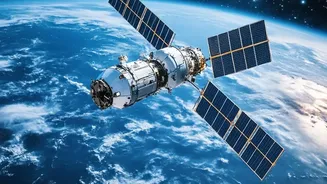
control robotic explorers on distant planets, and sift through mountains of satellite data to provide actionable insights in near real-time. In India, this shift is already underway. Startups are developing satellites that act as intelligent computing nodes in orbit, processing data directly in space for applications ranging from climate monitoring to disaster management and defence. This move towards 'Edge AI' in space reduces the delay between data capture and life-saving decisions on Earth, creating a massive demand for professionals who can build and manage these smart systems.
Forging Your Career at the Final Frontier
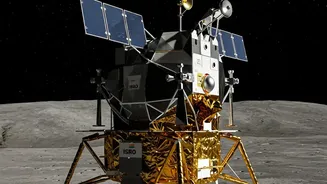
The fusion of AI and space tech is creating entirely new job roles that didn't exist a decade ago. Students with the right skills can aim for several exciting careers. A Data Scientist or Analyst could work for a company like Pixxel, using AI to analyse hyperspectral satellite imagery to monitor agriculture, energy, and environmental changes. An AI/ML Engineer might develop the autonomous navigation systems for ISRO's Gaganyaan mission or for robotic rovers exploring the Moon. Other roles include Robotics Engineer, focusing on the physical hardware that AI controls, and Satellite Systems Engineer, designing the next generation of smart satellites for companies such as Dhruva Space or Digantara. These roles are found not only at ISRO but also within a booming ecosystem of Indian private space companies like Skyroot Aerospace, Agnikul Cosmos, and SatSure Analytics.
The Essential Skill Set to Build Now
To prepare for these opportunities, a strong foundation in core technical skills is non-negotiable. Proficiency in programming languages, especially Python, is fundamental, as it's the dominant language for AI development. Beyond that, aspiring space-tech professionals should focus on building expertise in machine learning frameworks like TensorFlow and PyTorch, and gain a solid understanding of neural networks, data analytics, and computer vision. However, technical skills alone aren't enough. A passion for aerospace and a foundational knowledge of subjects like physics and mathematics are crucial. Employers look for engineers who can apply AI concepts to solve real-world aerospace problems, whether it's optimising a rocket's trajectory or improving satellite communications.
Your Educational and Practical Launchpad
Your journey can begin with a Bachelor's degree (B.E. or B.Tech) in a relevant field. While Aerospace or Aeronautical Engineering is a traditional path, a degree in Computer Science with a specialisation in AI and Machine Learning is now equally valuable. Many experts suggest that it's easier to learn AI/ML with a core engineering background than the other way around. To stand out, complement your coursework with hands-on projects. Participate in coding challenges, work on satellite data analysis projects, or join a university club building robotics. Internships with organisations like ISRO or private space-tech startups offer invaluable real-world experience, allowing you to apply classroom theory to practical challenges and build a professional network. These experiences demonstrate initiative and a genuine passion for the field, which employers highly value.