
What is Lippan Kam?
At its heart, Lippan Kam—also known as mud-relief or mirror work—is a traditional mural craft from the Kutch region of Gujarat. The name itself tells its story: in the local dialect, "Lippan" means to plaster or apply, and "Kam" means work. Practised
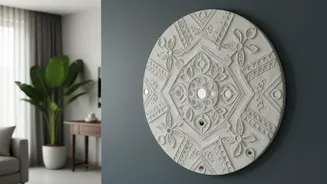
for centuries, this art involves creating intricate, textured patterns using a dough-like mixture, which is then embellished with small, reflective mirrors called 'aabhla'. Traditionally found on the inner and outer walls of circular mud huts known as 'bhungas', these designs were more than just decoration; they were a part of daily life and culture for communities like the Rabari, Mutwa, and Meghwal.
A Glimmering History from the Kutch Desert
The origins of Lippan Kam are deeply intertwined with the landscape and architecture of the Rann of Kutch. Traditionally created by women, the art form served both functional and aesthetic purposes. The thick mud relief work helped insulate the bhungas, keeping them cool in the harsh summer heat and warm during the winter. The embedded mirrors played a clever role, too; in dimly lit homes, they would catch and reflect the light of a single lamp, brightening up the entire space. The motifs were often inspired by the artists' surroundings and beliefs, featuring geometric shapes, peacocks, camels, the tree of life, and daily village scenes, making each wall a canvas for storytelling.
The Art of Mud and Mirrors
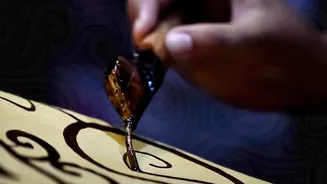
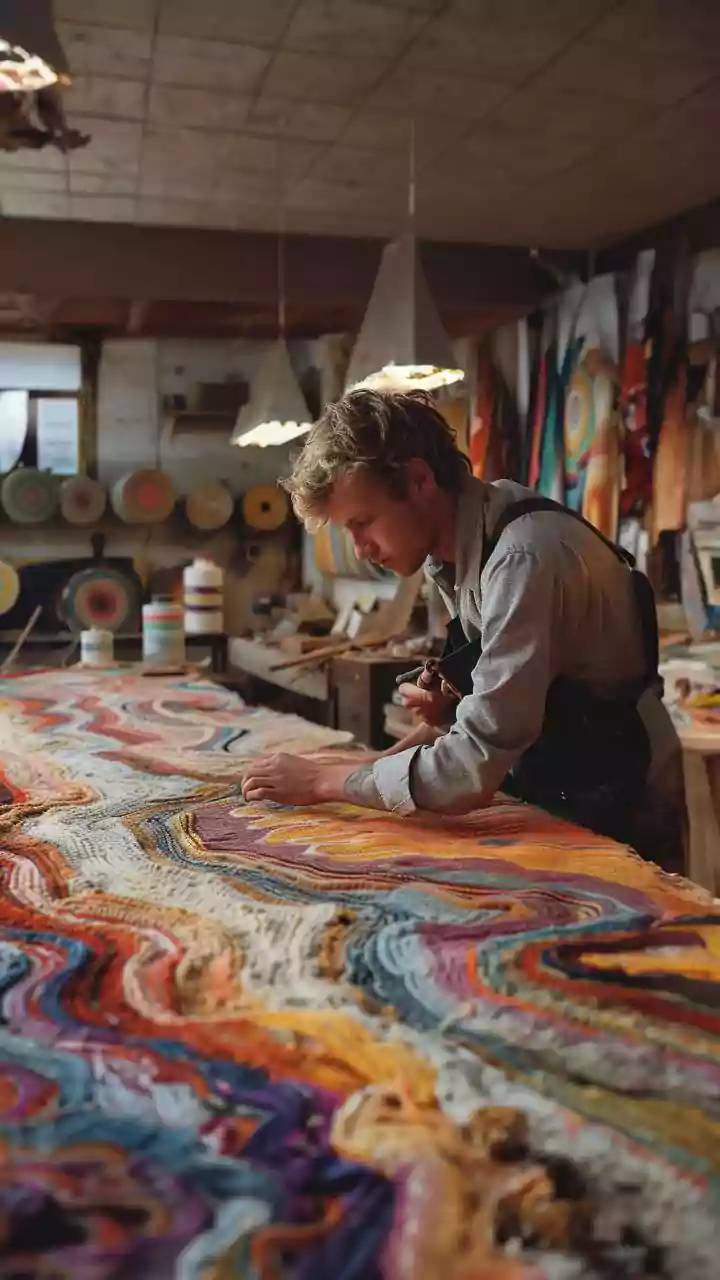
The traditional process of creating Lippan Kam was a testament to resourcefulness. The primary material was a mixture of clay and dung, often from camels or wild asses, which provided fibrous content that acted as a strong binding agent. This dough was kneaded and then rolled into thin coils. Artisans would skillfully shape these coils by hand directly onto a moistened wall, creating their designs freehand without any prior sketching. While the mud was still wet, small pieces of mirror—once made by shattering larger pieces—were carefully pressed into the relief work. The entire artwork was typically finished with a coat of white clay or sand, giving it a distinctive, clean look that made the mirror work pop.
A Modern Makeover for Urban Homes
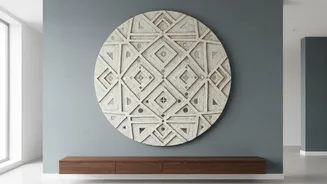
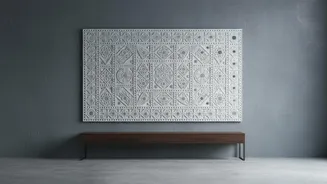
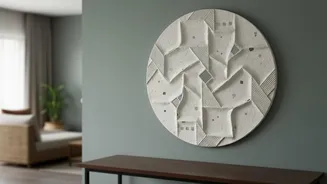
Today, Lippan Kam has journeyed far from the walls of bhungas and is being embraced by contemporary interior design. To make the art form more durable and portable, artists have adapted their materials. Instead of dung and mud on walls, many now use MDF boards as a base. The traditional mud mixture is often replaced with more accessible materials like ceramic clay, chalk powder, or air-dry clays mixed with adhesives like Fevicol to prevent cracking and repel termites. While classic white remains popular, modern iterations often incorporate vibrant acrylic paints, adding a contemporary twist to the earthy art form. This evolution has allowed Lippan art to be sold as decorative panels, wall clocks, nameplates, and other home accents, making it accessible to a global audience.
Styling Lippan Art in Your Living Room
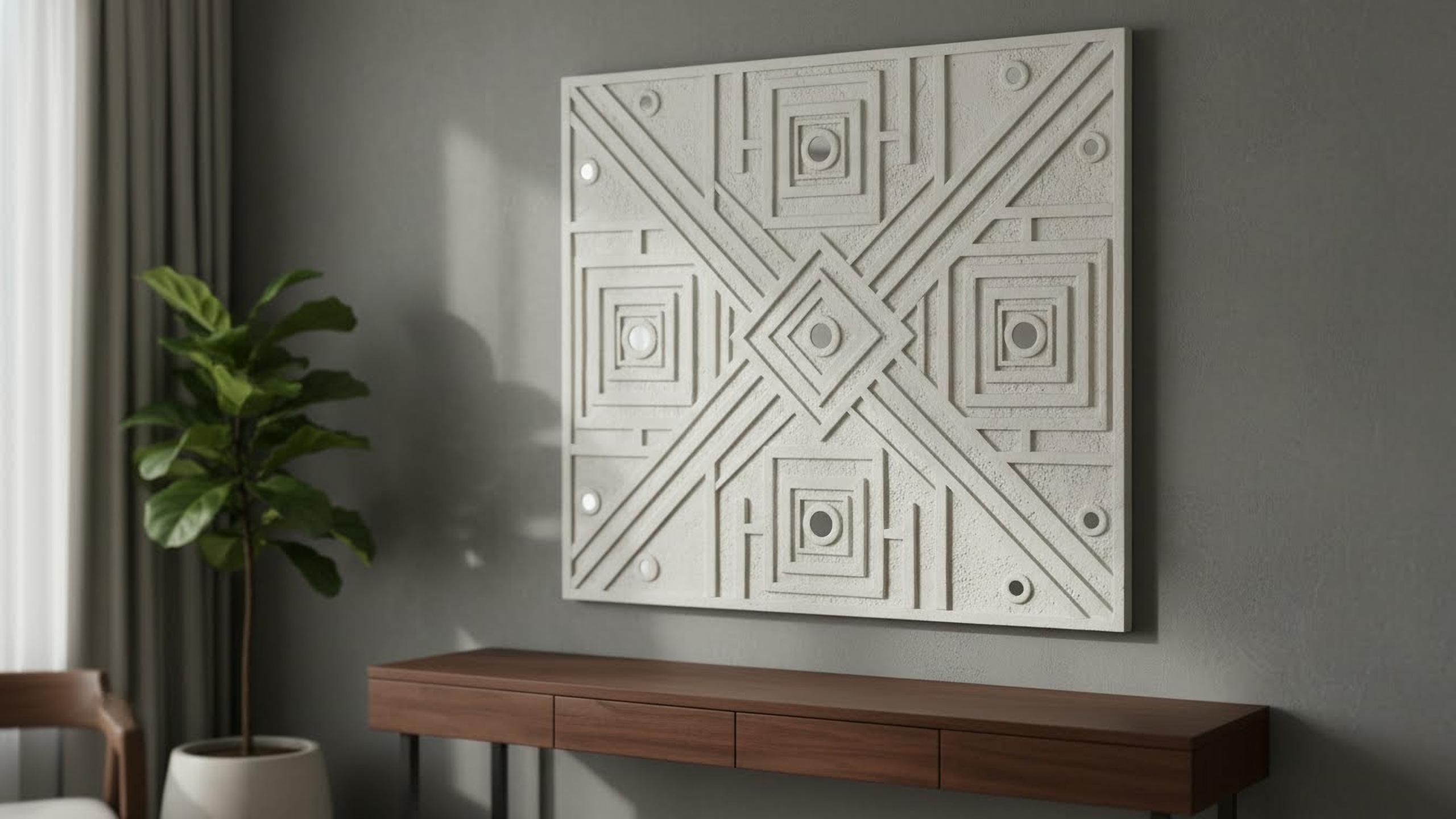
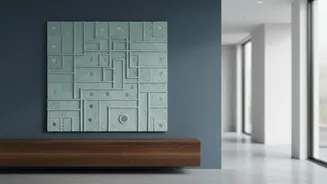
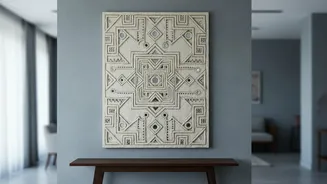
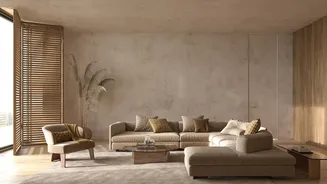
Integrating Lippan Kam into a modern home is a wonderful way to add texture, tradition, and a personal story to your space. A large, intricate panel can serve as a stunning focal point above a sofa or in an entryway, immediately drawing the eye. For a more subtle approach, consider creating a gallery wall that mixes smaller Lippan pieces with photographs and other art. The reflective quality of the mirrors can brighten a dim corner or add a touch of glamour. You can coordinate the colours in painted Lippan pieces with your cushions or curtains to create a cohesive look. Whether you opt for a grand mural or a small, framed piece, Lippan art brings a unique blend of rustic charm and sophisticated sparkle.