





What Are AI Writing Enhancers?
At their core, AI writing enhancers are tools powered by large language models (LLMs), the same technology behind platforms like ChatGPT, Claude, and Google Gemini. These assistants are designed to help users generate, refine, and restructure text. For
job seekers, they offer a way to overcome writer's block and produce professional-grade application materials. The tools can range from general-purpose chatbots that can draft a cover letter from a prompt, to specialized browser extensions that integrate directly into your email client or job application platform to offer real-time suggestions. Many work by analyzing your input—like a job description and your rough notes—to generate tailored content, saving hours of work.
Revolutionising the Resume Summary
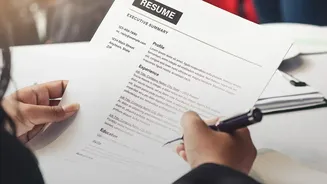
The professional summary is often a candidate's first impression, but it can be the hardest part of a resume to write. AI tools excel at this task. By feeding the AI a job description and a list of your skills and experiences, you can generate a compelling summary in seconds. These platforms are particularly effective at identifying and weaving in relevant keywords that help your resume pass through Applicant Tracking Systems (ATS), the software used by a majority of large companies to screen applications before a human sees them. Beyond just keywords, AI can help structure your achievements into powerful, concise bullet points, transforming a list of duties into a narrative of impact. This is especially helpful for career changers who need to highlight transferable skills.
Mastering the Tone of Professional Emails
Email communication during a job search is a minefield of tone. Is your follow-up email too persistent? Is your networking request too casual? AI tone rewriters act as a digital communication coach to navigate these challenges. Tools like Grammarly and others built into email clients can analyze your draft and suggest changes to make it sound more confident, formal, or friendly, depending on the context. This functionality can be a game-changer, ensuring that your messages strike the right professional chord every time. For non-native English speakers or those who struggle to find the right words under pressure, these tools can level the playing field, allowing the substance of their message to shine through without being hindered by delivery.
The Hidden Risks and Downsides
Despite their benefits, over-relying on AI carries significant risks. The biggest danger is producing generic, impersonal content. Since many candidates use the same tools, recruiters are becoming adept at spotting AI-generated text, which often lacks a personal voice and specific, unique examples. A survey found that 62% of employers are more likely to reject resumes that lack personalization. Furthermore, AI models can 'hallucinate' or invent facts, which means every claim must be meticulously fact-checked. Some companies are now using AI detection tools to screen applications, and being flagged could hurt your credibility, especially for roles in writing or communication.
The Smart Way to Use AI
The key to successfully using AI in your job search is to treat it as a collaborator, not a replacement for your own effort. Think of it as a first-draft writer or a brainstorming partner. Use AI to generate ideas, structure your thoughts, and overcome writer's block. For example, instead of asking it to 'write a resume,' provide the job description and your current resume and ask it to identify gaps or suggest stronger action verbs. Always inject your own voice, specific achievements, and genuine enthusiasm into the final product. The goal is to enhance your authentic story, not to have a robot tell a generic one. This human-in-the-loop approach ensures your application stands out for the right reasons.