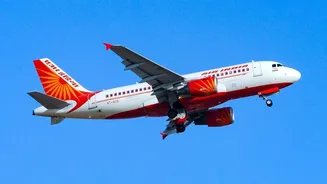





The Soaring Cost of a Festive Reunion
The numbers this year are staggering, with air ticket prices on popular domestic routes more than doubling. A one-way flight from Hyderabad to Patna or Chandigarh, which typically costs around ₹9,000, is now touching ₹22,000 for the Diwali period. Similarly,
fares from Hyderabad to Jaipur have climbed from ₹8,000 to nearly ₹21,000. The trend is nationwide. Routes like Delhi-Hyderabad have seen a 68% year-on-year price jump, while Mumbai-Kolkata is up by 51%. On some routes with limited flight options, one-way tickets that usually hover around ₹7,000 are now approaching ₹15,000 or more. In a strange twist, travel agents report that flying to international destinations like Bangkok or Singapore can be thousands of rupees cheaper than flying to some Indian cities from Hyderabad.
A Perfect Storm for Prices
This dramatic spike in fares is not caused by a single issue, but rather a perfect storm of economic and logistical factors. At its core is a simple mismatch between supply and demand. Airlines have reduced the number of scheduled domestic flights for the October-December quarter by 5% compared to last year. While they are using larger aircraft to keep the total number of seats relatively stable, fewer departure times concentrate demand on the most popular flights, giving airlines greater pricing power. Compounding this is the rising cost of Aviation Turbine Fuel (ATF), which makes up 30-40% of an airline's operating expenses. With multiple fuel price hikes in recent months, airlines are passing these costs directly to consumers. Finally, all airlines use dynamic pricing, where algorithms automatically increase fares as seats fill up, heavily penalizing those who book late.
Traditions Under Financial Pressure
The consequences of these high prices are rippling through family traditions. Many are now facing difficult choices. Some are postponing or cancelling trips altogether. Travel agents have reported that Diwali bookings are slower than usual, as travellers hold back, hoping for prices to drop—a risky gamble. Others are altering their plans, choosing to travel a week before or after the main festival days to find more reasonable fares. The exorbitant cost of flying is also pushing people towards alternatives. Indian Railways has announced thousands of special trains to manage the festive rush, and many routes still have available berths. For shorter distances, car travel is becoming a more attractive option. For some, the high cost is forcing a change in holiday priorities, with families having to choose between travelling for Diwali or for Christmas later in the year.
Smarter Strategies for Festive Travel
While the situation is challenging, travellers are not entirely without options. The most effective strategy remains booking well in advance—ideally six to eight weeks before the festival, as prices rise sharply in the final two weeks. Flexibility is also key. Flying on the day of Diwali itself can sometimes be cheaper than the days leading up to it, as most people want to arrive before the celebrations begin. Using fare comparison websites and setting up price alerts can help catch any dips in fares. Another savvy tactic is to consider flying into a nearby, smaller airport and completing the journey by road or rail, which can sometimes be significantly cheaper than a direct flight to a major hub. For those on routes with packed flights, exploring alternatives like the new special train services could be the most practical solution.