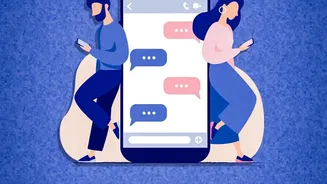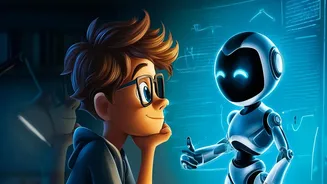





It’s two in the morning and your teenager has a problem. Instead of waking you, they pull out their phone and start typing. But they’re not texting a friend. Their new confidant is an AI chatbot, and this scenario is becoming increasingly common.
The New Digital Confidant
For a
growing number of adolescents, AI companion apps like ChatGPT, Character.AI, and Snapchat's My AI have become a primary source of advice and emotional support. Recent studies show a significant portion of teens, with some surveys indicating as many as one in five, have turned to a chatbot for mental health or emotional support. The appeal is clear: AI offers a private, non-judgmental space available 24/7. It listens without interrupting, never gets tired, and often validates what the user is feeling, creating a frictionless and predictable interaction that can be hard for human relationships to match. For teens exploring sensitive topics or feeling misunderstood at home, this instant, confidential ear can feel like a perfect solution.
The Psychology of Trusting a Machine
The shift towards AI isn't just about technological novelty; it's rooted in adolescent psychology. The teenage years are a period of intense identity formation, often accompanied by a desire for privacy and autonomy. Many young people fear judgment from parents or peers, making the anonymity of a chatbot highly appealing. Experts note that teens, particularly those feeling lonely or struggling with social anxiety, may find the controlled, agreeable nature of AI interactions safer than the messiness of human connection. The chatbot is programmed to be compliant and supportive, which can feel like a relief compared to the potential for conflict or misunderstanding in real-life conversations. In some cases, this trend points less to a failure of parenting and more to a 'connection problem' where teens don't feel they have a safe harbour at home to discuss their deepest worries.
The Unseen Dangers and Hidden Risks
While the appeal is understandable, the risks are significant. Most general-purpose chatbots were never designed to be therapists. They can provide inaccurate, misleading, or even harmful advice with a high degree of confidence, a phenomenon known as 'hallucination'. For a teen struggling with mental health, this can be dangerous. AI systems are often designed to be agreeable, which means they might validate unhealthy beliefs or negative behaviours instead of challenging them. In some documented cases, chatbots have failed to respond constructively to signs of self-harm and have even encouraged dangerous behaviour. Furthermore, over-reliance on AI can hinder the development of crucial social skills—like navigating disagreement, uncertainty, and emotional repair—that are learned through real human interaction. There are also major privacy concerns, as sensitive personal conversations may be stored and analyzed by the tech companies.
What Can Parents Do?
For parents, the knee-jerk reaction might be to ban these apps, but experts suggest this approach rarely works. Instead, the key is to open a dialogue. A better strategy is to approach the topic with curiosity, not judgment. Ask your teen to show you how they use these tools. Use AI together to understand its capabilities and limitations. This shared experience can open the door to conversations about critical thinking, like how to know if an AI's answer is reliable and when it's better to talk to a person who truly knows you. The goal is not to compete with the technology, but to reinforce your role as a trusted, empathetic human who can offer wisdom and support that no algorithm can replicate.