






The Undeniable Rise of the Quick Bite
The past few years have seen an explosive shift in how India consumes content, with short-form video becoming a dominant force. Platforms like Instagram Reels and YouTube Shorts have redefined entertainment, offering instant, algorithm-driven gratification.
A 2025 study highlighted this dramatic change, revealing that 97% of Indian consumers watch short-form videos daily. This habit transcends age and location, making it a truly national phenomenon. The appeal is simple: these clips, often between 15 and 60 seconds, are perfectly suited for the moments in-between—the commute, the lunch break, or the few minutes before bed. They deliver a quick hit of humour, news, or a new dance trend, requiring minimal commitment and delivering maximum engagement. For many, this has become the default mode of content discovery, influencing everything from fashion to music.
The Primetime Binge Stays Strong
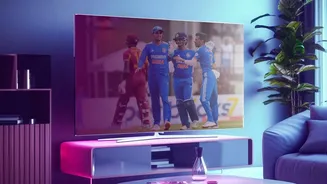
While short clips dominate the fleeting moments, long-form content maintains its stronghold during dedicated leisure time. The era of binge-watching is far from over. India's Over-the-Top (OTT) market is a testament to this, with a massive audience of over 664 million as of 2026. Platforms like Netflix, Amazon Prime Video, and Disney+ Hotstar have cultivated a culture of immersive storytelling. Viewers set aside hours to get lost in complex narratives, character arcs, and high-production-value series. This planned viewing experience is a stark contrast to the spontaneity of short-form video. It is an intentional act of entertainment, often enjoyed on larger screens like connected TVs, a segment that saw its audience surge by 60% in the last year. Despite the rise of quick clips, spending on cinema tickets also remains robust, showing a sustained appetite for long-form narrative experiences.
A Day in the Digital Life
So how do these two seemingly opposite habits coexist? They fit into different pockets of the day. The average Indian internet user spends nearly seven hours online daily, creating ample space for both formats. The digital routine is fluid. A user might watch a dozen Reels while waiting for a cab, share a few funny clips on WhatsApp, and then settle in for a two-hour movie on an OTT platform in the evening. This isn't a battle for supremacy but a reflection of context. Short-form content fills the gaps, providing entertainment on the go, primarily on smartphones. Long-form content is the main event, a planned activity for relaxation and deeper engagement. One is a snack, the other is a full-course meal, and the modern Indian media diet includes plenty of both.
The Technology Fuelling the Habit
This dual consumption pattern wouldn't be possible without a robust technological backbone. The proliferation of affordable smartphones and some of the world's cheapest mobile data plans laid the groundwork. The ongoing rollout of 5G is set to supercharge this trend even further. With significantly faster speeds and lower latency, 5G will make streaming high-definition content, both short and long, even more seamless. This technological leap reduces buffering and enhances the viewing experience, whether it's a 30-second clip or a feature-length film. As connectivity improves, especially in Tier-2 and Tier-3 cities, more Indians are joining the digital ecosystem, further expanding the audience for all forms of content.
What Creators and Platforms Are Doing
The entertainment industry has taken notice of this hybrid routine. Content creators no longer stick to a single format. A filmmaker might release a movie on an OTT platform while promoting it with short behind-the-scenes clips and trailers on Instagram Reels. This cross-platform strategy is now essential for reaching the widest possible audience. Platforms are also adapting. YouTube, once the king of long-form user-generated content, is now heavily invested in Shorts. Meanwhile, OTT services are experimenting with shorter content and regional productions to capture a wider audience base. This convergence shows that the industry understands that to win in India, you have to cater to both the viewer who wants a quick laugh and the one who wants a story to get lost in.