


A Storm from the Sun
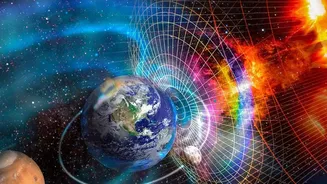
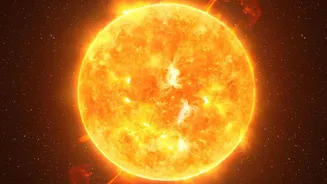
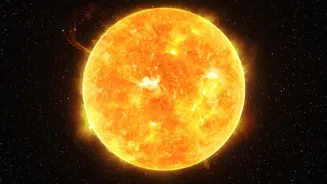
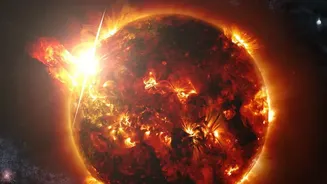
The primary threat from the sun isn’t its heat or light, but something called a Coronal Mass Ejection, or CME. These are massive, explosive bursts of plasma and magnetic fields from the sun's outer atmosphere, the corona. A single CME can eject billions
of tonnes of material, traveling at speeds from 250 to 3,000 kilometres per second. While many CMEs miss Earth entirely, the ones that do head our way can trigger a geomagnetic storm upon arrival, which can happen in as little as 15 hours for the fastest events. This isn't weather in the terrestrial sense; it's a disturbance in Earth's magnetic field caused by a wave of charged particles from the sun.
Our Technological Achilles' Heel
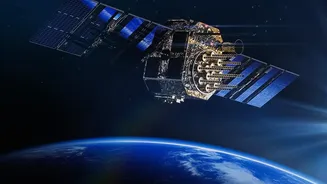
A severe geomagnetic storm poses a significant risk to the technological backbone of our society. These storms can induce powerful electrical currents in the ground, which can flow into power grids and overload high-voltage transformers, potentially causing widespread and long-lasting blackouts. Beyond the power grid, our space-based assets are highly vulnerable. Satellites responsible for GPS, communications, and weather forecasting can have their electronics damaged or their orbits altered. This can lead to disruptions in everything from air traffic control and shipping to banking and emergency services. The infamous Carrington Event of 1859 fried telegraph systems, and a similar event today would have a far more catastrophic impact on our deeply interconnected world.
Creating an Artificial Eclipse
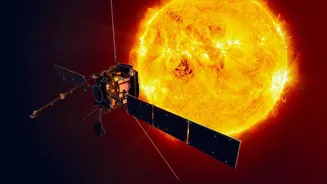
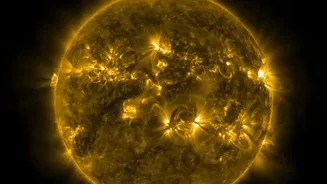
This is where coronagraphs become essential. The sun's surface, or photosphere, is so bright that it completely drowns out the much fainter light of its surrounding corona. A coronagraph is a special telescopic instrument designed to create an artificial eclipse. It uses a precisely positioned disk to block the direct glare of the sun, allowing scientists to see the corona and, crucially, to spot a CME as it erupts and blasts away from the sun. While ground-based coronagraphs exist, their view is hampered by our own atmosphere. To get a clear and constant view, we need to put them in space.
Our Sentinels in Space
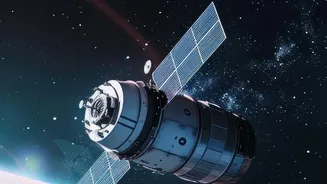
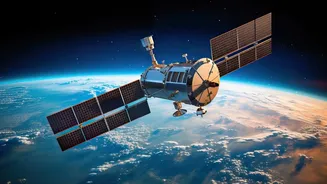
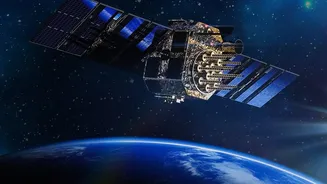
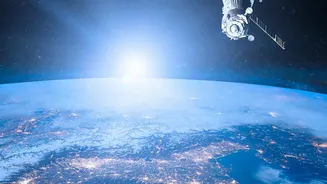
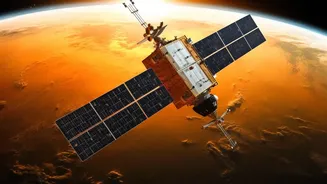
Space-based observatories are our most important sentinels. Missions like the Solar and Heliospheric Observatory (SOHO) and the new generation of satellites provide real-time imagery of the sun's corona. Some, like the European Space Agency's PROBA-3, use two separate spacecraft flying in precise formation—one acting as the occulter disk and the other as the coronagraph—to create a near-perfect artificial eclipse. By stationing these satellites at strategic points between the Sun and Earth, such as the L1 Lagrange point, we can get a constant, uninterrupted view of the sun and detect Earth-directed CMEs shortly after they occur.
A Crucial Early Warning
The data from coronagraph satellites doesn't stop a CME, but it buys us invaluable time. Depending on the speed of the solar storm, these satellites can provide a warning of one to four days before it reaches Earth. This warning period is critical for mitigating potential damage. Power grid operators can take preventative measures to protect their transformers, satellite operators can put their spacecraft into a protective safe mode, and airlines can reroute flights away from polar regions where the effects are strongest. Without these eyes on the sun, a major solar storm would arrive with little to no notice, leaving our vital infrastructure exposed and vulnerable.