
Beyond the Goldilocks Zone
The search for extraterrestrial life has long been guided by the 'habitable zone', often called the Goldilocks zone. This is the orbital region around a star where conditions are just right—not too hot and not too cold—for liquid water to exist on a planet's
surface. Since liquid water is essential for all life as we know it, this has been a logical starting point. However, this approach is fundamentally Earth-centric. It assumes that the conditions that allowed life to flourish here are the absolute best the universe to offer. But a growing number of astrobiologists are challenging this idea, suggesting that Earth might be merely habitable, not optimal.
Defining Superhabitability
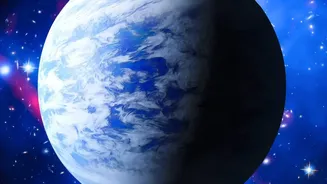
The concept of a 'superhabitable' world, first formally proposed by scientists René Heller and John Armstrong in 2014, describes a planet or moon with conditions more suitable for the emergence and evolution of rich biodiversity than Earth. This isn't about finding a paradise for humans, but a world where the fundamental ingredients for life are more robust and stable. The goal is to identify planets that could support more diverse and abundant ecosystems. According to Dirk Schulze-Makuch, a leading researcher in the field, this requires us to look beyond a 'second Earth' and consider the possibility that other planetary recipes might yield even better results for life.
The Perfect Planetary Recipe
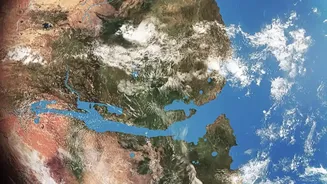
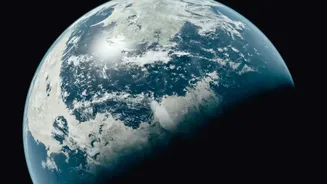
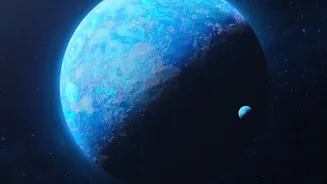
So, what makes a world superhabitable? Scientists have proposed several key characteristics. An ideal candidate might be slightly larger and more massive than Earth—perhaps up to two times the mass. This would create stronger gravity to help retain a dense, life-sustaining atmosphere and a larger surface area for life to colonize. Its topography might feature shallow, sprawling oceans dotted with archipelagos, promoting greater marine biodiversity than Earth's deep, vast oceans. A slightly warmer average temperature, by about five degrees Celsius, could also encourage richer biodiversity, similar to Earth’s own tropical rainforests. Critically, these worlds would likely be older than Earth, allowing more time for complex life to evolve and for the planet to settle into a stable rhythm.
The Star and the Climate
The type of star a planet orbits is also crucial. Our sun, a G-type star, has a lifespan of about 10 billion years. Complex life took nearly 4 billion years to appear on Earth, leaving a relatively short window before our sun's eventual demise. Superhabitable planets might orbit K-dwarf stars. These stars are cooler, smaller, and less luminous than our sun, but they are much more stable and have lifespans stretching from 20 to 70 billion years. This incredible longevity provides a much longer, more stable period for life to emerge and evolve. A stable climate, maintained over billions of years, is perhaps the most critical factor. This stability relies on processes like a geologic carbon cycle, which requires sufficient surface water to regulate atmospheric carbon dioxide and keep temperatures in a habitable range over eons. Without this long-term climatic stability, a planet could easily lose its water and become barren, like Mars or Venus may have.
The Hunt for a Better Earth
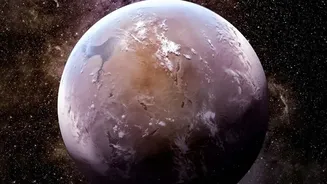
This is more than just a thought experiment. In 2020, a team led by Schulze-Makuch identified 24 potential superhabitable candidates from the thousands of known exoplanets. These planets, all more than 100 light-years away, meet some of the key criteria, though much more data is needed to confirm their true nature. The goal isn't to pack our bags, but to focus the efforts of powerful new instruments like the James Webb Space Telescope. By targeting these most promising worlds, scientists hope to increase the chances of one of humanity's greatest discoveries: finding definitive proof of life beyond Earth. These prime candidates give us a specific, tantalizing place to look for biology elsewhere in the cosmos.