


The Endless Search for a Perfect Match
Finding the right foundation has long been one of the most frustrating shopping experiences. It's a process of trial and error that often feels destined to fail. Between unflattering store lights, the pressure to make a quick decision, and the difficulty
of determining your own undertones, many of us end up with a drawer full of barely-used bottles that are either too orange, too pink, or too pale. For years, the only solution was to get samples, test swatches on your jawline, and hope for the best. This challenge is amplified for online shoppers, where the risk of choosing the wrong shade is even higher. Studies have shown that a significant percentage of online beauty returns are due to shade mismatches, highlighting just how common this problem is.
How AI Enters the Picture
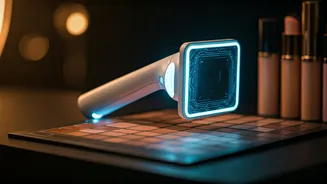
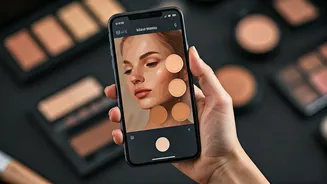
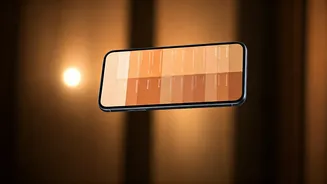
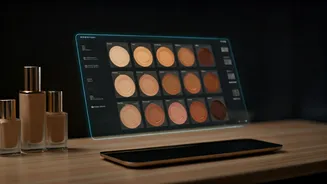
Enter artificial intelligence. The beauty industry is undergoing a massive technological transformation, with AI at its heart. Brands are now leveraging sophisticated algorithms to offer a solution to this age-old problem: AI-powered foundation matching. These tools, often available through a brand's website or a dedicated app, use your smartphone's camera to analyse your skin and recommend the ideal shade. This shift isn't just about convenience; it's about creating a more personalised and inclusive beauty experience. By moving beyond broad categories, AI can cater to the unique nuances of every individual skin tone.
The Technology Behind the Match
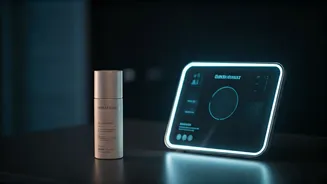
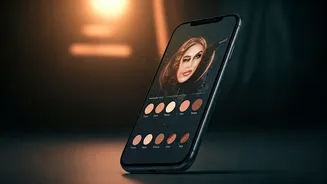
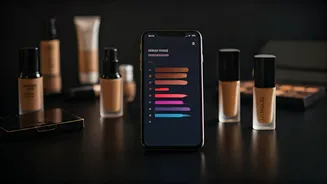
So, how does it actually work? Most AI foundation matchers use a combination of facial recognition and image processing. When you scan your face, the tool analyses multiple points to determine not just your skin tone (how light or dark it is) but also your crucial undertones (the cool, warm, or neutral hues beneath the surface). Some advanced systems, like Sephora's Color iQ, even measure saturation to get a more precise reading. This data is then compared against a vast database of foundation shades to find your perfect match. Other platforms, like Il Makiage's popular PowerMatch quiz, use machine learning to analyse your answers to questions about your skin, current foundation, and even how you react to the sun to predict your shade with high accuracy.
Does It Actually Work?
This is the million-dollar question. The honest answer is: it depends. The accuracy of camera-based apps can be heavily influenced by your environment. Lighting is the single most important factor; a photo taken in warm bathroom light will yield a different result than one taken in natural daylight by a window. The quality of your phone's camera also plays a role. However, when conditions are right, these tools can be incredibly accurate and a fantastic starting point. They offer unparalleled convenience, allowing you to confidently shop from home. They also expose you to a wider range of brands and shades than you might find in a single store. While some users report finding their holy grail match on the first try, others find the recommendation is a near-miss. The technology isn't perfect yet, but it’s a massive improvement on guesswork.
The Future is Personalised and Inclusive
AI-powered foundation matching is just one piece of a much larger trend reshaping the beauty world: hyper-personalisation. Technology is enabling brands to move away from a one-size-fits-all approach and toward creating customised products and routines for every individual. We're already seeing AI used for personalised skincare recommendations, virtual makeup try-ons, and even custom-blended haircare. This technology is also a powerful driver of inclusivity, ensuring that people with all skin tones feel seen and catered for by the industry. As AI continues to evolve, we can expect even more sophisticated tools, perhaps integrating with wearable sensors that track skin changes in real-time to adjust recommendations. The ultimate goal is a beauty experience that is as unique as you are.