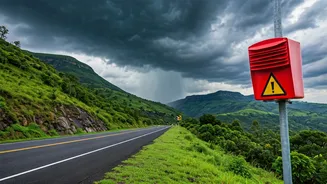









The Unseen Threat in the Hills
Every year, the majestic slopes of the Western Ghats, a UNESCO World Heritage site, become treacherous. Intense rainfall saturates the soil on steep hillsides, creating the perfect conditions for landslides. For the millions living in or travelling through
regions in Kerala, Karnataka, Goa, Maharashtra, and Tamil Nadu, this is not a distant threat but an annual reality. These sudden, powerful movements of rock, debris, and earth can engulf homes, block vital roads, and tragically, claim lives with little to no warning. Understanding this risk is the first step toward mitigating it.
How Science Predicts the Unpredictable
Until recently, predicting a landslide was nearly impossible. Today, thanks to pioneering work by Indian institutions like Amrita Vishwa Vidyapeetham, a network of advanced sensors is changing the game. This real-time Landslide Early Warning System (LEWS) deploys a suite of instruments directly into the hillside. These include rain gauges to measure rainfall intensity, moisture sensors to check soil saturation, and geophones that listen for the subtle underground movements that precede a collapse. Data from these sensors is streamed to a central server where AI-powered models analyse it 24/7. When the system detects a combination of factors that indicate a high probability of a landslide, it automatically triggers an alert.
Getting the Alerts on Your Smartphone
The most sophisticated warning system is useless if it doesn't reach the people in harm's way. This is where your phone comes in. The primary method of receiving these specific, localised alerts is through targeted SMS messages sent to residents in the immediate vicinity of a potential danger zone. Additionally, initiatives are in place to make this information more accessible. For instance, the 'AmritaKripa' app is designed to disseminate these warnings. It is also crucial to follow official updates from the Geological Survey of India (GSI) and your state’s Disaster Management Authority (SDMA). They often issue broader rainfall-based warnings for districts, which serve as a vital first-level caution to be extra vigilant.
An Alert Is Received: What Happens Now?
Receiving a landslide alert can be frightening, but panicking is the worst response. The key is to have a plan. The alerts are designed to give you precious time—minutes to hours—to act. Here’s a simple protocol to follow: 1. **Stay Calm and Verify:** Read the alert carefully. Does it advise evacuation or caution? Cross-reference with information from official government channels if possible. 2. **Inform Others:** Alert your family, neighbours, and community members who might not have received the message. 3. **Prepare to Move:** If evacuation is advised or seems likely, gather your emergency 'go-bag'. This should contain documents, a first-aid kit, water, non-perishable food, a torch, and any essential medications. 4. **Listen to Authorities:** Follow the instructions of local officials, disaster response teams (like the NDRF), or police. They will guide you on safe evacuation routes and shelter locations.
Safety Beyond the Alert
Technology is a tool, not a guarantee. Your personal preparedness is the most critical factor. During periods of heavy rain, especially if you have received a general warning for your area, take proactive steps. Avoid travelling through ghat roads unless absolutely necessary. Be aware of your surroundings; signs of an impending landslide can include new cracks in walls or foundations, tilting trees or poles, and the sudden sound of rumbling or rushing water. If you are in a vehicle and get caught near a potential slide, do not attempt to cross it. The safest action is to turn back. If you are at home in a vulnerable area, identify the safest room (often the one furthest from the hillside) and know your nearest evacuation path to higher, more stable ground.