








Habit 1: Prioritise Flawless Form
The most important habit is also the least glamorous: focusing on form over everything else. With free weights, gravity does half the work. With bands, the resistance is constant and variable, making it easy to cheat the movement by using momentum or improper
posture. A good habit is to start with a lighter band than you think you need. Record yourself or use a mirror to check your alignment. Are your shoulders down and back? Is your core engaged? Is the movement originating from the target muscle? Sacrificing weight (or band colour) for perfect form prevents injury and ensures the muscle you’re trying to work is actually the one doing the work. This foundation makes every other habit more effective.
Habit 2: Control the Entire Movement
It’s common to see people power through the main part of an exercise (the concentric phase, like pulling a band apart) and then let it snap back without control. This is a huge missed opportunity. The eccentric phase—when the muscle lengthens under tension, like slowly returning the band to its starting position—is crucial for building strength and muscle control. Cultivate the habit of making the return journey just as slow and deliberate as the initial pull. A good rule of thumb is a “1-2 count”: one second to pull, and a slow two-second count to return. This doubles the time your muscles are under tension, leading to better stimulus and faster results.
Habit 3: Progress Your Bands Smartly
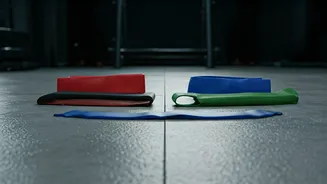
Using the same light band for months on end will eventually lead to a plateau. Progressive overload—gradually increasing the demand on your muscles—is essential for getting stronger. However, jumping to the heaviest band too soon can wreck your form and lead to injury. A smart habit is to have a system for progression. When you can comfortably complete 3-4 sets of 12-15 reps with perfect form, you have two options: either grab the next heaviest band or increase the challenge with your current band. You can do this by increasing the stretch (stepping further away from the anchor point) or adding a small pulse at the peak of the contraction. This ensures you’re always challenging yourself safely.
Habit 4: Make It a Full-Body Tool
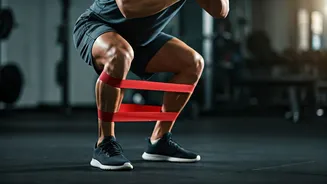
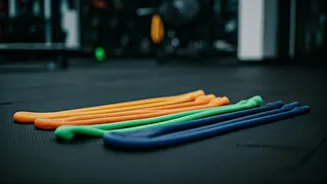
Resistance bands, especially the mini-loop ones, have become famous for glute-building exercises like clamshells and monster walks. While they are fantastic for that, their potential is so much greater. Get into the habit of viewing your bands as a full-body workout solution. Use long bands for rows and pull-aparts to strengthen your back, for overhead presses to work your shoulders, and for adding resistance to squats and lunges. Looping a band around your back for push-ups adds a serious challenge. By incorporating variety, you create a more balanced physique and prevent the muscular imbalances that can arise from focusing on just one area.
Habit 5: Inspect Your Equipment Regularly
This is a simple but critical safety habit. Unlike dumbbells, resistance bands can wear out, fray, and eventually snap. A band snapping mid-exercise, especially when stretched near your face, can cause serious injury. Before every single workout, get into the habit of giving your bands a quick once-over. Check for any small nicks, tears, or areas where the latex or fabric looks thin or stressed. Pay close attention to the points where you anchor them. If you see any signs of wear, it’s time to retire that band. They are inexpensive to replace, and your safety is priceless.
Habit 6: Use Them as a 'Workout Snack'
One of the best habits for long-term consistency is detaching from the idea that a workout has to be a gruelling, one-hour session. Resistance bands are perfect for “exercise snacking.” Keep a band at your desk and do a set of pull-aparts every hour to combat desk posture. Do a set of glute bridges while watching TV. Do some monster walks while waiting for your food to cook. These small, five-minute bursts of activity add up significantly over the course of a day and a week. This habit keeps your body moving, your muscles activated, and your fitness goals top of mind, even on days when you can’t make it to the gym.