






The Old Way to Mars
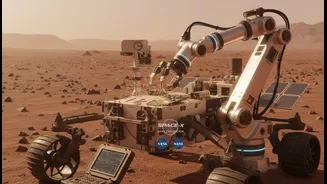
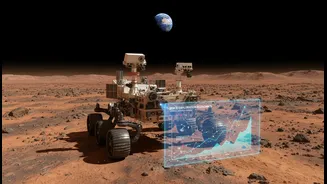
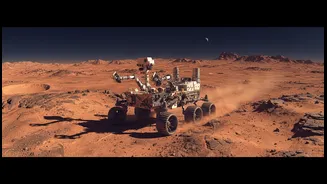
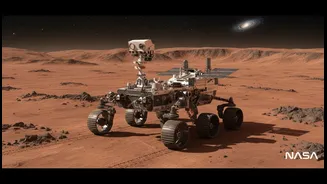
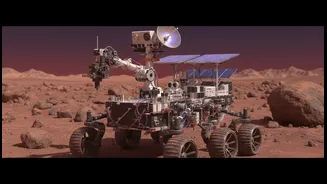
Historically, exploring Mars was the exclusive domain of national space agencies. NASA would design, build, launch, and operate every component of a multi-billion-dollar mission, from the rocket to the rover. These monolithic projects, like the Curiosity
and Perseverance rovers, are technological marvels, but their sheer scale and cost mean they are few and far between. This model concentrates immense risk into a single launch; a failure could set back scientific goals by a decade. Furthermore, each mission had to be largely self-sufficient, carrying its own powerful communications gear to talk to Earth, which adds significant weight and complexity. This traditional approach, while groundbreaking, created a bottleneck, limiting the number of scientific questions we could ask and answer at the Red Planet.
A New Commercial Blueprint
NASA is now applying a successful model from its low-Earth orbit and lunar programs to its Mars strategy: public-private partnerships. The agency is increasingly acting as a customer and a partner, rather than the sole builder and operator. Under this new paradigm, NASA focuses on what it does best—defining ambitious science goals and developing one-of-a-kind scientific instruments—while letting commercial companies handle the transportation. This model was proven with commercial cargo and crew deliveries to the International Space Station and is now being used for lunar landings through the Commercial Lunar Payload Services (CLPS) program. A recent example is the Aeolus mission, planned for 2028, where NASA will provide the atmospheric science instruments, and a partner, Relativity Space, will be responsible for the spacecraft, launch, and flight operations. This division of labor allows NASA to focus its budget on science, not just the ride to space.
The 'Highway' to Mars
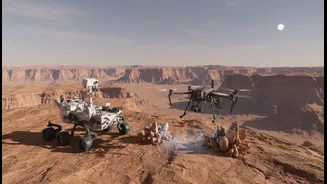
A crucial element of this new strategy is the concept of shared infrastructure. Instead of each mission carrying its own heavy-duty radio to phone home, imagine a network of dedicated communication relay satellites orbiting Mars. A small lander or science orbiter would only need a short-range radio to send its data to one of these hubs, which would then transmit the information back to Earth. This is akin to building a highway system with service stations instead of forcing every driver to carry all their own fuel for a cross-country trip. This infrastructure could also include common navigation systems, and in the future, landing pads or power sources on the Martian surface. By creating these shared resources, the barrier to entry for any single mission drops dramatically. Companies and even other countries could design smaller, more focused spacecraft without having to solve the problem of long-haul communications every time.
More Shots on Goal
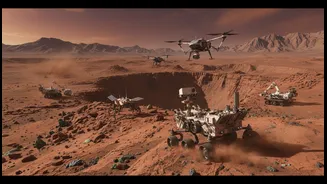
The primary benefit of this model is a higher cadence of missions at a lower cost. By offloading development and launch services, NASA can get more science per dollar. Instead of one giant, do-it-all mission per decade, the agency could support several smaller, more specialized missions. This “more shots on goal” approach diversifies the scientific portfolio and makes the overall exploration program more resilient. If one low-cost mission fails, it's a setback, not a catastrophe. This frequency also accelerates the pace of discovery and technology demonstration. For instance, the data from the Aeolus mission will provide the first daily, global view of Martian weather, which is essential for planning future landings—both robotic and human. More frequent missions allow for a more continuous stream of data, helping scientists and engineers build a deeper understanding of the planet faster than ever before.
Challenges and the Bigger Picture
This commercial model is not without its challenges. It requires a mature private space industry capable of handling complex deep-space missions, which is still an emerging field. There are also risks in relying on a small number of commercial providers, which could create new dependencies. However, the strategy is about more than just cost savings. By fostering a commercial ecosystem for Mars, NASA is laying the groundwork for a sustainable, long-term presence. These partnerships stimulate the economy, drive innovation across the aerospace sector, and create a broader base of expertise. The goal is to evolve from one-off exploratory missions to a permanent infrastructure that can support science, commerce, and eventually, human pioneers. This model isn't just a new way to get to Mars; it's a new way to stay.