


Two Beacons in the Primordial Dark
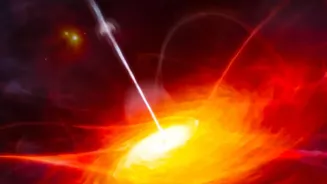
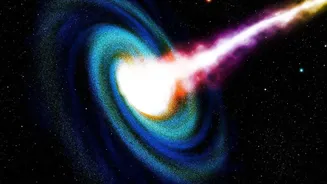
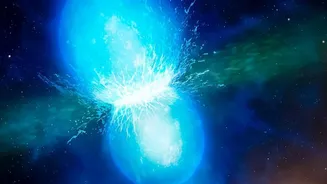
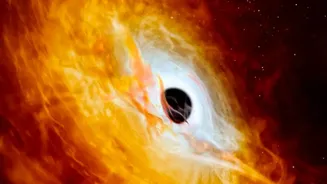
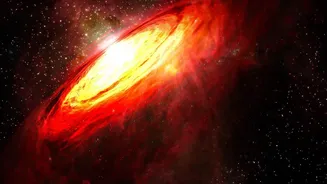
Astronomers have discovered the oldest and most distant pair of quasars ever seen. A quasar is the intensely bright lighthouse caused by a supermassive black hole actively feeding on surrounding gas and dust. This newly found pair, named Nāpōwawāʻenakaulua,
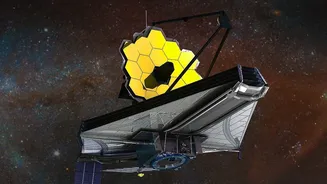
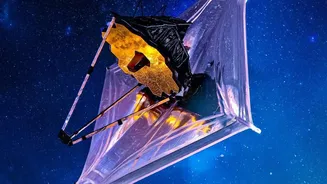
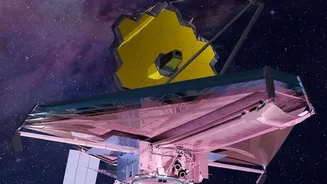
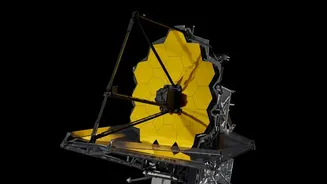
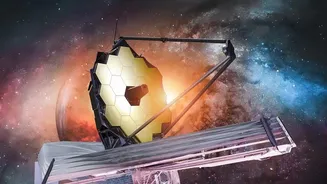
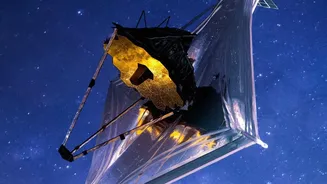
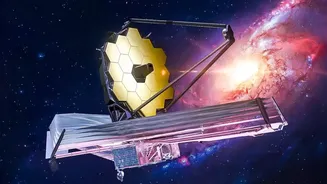
is seen as it was when the universe was just a fraction of its current age. The discovery, made using data from JWST and confirmed by the Gemini North telescope in Hawai'i, reveals two enormous black holes. One is about 1.5 billion times the mass of our sun, and its companion is around 400 million solar masses. They are separated by just 18,100 light-years, which is cosmically close—about one-fifth the width of our own Milky Way galaxy. Finding even one such behemoth this early is a puzzle, but finding a pair this close together is truly perplexing.
A Puzzle That Breaks the Rules
According to the standard model of cosmology, this discovery shouldn't be possible. The prevailing theory of galaxy formation is hierarchical: small structures form first and gradually merge over billions of years to create larger ones. This process applies to galaxies and the supermassive black holes at their centres. It’s a slow-and-steady growth model. Black holes are thought to start from 'seeds'—perhaps the remnants of the first massive stars—and grow by consuming matter and merging with other black holes. This process is believed to take a very long time. The existence of Nāpōwawāʻenakaulua, with two fully-formed supermassive black holes so early in cosmic history, throws a wrench in that timeline. There simply shouldn't have been enough time for them to grow so large and then find each other to form a pair.
Rethinking Black Hole Origins
This finding forces astronomers to reconsider how the very first supermassive black holes came to be. One alternative idea is the 'direct collapse' model. Instead of starting from a star-sized seed, this theory proposes that a massive cloud of primordial gas in the early universe could have collapsed directly into a large black hole 'seed', weighing tens of thousands of solar masses. This would give it a significant head start, allowing it to reach a billion-solar-mass scale much faster. The presence of a pair of these objects suggests that the environment they formed in was exceptionally dense with matter, creating the perfect conditions for rapid and extreme growth. It hints that the 'cosmic dawn' might have been a far more chaotic and violent period of assembly than previously thought.
What New Questions Does This Raise?
The discovery of Nāpōwawāʻenakaulua isn't just an outlier; it's the third quasar pair found in the early universe, suggesting these objects might be more common than expected. This raises profound questions. Were the conditions for rapid, direct-collapse black hole formation more widespread? Are the invisible halos of dark matter, which are believed to be the scaffolding for galaxy formation, much more massive or 'clumpy' in the early universe than our simulations predict? The discovery also provides a unique laboratory for studying galaxy mergers in their infancy. By observing these two giants as they orbit each other and inevitably spiral together, scientists can test theories about how galaxies and their central black holes co-evolve, a process that has shaped the universe we see today.