



Why August is Special for Saturn
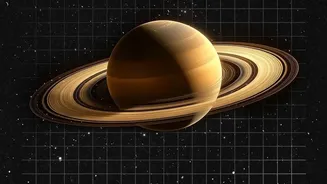
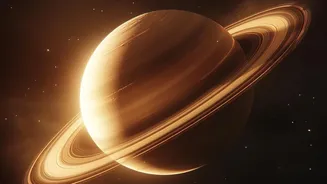
Throughout August, Saturn will be visible for much of the night, appearing as a bright, yellowish point of light. The planet is heading towards its opposition in early October, which is the point in its orbit where Earth passes directly between it and
the Sun. This means the planet is relatively close to us in cosmic terms, making it appear bigger and brighter in our sky. For sky-watchers, this is the best time of year to turn your attention to the ringed jewel of our solar system. It will rise in the east in the evening and travel across the sky, setting in the west near sunrise.
Finding the Ringed Planet
You don't need to be an expert to locate Saturn. Look towards the eastern sky a couple of hours after sunset. The planet will be situated in the constellation Pisces, which doesn't have many bright stars, making Saturn stand out. Unlike stars that twinkle, Saturn will shine with a steady, constant light. If you have a smartphone, a basic stargazing app can point you in the exact direction. Just hold it up to the sky, and it will identify the bright dot as Saturn, taking all the guesswork out of your celestial search.
What You Can See: From Naked Eye to Binoculars
Your own eyes are the first and easiest tool to use. To the naked eye, Saturn will look like a bright, yellowish-white star. Spotting it this way is a great first step to familiarise yourself with its location. If you have a pair of binoculars, you'll get a slightly better view. While you won't see the rings as a separate structure, a good pair of 10x50 binoculars may reveal that the planet is not perfectly round, but slightly elongated or oval-shaped, a clear hint of the famous rings. You might even spot its largest moon, Titan, which appears as a tiny, star-like point of light next to the planet.
The Magic of a Basic Telescope
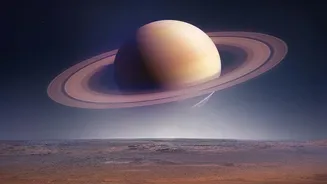
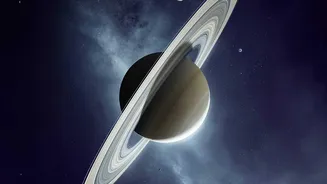
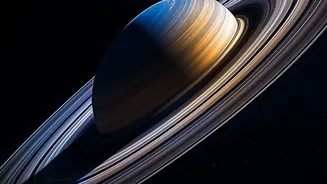
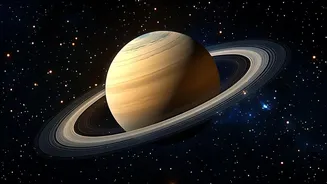
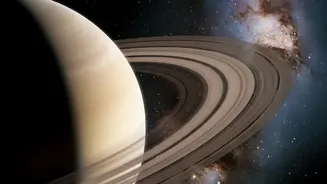
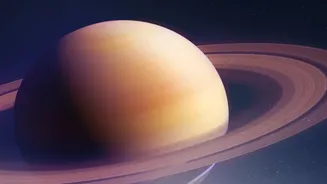
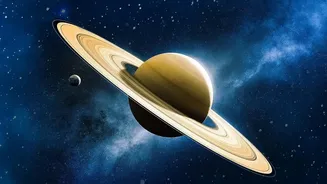
This is where the real magic happens, and it's more accessible than you might think. Even a small, entry-level telescope with a magnification of around 25x to 50x can transform that point of light into a planetary disk with its rings clearly visible. With a basic 3-inch or 4-inch telescope, the rings will appear as a distinct and separate structure from the planet itself, a truly breathtaking sight. You will clearly see the planet and the magnificent rings that make it so famous. More powerful amateur telescopes may even reveal a gap in the rings known as the Cassini Division, or some faint cloud bands on the planet's surface.
Tips for an Unforgettable View
To make the most of your Saturn-gazing session, a little preparation goes a long way. If possible, try to get away from bright city lights. Even a local park or a rooftop can offer a better view than a brightly lit street. Give your eyes about 15-20 minutes to fully adjust to the darkness; this will help you see fainter details. Check the weather forecast for a clear night, as clouds can easily spoil the view. Finally, be patient. Spend time at the eyepiece, letting your eye relax and absorb the details. The longer you look, the more you are likely to see.
A Bonus Celestial Show
While you're looking up, August offers another fantastic reason to stay outside after dark: the Perseid meteor shower. This is one of the best and most reliable meteor showers of the year, peaking on the night of August 12-13. With the new moon occurring on August 12, the sky will be exceptionally dark, creating perfect conditions for spotting shooting stars. You could see dozens of meteors per hour streaking across the sky, radiating from the constellation Perseus. It’s the perfect accompaniment to your Saturn-spotting adventure.