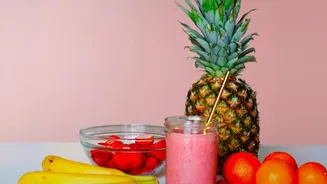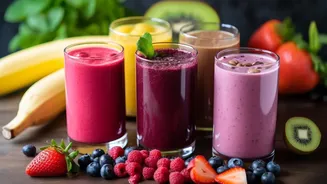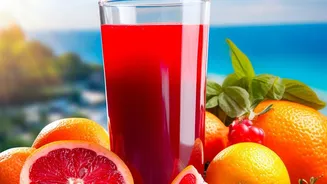





The Core Difference: Fibre is Key
The single biggest distinction between whole fruit and fruit juice comes down to one crucial component: dietary fibre. When you eat a whole apple or orange, you consume all the pulp and skin, which are packed with fibre. This fibre is essential for good
digestive health, helping to prevent constipation and maintain a healthy gut. More importantly, it slows down the absorption of sugar into your bloodstream. This prevents sharp spikes in blood sugar and insulin, leaving you feeling full and satisfied for longer. When fruit is juiced, however, this beneficial fibre is almost entirely removed, leaving behind a liquid that your body processes very differently.
The Sugar Question: A Concentrated Rush
While the sugar in both fruit and juice is natural, its effect on the body is not the same. In whole fruit, sugars are 'intrinsic', meaning they are locked within the fruit's cellular structure along with fibre. This matrix slows down digestion. In contrast, the juicing process breaks down these cell walls, turning the sugars into 'free sugars'. These are the same type of sugars found in honey and syrups, which health organisations advise limiting. Without fibre to slow them down, these free sugars are absorbed very quickly, causing a rapid spike in blood sugar that can lead to a subsequent energy crash and increased hunger. Over time, large cohort studies have found that while high whole-fruit intake is linked to a lower risk of type 2 diabetes, high fruit juice intake is associated with a greater risk.
A Look at Nutrient Loss
Juicing isn't just about removing fibre. The process can also lead to a loss of other important nutrients. Many of the vitamins, minerals, and health-promoting plant compounds called phytonutrients are found in the skin and pulp of fruits. For example, a significant portion of the flavonoids in an orange is stored in the pulp, not the juice. While fresh juice is still a source of some nutrients, like Vitamin C, it is a less complete package than the whole fruit it came from. The act of eating a whole fruit also provides benefits; chewing slows you down and helps your body register that it's full, which is a signal you miss when drinking calories quickly.
Your Guide to Juice Serving Sizes
So, does this mean juice is off the table? Not necessarily, but portion control is vital. Health authorities generally agree on a strict limit for fruit juice. The recommended serving size is a small glass of 150ml (about 5 ounces) per day for adults. Importantly, no matter how much juice you drink, it will only ever count as a maximum of one of your 'five-a-day' fruit and vegetable portions. This is because the lack of fibre means it doesn't provide the same broad benefits as whole produce. For children, the recommendations are even smaller, typically ranging from 120ml to 180ml depending on age.
When Can Juice Be a Good Choice?
Despite its downsides, fresh juice can have a place in a healthy diet. It can be a convenient way to get a quick dose of vitamins and minerals, especially for those who struggle to eat enough whole fruits. Certain juices also have specific benefits; for example, cranberry juice is known to help prevent urinary tract infections. The key is to view juice as a supplement or a treat, not a replacement for whole fruit. If you do enjoy a glass, consider it part of your daily limit for free sugars and always opt for 100% fruit juice with no added sugar. Some experts suggest that blending fruit into a smoothie is a better alternative than juicing, as it retains much more of the beneficial fibre.