





The Unbeatable Economics of Mobility
For millions of Indians, the decision to buy a two-wheeler is a simple matter of arithmetic. With even the most basic car costing at least five times more, motorcycles and scooters are the most affordable entry point into personal mobility. The initial
purchase price is just the start. In a country sensitive to fuel costs, the exceptional mileage of commuter motorcycles—often delivering 60-70 kilometres per litre—makes the daily journey to a factory or office financially viable. Low maintenance costs, widely available spare parts, and affordable servicing solidify their position as the most cost-effective transport solution for the middle-class and low-income households that form the backbone of the urban workforce.
The Last-Mile Lifeline
India's cities have invested heavily in public transport, with metro networks expanding rapidly. However, these systems often suffer from a persistent 'last-mile' problem. The distance from a metro station or bus stop to a commuter's final destination—be it an office park, industrial estate, or residential colony—is frequently too far to walk, especially in extreme weather. Two-wheelers perfectly bridge this gap, providing door-to-door connectivity that public transport cannot. They offer the autonomy to travel on one's own schedule, without relying on the fixed routes and timetables of buses or the fluctuating availability and cost of auto-rickshaws. This makes them an essential supplement, rather than a competitor, to mass transit.
Mastering the Urban Maze
Indian cities are synonymous with traffic congestion. Bengaluru, Mumbai, and Delhi consistently rank among the world's most congested urban centres, where drivers can spend a significant portion of their commute stuck in traffic. Here, the agility of a two-wheeler is a superpower. Its ability to maneuver through narrow lanes, filter through stagnant car traffic, and find parking in impossibly tight spaces makes it uniquely suited to the urban landscape. While cars remain trapped in gridlock, two-wheelers keep moving, drastically cutting down commute times and reducing the daily stress associated with urban travel.
An Engine of Aspiration and Enterprise
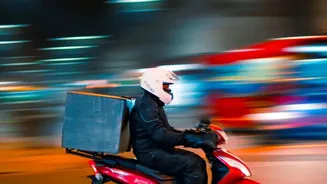
Beyond the daily commute, the two-wheeler is a powerful tool for economic empowerment. For small business owners, it is a vehicle for making sales calls and transporting goods. For students, it provides access to better educational opportunities far from home. In recent years, the explosive growth of the gig economy has transformed the two-wheeler from a personal vehicle into a commercial asset. Fleets of motorcycles and scooters are the lifeblood of food delivery platforms like Zomato and Swiggy, quick-commerce services, and bike-taxi operators such as Rapido, creating employment for millions. This makes the vehicle an engine of social mobility and a key enabler of India's burgeoning digital economy.
The Road Ahead: Greener and Smarter
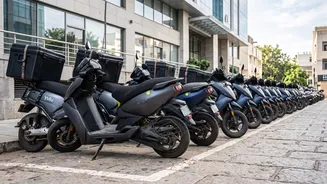
The dominance of the two-wheeler is not static; it is evolving. With growing concerns over urban pollution, the industry is pivoting towards electrification. The electric two-wheeler market in India is experiencing explosive growth, with sales increasing dramatically year-on-year, driven by government incentives, falling battery costs, and rising environmental awareness. Electric scooters, in particular, are becoming a common sight, offering near-silent operation and running costs far lower than their petrol counterparts. This transition suggests that the future of the Indian commute will not be a move away from two-wheelers, but a shift to a cleaner, quieter, and more sustainable version of this trusted vehicle.