





India is in the midst of an artificial intelligence boom, with AI-driven services poised to transform the economy. But this digital revolution has a hidden cost: a colossal appetite for electricity that is testing the limits of the nation's energy grid.
The Hidden Cost of Intelligence
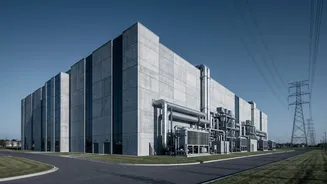
Artificial intelligence, particularly generative AI, is incredibly power-hungry. Unlike a simple web search, training large AI models and running complex queries requires immense computational power, which translates directly into high energy consumption. Data centres, the physical backbone of the cloud and AI, are the epicentre of this demand. A traditional server rack might draw 5-10 kilowatts (kW) of power, but a rack dedicated to AI can consume over 120 kW. Globally, data centres are already significant energy users, and the explosive growth of AI is set to dramatically increase their share. The International Energy Agency (IEA) projects that electricity consumption from data centres could double by 2030, largely due to AI workloads.
India's AI Power Surge
This global trend is particularly acute in India. Driven by government initiatives like 'Digital India', a massive internet user base, and rapid cloud adoption, the country's data centre capacity is expanding at a phenomenal rate. Installed capacity has quadrupled in just a few years, from 375 megawatts (MW) in 2020 to around 1,575 MW today. Projections suggest this could grow to between 8 and 10 gigawatts (GW) by 2030. Consequently, the electricity demand from this sector is expected to surge, potentially accounting for 2.5% to 3% of India’s total electricity demand by the decade's end, up from less than 1% currently. This rapid expansion places significant strain on the electricity grid and raises critical questions about sustainability, especially given India's goal to achieve net-zero emissions by 2070.
A Shift to Smarter Hardware
Recognising that simply generating more power is not a sustainable long-term solution, the focus is shifting towards more energy-efficient computing. This means moving beyond traditional processors to hardware specifically designed for the demands of AI. Innovations in chip architecture are key to this transition. Companies are developing specialized processors like Intelligence Processing Units (IPUs) and AI accelerators that can handle machine learning tasks more efficiently, reducing the energy needed per operation. Advanced transistor designs, such as Gate-All-Around technology, promise energy-efficiency improvements of 25–30%. The goal is to make AI computations faster while consuming significantly less power, addressing the energy challenge at its source.
Building a Sustainable AI Future
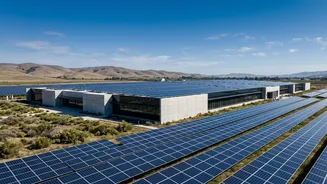
The push for green computing is a combined effort from both industry and government. The Indian government is actively promoting sustainable growth through various policies, including the Green Energy Open Access Rules and the National Green Hydrogen Mission. States are also taking the lead; Andhra Pradesh, for example, is mandating that new data centres source at least 70% of their power from renewable energy. On the corporate side, major tech players are investing billions in green data centres, while a new wave of Indian startups is emerging to design energy-efficient chips domestically. These fabless companies are developing System-on-Chips (SoCs) and RISC-V based processors tailored for edge AI, aiming to build a secure and self-reliant supply chain for the country's digital future.