


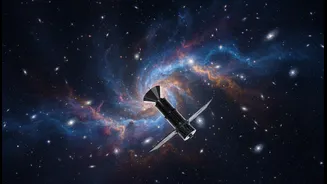
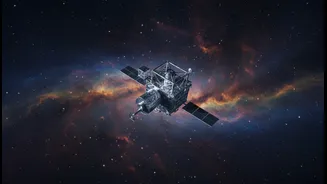


A New Eye on the Cosmos
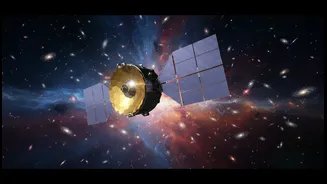
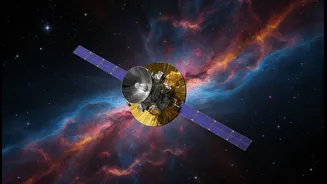
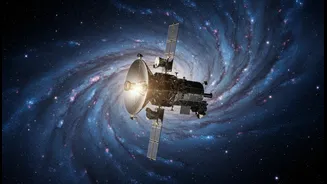
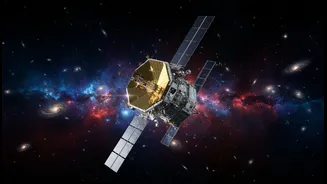
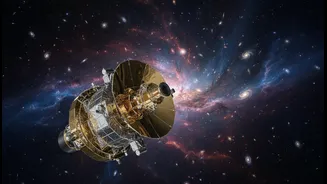
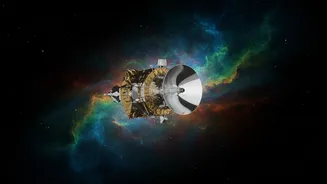
Named after NASA's first chief of astronomy, Nancy Grace Roman, this next-generation telescope is designed to tackle some of the biggest mysteries in the cosmos. With a 2.4-meter primary mirror—the same size as Hubble's—Roman is an infrared observatory
poised to investigate dark energy, dark matter, and exoplanets. Its key advantage is its incredible field of view. The Wide Field Instrument on Roman will be able to capture an area of the sky at least 100 times larger than Hubble can in a single snapshot, all with the same stunning resolution. This means it can create vast panoramas of the universe, surveying millions of galaxies with unprecedented speed and efficiency.
The August Launch Milestone
The mission is officially slated to launch on August 30, 2026, aboard a SpaceX Falcon Heavy rocket from Kennedy Space Center. For the thousands of engineers and scientists who have spent years designing, building, and testing the observatory, this moment will be the culmination of immense effort. The telescope has already undergone punishing environmental tests, including intense vibrations and extreme temperatures, to prove it can withstand the journey to space. The August launch date, which is several months ahead of its original commitment, is a testament to the team's progress. While launch windows can be affected by weather, the current target represents a major step toward getting this powerful new observatory into position.
From Liftoff to First Light
After the rocket leaves the launchpad, the real work begins. Roman will travel for several months to its operational orbit, a spot about 1.5 million kilometers from Earth known as the second Lagrange point, or L2. This is the same stable gravitational region where the James Webb Space Telescope operates. Once it arrives, the telescope will enter a commissioning phase. This period involves cooling the instruments down to their cryogenic operating temperatures, meticulously testing all systems, and calibrating the cameras and sensors. This process is deliberate and methodical, ensuring every component works perfectly before scientific operations can formally begin. The first images, while eagerly anticipated, will only come after these critical checkout procedures are complete.
What Roman Will Actually Study
Roman has two primary science goals: understanding the mysterious force known as dark energy that is accelerating the expansion of the universe, and conducting a massive census of exoplanets. To study dark energy, it will map the distribution of galaxies and measure the light from distant supernovae. For exoplanets, Roman will use a technique called gravitational microlensing, which can detect planets with masses down to a fraction of Earth's, including worlds that may not orbit a star at all. Its surveys are expected to find thousands of new planets, potentially increasing the number of known exoplanets by an order of magnitude. A secondary instrument, a Coronagraph, will demonstrate technology to directly image large planets by blocking the overwhelming glare of their stars.
The Virtue of Patience in Big Science
While the launch is an exciting spectacle, it’s crucial to remember that groundbreaking discoveries are not instantaneous. The vast amounts of data Roman will collect—observing hundreds of millions of stars and galaxies—will need to be processed, analyzed, and studied by scientists around the world. The data will be made public after initial processing, allowing the entire scientific community to dig in. Finding a potential signal of a new planet is one thing; confirming it and understanding its properties takes further observation and peer review. The process of turning raw data into revolutionary insights about dark energy or the formation of planetary systems is a marathon, not a sprint. The telescope's five-year primary mission is designed for the long, steady work of gathering evidence to answer fundamental questions about our universe.