





Kantola (Spiny Gourd)
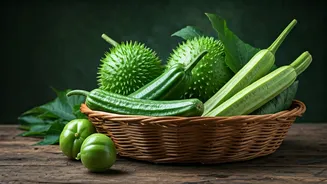
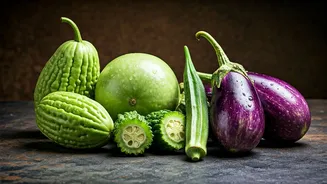
Don't be intimidated by its spiky exterior. Kantola, also known as spiny gourd or teasel gourd, is a monsoon superstar packed with nutrients. This humble vegetable is a powerhouse of antioxidants and flavonoids, making it excellent for boosting immunity,
which is often needed during the season of colds and flu. It is low in calories but high in fibre, aiding in digestion and keeping you full for longer. Its flavour is a delightful mix between a bitter gourd and a cucumber, but much milder. You can find it across India, called 'kakrol' in Bengali, 'kankoda' in Gujarati, and 'aakakarakaya' in Telugu. For a simple and delicious preparation, slice it thin, toss with turmeric, chilli powder, and salt, and shallow-fry until crisp. It also works beautifully in a simple stir-fry with onions and mustard seeds or stuffed with a masala filling.
Arbi ke Patte (Colocasia Leaves)
Colocasia leaves are the heart of many beloved monsoon delicacies, from Gujarati 'patra' to Maharashtrian 'alu vadi'. These large, heart-shaped leaves are rich in vitamins A and C, as well as iron. However, they contain calcium oxalate crystals, which can cause itching or irritation in the throat if not prepared correctly. The key is to always cook them thoroughly and pair them with a souring agent like tamarind, lemon juice, or kokum to neutralize the crystals. The traditional method involves smearing a spiced gram flour (besan) paste over the leaves, rolling them into tight logs, steaming them until cooked, and then slicing and frying the rounds. This process not only makes them safe to eat but also turns them into an incredibly flavourful and texturally exciting dish that is savoury, tangy, and slightly sweet.
Suran (Elephant Foot Yam)
Suran, or elephant foot yam, is an earthy, starchy vegetable that comes into its own during the rainy season. It has a dense, potato-like texture and a unique, slightly nutty flavour. Known for its digestive benefits, suran is rich in dietary fibre and is considered a good source of potassium and manganese. Like colocasia leaves, some varieties of yam can cause an itchy sensation, so it's often boiled with tamarind or lemon juice before being used in dishes. Once prepped, its versatility shines. You can make a rich, spicy curry ('suran ki sabzi'), mash it into a flavourful 'chokha' or 'bharta' with mustard oil and spices, or even slice it thin and fry it to make crispy chips. It’s a filling and satisfying vegetable that provides a wonderful, grounding counterbalance to the wet weather outside.
Laal Maath (Red Amaranth)
While green leafy vegetables are often advised against during the monsoon due to the risk of contamination from mud and grime, red amaranth is a sturdy and reliable exception. Known as 'laal maath' or 'laal saag', its vibrant crimson hue comes from anthocyanins, powerful antioxidants. This leafy green is a nutritional giant, loaded with iron, calcium, vitamin K, and vitamin C. Its slightly earthy and sweet taste makes it a welcome addition to any meal. To prepare it safely, be sure to wash the leaves and stems thoroughly in running water a few times. The simplest preparation is often the best: a quick stir-fry (bhaji) with garlic, green chillies, and a sprinkle of salt. The tender stems are just as edible and delicious as the leaves. It cooks down in minutes, releasing its beautiful colour and making for a quick, healthy, and visually stunning side dish.