
Why More Than Squats?
Relying solely on squats for thigh training is like eating only one type of vegetable. While beneficial, you miss out on a wider range of nutrients. Your thighs are a complex group of muscles, including the quadriceps at the front, hamstrings at the back,
and adductors and abductors on the inner and outer sides. Squats primarily target the quads and glutes. By alternating exercises, you ensure all these muscles are engaged, leading to more balanced development and reducing the risk of muscle imbalances that can lead to injury. Varying your routine also keeps workouts engaging and challenges your muscles in new ways, which is crucial for continuous improvement and breaking through strength plateaus.
The Lunge: A Unilateral Powerhouse
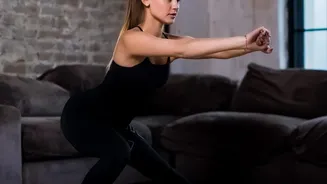
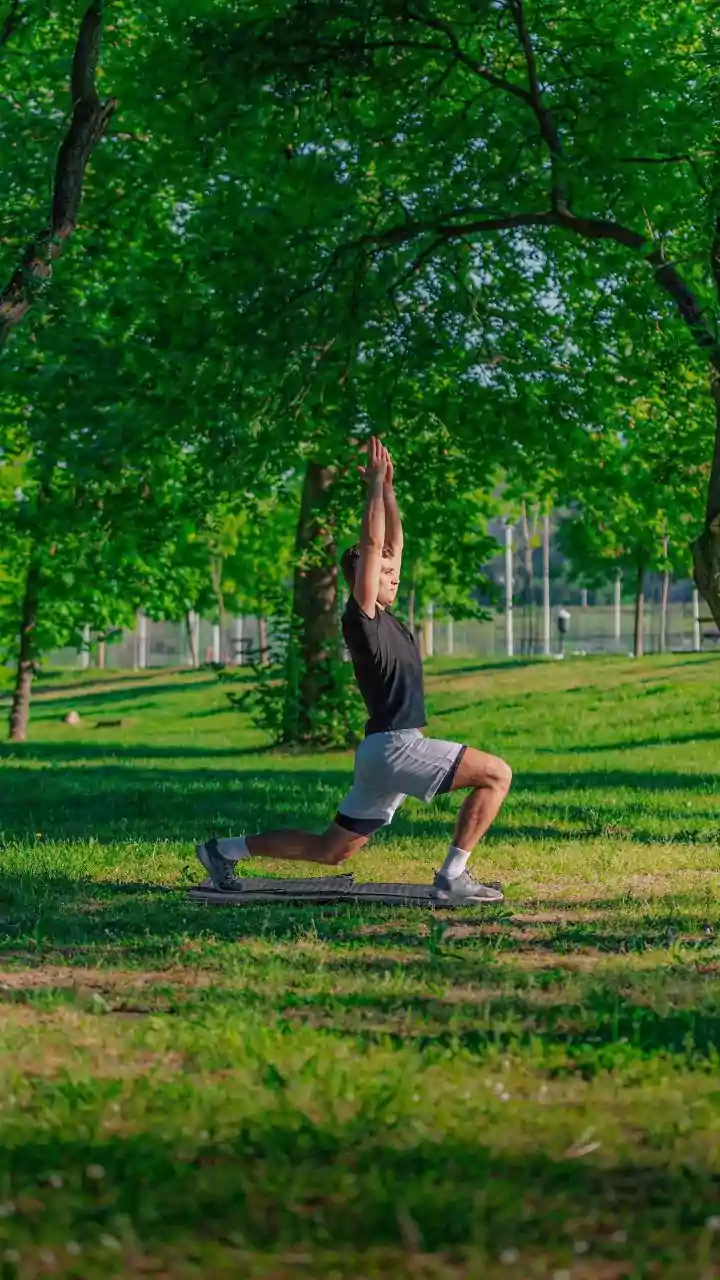
Lunges are a fantastic complement to squats because they are a unilateral exercise, meaning they work one leg at a time. This helps identify and correct strength differences between your left and right sides. Forward lunges are a classic, but reverse lunges are often easier on the knees while placing more emphasis on the glutes and hamstrings. For targeting the inner and outer thighs, lateral (or side) lunges are invaluable. By stepping out to the side instead of forward, you engage muscles that squats and forward lunges often miss, improving hip mobility and stability.
Glute Bridges for a Stronger Foundation
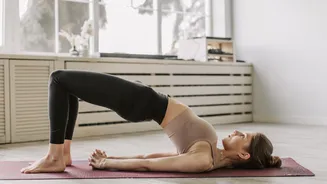
While they have 'glute' in the name, glute bridges are excellent for strengthening the entire posterior chain, which includes your hamstrings and lower back—muscles that support your thighs in almost every movement. Strong hamstrings are crucial for knee stability and balancing the power of your quadriceps. Glute bridges are a low-impact exercise performed lying on your back, making them accessible for all fitness levels and a great way to activate these key muscles without straining your joints. They also counteract the negative effects of prolonged sitting by opening up the hips.
Single-Leg Deadlifts for Balance and Hamstrings
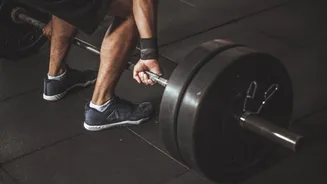
Another fantastic unilateral exercise is the single-leg deadlift. This movement is a champion for building strength in the hamstrings and glutes while seriously challenging your balance and core stability. Unlike a traditional squat, which is very quad-dominant, this exercise focuses on the muscles at the back of your legs. Mastering the bodyweight version is key before adding any weight. The focus is on a controlled hinging motion at the hips, keeping your back straight as you lower your torso and extend one leg behind you. It not only builds strength but also improves your body's coordination and proprioception (your sense of where your body is in space).
Targeting Inner and Outer Thighs
To round out your thigh workout, it's important to include movements that specifically target the adductor (inner) and abductor (outer) thigh muscles. Side-lying leg raises are a simple yet effective way to work the outer thighs and hips. For the inner thighs, exercises like clamshells (which can be done with or without a resistance band) or standing adductor leg lifts are excellent choices. Strengthening these often-neglected muscles contributes to better knee stability, improved balance, and a more sculpted overall leg appearance.
Structuring Your At-Home Workout
You don't need to do every exercise every day. A smart approach is to rotate them. You could dedicate two or three non-consecutive days a week to lower-body training. On one day, you might focus on squats and forward lunges. On the next, you could perform glute bridges, single-leg deadlifts, and lateral lunges. A simple routine could involve picking three to four exercises per session, performing 3 sets of 10-15 repetitions for each. Listen to your body, focus on maintaining proper form, and gradually increase the difficulty as you get stronger. The goal is consistency and variety, not exhaustion.