





The Co-Living Conundrum
In bustling Indian cities like Mumbai, Bengaluru, or Delhi, co-living has become a popular lifestyle choice for students and young professionals. It offers affordability and community but often at the cost of personal space. The typical shared apartment
can feel cluttered and lacking in privacy, where the living room doubles as a workspace and personal belongings spill over into common areas. This constant negotiation of space and privacy is a daily reality for many, making the home feel less like a sanctuary and more like a puzzle with too many pieces.
Enter Modular Furniture: The Smart Solution
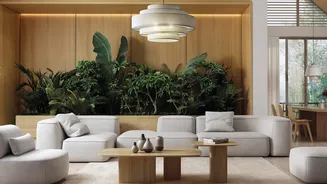
This is where modular furniture comes in, not just as a trend, but as a practical necessity. Unlike traditional, bulky furniture, modular pieces are designed to be flexible, multifunctional, and adaptable. They consist of individual units that can be arranged, reconfigured, and combined to fit your specific needs and the exact dimensions of your room. This adaptability is a game-changer in compact urban homes, allowing you to create a personalized environment that works for you.
Maximising Utility in Every Corner
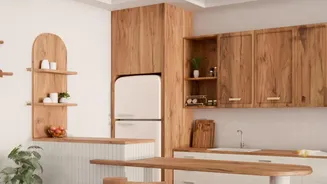
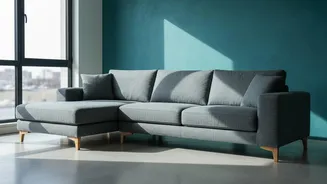
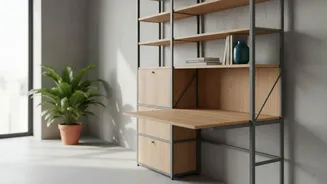
The primary benefit of modular furniture is its incredible utility. In a small apartment, every piece must justify its existence, and multifunctional furniture is the undisputed champion. A sofa-cum-bed, for instance, transforms a living area into a guest room in seconds. A coffee table with a lift-top can become a dining surface or a comfortable workstation. Beds with hydraulic lift mechanisms or built-in drawers offer enormous storage capacity for bedding, luggage, and seasonal items, effectively eliminating the need for an extra cupboard. Wall-mounted desks can be folded away when not in use, preserving precious floor area and keeping the space feel uncluttered.
Creating Privacy in a Shared World
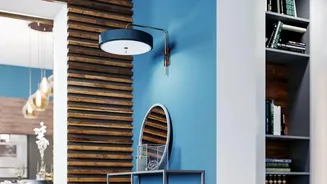
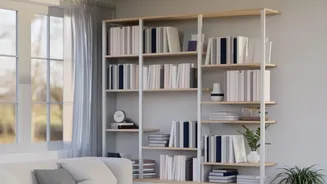
Privacy is a luxury in most co-living setups, but modular furniture can help you create it. Tall, open-backed shelving units are a perfect example. They can act as stylish room dividers, visually separating your bed from a common area or creating a distinct work zone without building a wall. This creates a sense of a private nook, a psychological boundary that is crucial in a shared home. Even a strategically placed modular wardrobe or a slim console table can help define personal territory. For bedrooms, sliding door wardrobes are ideal as they don't require clearance space to open, making them perfect for tight corners next to a bed.
More Than Just Function: Flexibility and Style
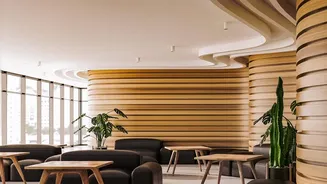
Beyond pure function, modular furniture offers long-term value and style. Its inherent flexibility means it can evolve with you. If you move to a new apartment, you don't need to buy new furniture; you can simply reconfigure your existing pieces to fit the new layout. If a component gets damaged, you can often replace just that single module instead of the entire set. Aesthetically, modern modular designs are sleek, minimalist, and designed to make spaces feel lighter and more open. By keeping floors clear with wall-mounted units and using pieces with clean lines, you create an illusion of spaciousness that transforms the feel of the entire apartment.