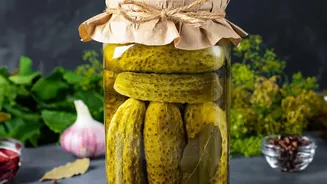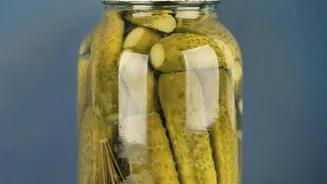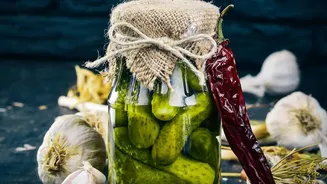

The Gut-Friendly Difference: Fermented vs. Vinegar Pickles
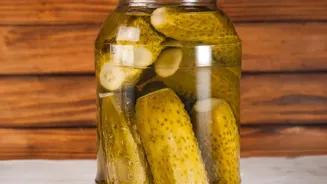
Most pickles you find on the shelf are preserved in a vinegar brine. While tasty, this process is quick and primarily about preservation through acidity. Fermented pickles, on the other hand, are a product of lacto-fermentation. This traditional method
uses a saltwater brine, which creates the perfect environment for beneficial bacteria, like Lactobacillus, to thrive. These microorganisms convert sugars in the vegetables into lactic acid, which naturally preserves the pickles and gives them their characteristic sour flavour. The result is a pickle that is alive with probiotics—beneficial microbes that can help balance your gut microbiome, support digestive health, and even boost your immune system.
Gathering Your Simple Ingredients and Tools
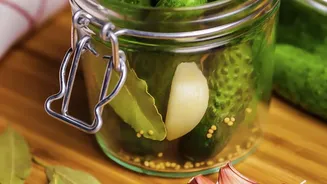
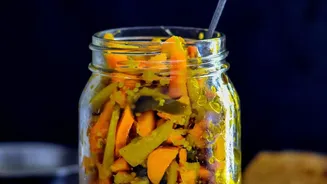
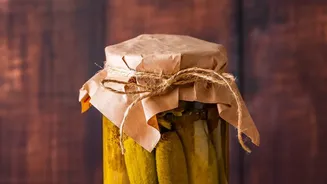
The beauty of fermented pickles lies in their simplicity. You don’t need any special oils or complicated equipment. All you need are a few basic items: Vegetables: Cucumbers are classic, but you can also ferment carrots, green beans, cauliflower, or radishes. Use the freshest, firmest produce you can find for the crunchiest results. Water: Use chlorine-free water, as chlorine can inhibit the growth of good bacteria. Filtered or distilled water is ideal. Salt: Choose a salt without iodine or anti-caking agents, which can interfere with fermentation. Sea salt, pickling salt, or kosher salt are excellent choices. Spices (Optional): Fresh dill, garlic cloves, mustard seeds, and black peppercorns are traditional flavourings. You can also add grape, oak, or horseradish leaves, as their tannins help keep the pickles crisp. * Equipment: A large glass jar is all you really need. You will also want a smaller glass jar, fermentation weight, or even a clean stone to keep the vegetables submerged under the brine.
Perfecting Your Saltwater Brine
The brine is the most critical element of lacto-fermentation. The right salt concentration is essential—it prevents harmful bacteria from growing while allowing the beneficial Lactobacillus to flourish. A general rule for vegetables like cucumbers is a 3.5% to 5% salt solution. A 5% brine is often recommended for cucumbers because their high water content will dilute the brine over time. To make a 5% brine, you would dissolve 50 grams of salt in 1 litre (1000 grams) of water. Stir the salt into the water until it is completely dissolved before pouring it over your vegetables.
A Step-by-Step Guide to Fermentation
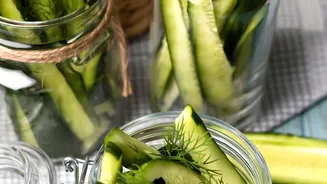
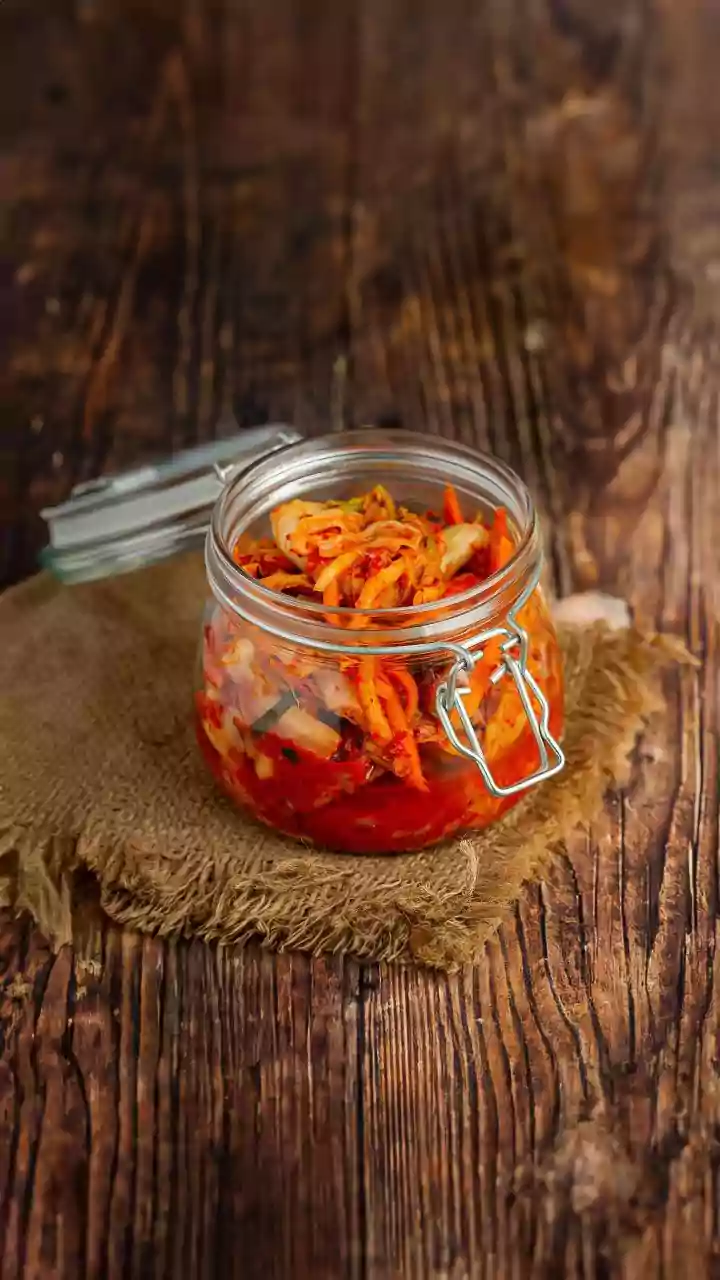
1. Prepare Your Vegetables: Wash your cucumbers or other vegetables thoroughly. You can leave them whole, cut them into spears, or slice them into rounds. Trimming the blossom end of cucumbers is recommended as it contains enzymes that can lead to mushy pickles. 2. Pack the Jar: Place your optional spices and any tannin-rich leaves at the bottom of your clean glass jar. Tightly pack your vegetables into the jar. 3. Add the Brine: Pour the prepared saltwater brine over the vegetables, ensuring they are completely covered. Leave about an inch of headspace at the top of the jar. 4. Keep it Submerged: This is crucial. Any vegetable matter exposed to air can develop mould. Use a fermentation weight or a smaller, water-filled jar to keep everything pushed down below the surface of the brine. 5. Cover and Wait: Loosely cover the jar with its lid or a cloth secured with a band. You want fermentation gases to escape. Place the jar on a plate to catch any potential overflow and leave it at room temperature, away from direct sunlight, for 3 to 7 days or longer, depending on your taste preference. You will see bubbles forming, and the brine will become cloudy—this is a sign that fermentation is working.
Troubleshooting: Is That White Film Okay?
During fermentation, you might notice a white film on the surface. Don't panic; this is usually harmless Kahm yeast. Kahm yeast is not mold and looks like a flat, white, or creamy film. While it's safe, it can impart a yeasty flavour, so it's best to skim it off as you see it. Mold, on the other hand, is fuzzy and can be green, black, or blue. If you see mold, it is a sign of contamination, and the entire batch must be discarded, as its roots can penetrate deep into the food. The key to preventing both is keeping your vegetables fully submerged in the brine, as both Kahm yeast and mold need oxygen to grow.