





The Mid-Day Munchie Trap
It’s a familiar story for office-goers across India. The time between lunch and leaving for home can feel endless, and our brains crave a quick energy boost. This is when we are most vulnerable to the lure of easily accessible but unhealthy options like
fried snacks, sugary biscuits, and greasy samosas. While they provide a momentary spike in energy, it’s often followed by a crash, leaving you feeling sluggish and unproductive. The high salt, refined flour, and unhealthy fats contribute to long-term health issues. The key isn't to fight the urge to snack, but to outsmart it with better choices.
The Rise of the Millets: Why Ragi and Jowar?
Enter the humble yet mighty millets. Grains like ragi (finger millet) and jowar (sorghum) have been staples in Indian diets for centuries, and for good reason. Ragi is a nutritional powerhouse, celebrated for its high calcium content, which is crucial for bone health. It is also rich in dietary fibre, which aids in digestion and helps you feel full for longer, preventing overeating. Jowar is another star performer. Naturally gluten-free, it's gentle on the digestive system and packed with antioxidants, protein, and essential minerals like iron and magnesium. Both millets have a low glycemic index, meaning they release sugar into the bloodstream slowly, providing sustained energy without the spikes and crashes associated with refined carbs.
Roasted, Not Fried: The Method Matters
Simply choosing a snack made from a healthy grain isn't enough; how it's prepared is just as important. Most conventional chips are deep-fried, a process that loads them with unhealthy fats and excess calories. Roasted or baked snacks, on the other hand, use dry heat to achieve that satisfying crunch with minimal oil. This simple switch dramatically reduces the fat and calorie content, making snacks like roasted ragi chips or baked jowar puffs a far superior choice. You get the crunch you crave without the post-snack guilt and lethargy.
Your New Office Snack Roster
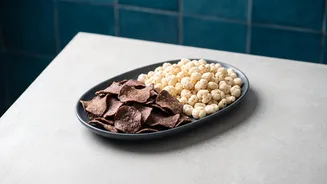
It's time to restock your desk drawer. Beyond just ragi and jowar, a whole world of healthy Indian snacks awaits. Here are some top contenders: Roasted Ragi Chips and Jowar Puffs: These are excellent starting points. They offer more fibre and nutrients compared to potato chips. Look for baked versions to keep fat content low. Roasted Makhana (Fox Nuts): Light, crunchy, and low in calories, makhana is rich in protein and fibre. A simple dry roast with a sprinkle of salt and pepper makes for a perfect, mess-free snack. Roasted Chana (Chickpeas): A timeless classic, roasted chana is an inexpensive and incredibly effective snack, packed with protein and fibre that keeps hunger at bay. Khakhra: This thin, crispy, baked flatbread from Gujarat is a fantastic low-calorie option. Enjoy it plain or with a simple dip. Mixed Nuts and Seeds: A small handful of almonds, walnuts, and seeds provides a powerful mix of healthy fats, protein, and sustained energy. Just be mindful of portion sizes as they are calorie-dense.
How to Read the 'Healthy' Snack Label
The snack aisle is filled with clever marketing. Many products scream 'healthy', 'millet', or 'multigrain' on the front, but the real story is on the back. First, check the ingredients list. The first ingredient is the most prominent one; if it’s 'maida' or 'refined wheat flour', the snack isn't as healthy as it claims, even if it contains some millet. Second, look for the fat source—'cold-pressed oil' is better than 'refined vegetable oil' or 'palm oil'. Finally, check the sodium content; many packaged snacks are loaded with salt. A genuinely healthy snack has a short, recognizable ingredient list.