



Beyond the Surface Dust
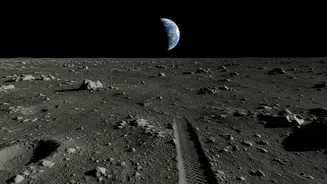
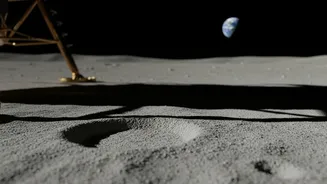
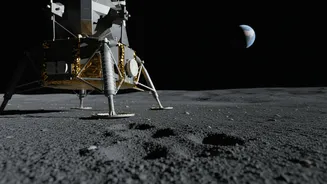
When we look at the Moon, we see a surface covered in a fine, grey powder known as regolith. This is a layer of loose rock and dust created by billions of years of meteorite impacts. While the surface itself tells a story, scientists are particularly
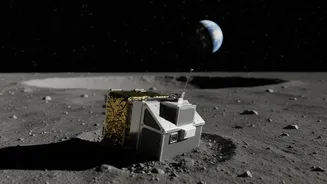
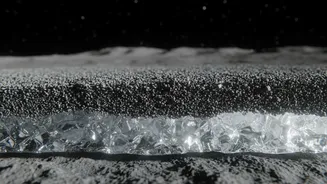
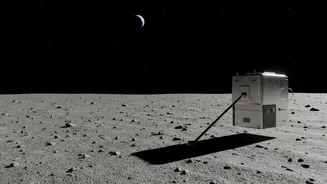
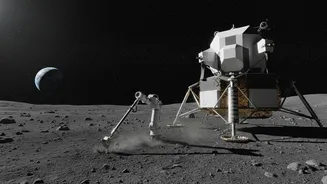
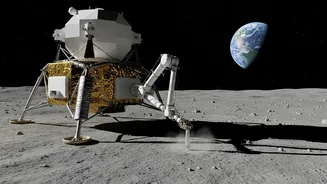
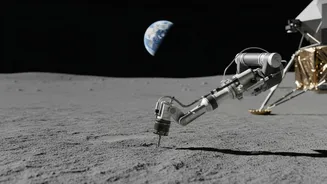
interested in what lies just a few centimetres beneath. This subsurface soil is shielded from the harsh solar radiation and extreme temperature swings that affect the top layer. An ISRO lander, much like the historic Chandrayaan-3, is equipped with instruments designed to probe this protected layer. The data it sends back offers a more pristine sample of the Moon's composition, free from the contamination of constant space weathering. It’s like getting a cleaner page from the Moon's diary.
Why the Poles are a Scientific Goldmine
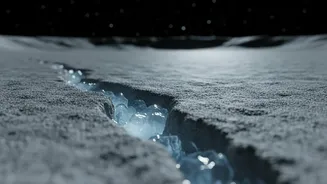
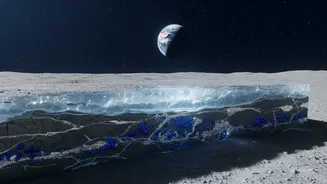
The lunar poles are unlike any other place on the Moon. Because of the Moon's slight axial tilt, some deep craters near the poles have floors that have not seen direct sunlight for billions of years. These areas are called Permanently Shadowed Regions (PSRs). Temperatures in these ultra-cold traps can plummet to as low as -250 degrees Celsius. Scientists have long theorised that these frigid craters could act as reservoirs, trapping volatile compounds—especially water ice—delivered by comets and asteroids over eons. Recent data from ISRO's Chandrayaan-2 orbiter has already provided strong evidence of subsurface ice in these polar regions, making any fresh data from a lander on the ground incredibly valuable.
The Quest for Water Ice
The number one prize in this scientific hunt is water ice. Finding significant deposits of water on the Moon would be a monumental discovery. It’s not just about providing drinking water for future astronauts. Water (H2O) can be broken down into its constituent parts: hydrogen and oxygen. These elements are the primary components of rocket propellant. Being able to 'refuel' on the Moon would dramatically lower the cost and complexity of deep space missions to Mars and beyond, making the Moon a critical pitstop for exploring the solar system. ISRO's new data will help quantify how much water might be there and how accessible it is, moving this possibility from theory to practical planning.
Decoding the Moon's Ancient Past
Beyond the search for water, the polar soil is a time capsule. The trapped ice and minerals hold a chemical record of the early solar system. By analysing this material, scientists can learn more about the types of comets and asteroids that have impacted the Moon and, by extension, the Earth. This could offer insights into how Earth's oceans formed. Furthermore, instruments like the Alpha Particle X-ray Spectrometer (APXS) and Laser-Induced Breakdown Spectroscope (LIBS) analyse the elemental composition of the soil, revealing details about the Moon's volcanic history and geological evolution. The surprising discovery of sulfur by Chandrayaan-3's rover in the south polar region showed just how much we have yet to learn from in-situ measurements.
Laying the Groundwork for Lunar Living
Every piece of data gathered on soil composition and thermal properties is a crucial step toward establishing a long-term human presence on the Moon. Understanding the soil's characteristics, such as its temperature changes and load-bearing capacity, is essential for designing habitats, landing pads, and infrastructure. Instruments like the Chandra’s Surface Thermophysical Experiment (ChaSTE) from previous missions provided the first-ever thermal profile of the lunar south pole's topsoil, revealing its surprising insulating properties. Fresh subsurface data builds on this knowledge, helping engineers develop technologies for construction and resource extraction, a field known as In-Situ Resource Utilization (ISRU). This research solidifies India’s role as a key player in enabling the next chapter of human space exploration.