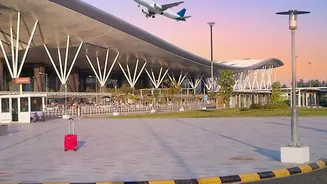









The Grand Vision of a Connected India
Imagine flying from a small town in the Himalayas to a coastal city in the south with the ease of catching a train. That's the future India is building. In early September 2026, the Civil Aviation Minister confirmed plans to invest approximately ₹30,000
crore to develop 100 new airports over the next ten years. This initiative is the next chapter of a remarkable journey that has already seen India's airport count grow from 74 in 2014 to 166. The goal is to ensure that the demand for air travel, which is booming in Tier-2 and Tier-3 cities, is met with robust infrastructure, fundamentally changing how people travel, work, and connect across the country.
UDAN: The Engine of Regional Aviation
At the heart of this transformation is the UDAN (Ude Desh ka Aam Naagrik or 'Let the Common Citizen Fly') scheme. Launched in 2016, its objective is simple but powerful: make air travel affordable and accessible. The scheme works by providing financial support, known as Viability Gap Funding (VGF), to airlines that operate flights on underserved or unserved routes. In exchange, airlines cap fares for a significant portion of seats, with the original benchmark being around ₹2,500 for a one-hour flight. This subsidy, funded jointly by the central and state governments, encourages airlines to venture into markets that would otherwise be commercially unviable, connecting dozens of new towns to the national aviation grid.
From Ambitious Plan to Active Runways
This isn't just a plan on paper. The government has approved a 'Modified UDAN' scheme that will run for ten years, from 2026-27 to 2035-36, with an outlay of over ₹28,000 crore. This new phase specifically allocates funds not just for building airports but also for their long-term operation and maintenance. Since its inception, the UDAN scheme has already operationalized hundreds of routes, connecting nearly 100 regional aerodromes, including airports, heliports, and even water aerodromes. The 100 new airports will largely be developed from existing unserved airstrips, accelerating the process and bringing scheduled flights to new communities much faster.
More Than Just Travel: Reshaping the Economy
The impact of this connectivity boom extends far beyond passenger convenience. New airports are powerful economic engines. They stimulate local tourism, create direct and indirect jobs, and make smaller cities more attractive for investment and business relocation. By connecting production hubs in the hinterlands to major markets, the scheme can boost trade and commerce. For regions like the Himalayas or remote islands, air connectivity is a lifeline, providing access to better healthcare, education, and economic opportunities that were previously out of reach. The government is also promoting a 'hub-and-spoke' model, allowing passengers from small towns to seamlessly connect to international flights via major hubs like Delhi and Ahmedabad.
Navigating the Turbulence Ahead
Despite its successes, the UDAN scheme faces significant challenges. The biggest hurdle is ensuring the long-term commercial viability of these regional routes. A 2023 audit revealed that many routes ceased operations once the three-year government subsidy period ended, raising questions about sustainable demand. Low passenger numbers have forced some recently launched airports to suspend scheduled flights, turning expensive infrastructure into 'ghost airports'. Airlines, especially smaller operators, struggle with high operational costs on these routes. Furthermore, competition from ever-improving road and rail networks presents a cheaper, and sometimes more convenient, alternative for shorter distances. For the 100 new airports to succeed, they must be backed by a clear understanding of local demand and a sustainable business model that outlasts the initial subsidies.