




The Sun's Volatile Temper
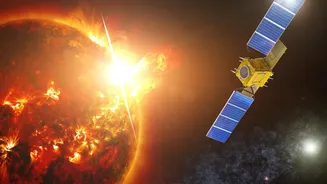
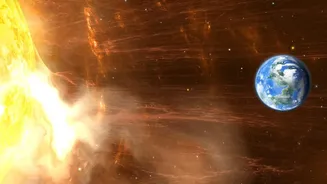
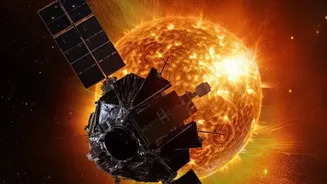
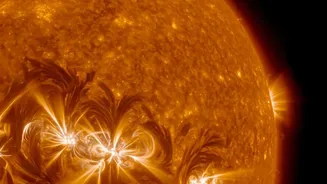
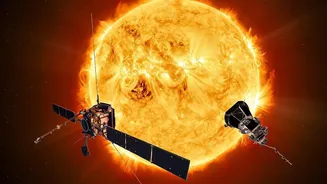
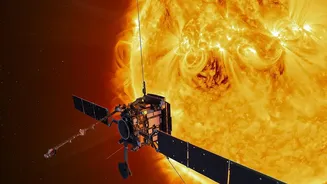
The Sun, our life-giving star, has a turbulent side. It periodically unleashes massive explosions of plasma and magnetic fields known as Coronal Mass Ejections (CMEs), or solar storms. These storms hurl billions of tonnes of solar particles into space.
While many miss Earth, a direct hit can have serious consequences. These events can trigger beautiful auroras, but they also pose a significant threat to our increasingly technology-dependent civilisation, which relies on a fragile web of satellites for everything from GPS navigation and financial transactions to global communications.
Earth's Invisible Shield
Our planet has a natural defence: the magnetosphere. This is a vast, comet-shaped region of space controlled by Earth's magnetic field. It deflects most of the solar wind and radiation that constantly flows from the Sun. However, a powerful CME can compress, distort, and inject energy into this shield, causing a geomagnetic storm. This disturbance is not just a high-altitude phenomenon; it has tangible effects right down to the ground, causing the Earth’s magnetic field to fluctuate. It is these very fluctuations that scientists can measure and analyse.
Sentinels on the Ground
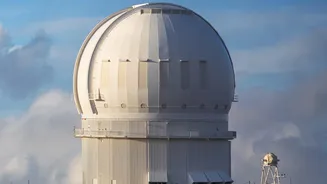
This is where ground-based observatories come in. Spread across the globe, including in remote locations from the Himalayas to the poles, is a network of highly sensitive instruments called magnetometers. These devices continuously measure the strength and direction of the local magnetic field with incredible precision. When a solar storm hits the magnetosphere, the resulting geomagnetic disturbance causes detectable variations in the magnetic field at the surface. By combining readings from many observatories, scientists can build a global picture of the storm's impact on Earth's magnetic environment.
Connecting Ground Data to Orbit
It might seem counterintuitive to look at the ground to understand a threat in space, but these ground measurements are crucial. The changes detected by the magnetometer network are fed into sophisticated computer models. These models can infer the behaviour of the vast electrical currents flowing in the ionosphere and magnetosphere far above. By analysing how the magnetic field is disturbed on the ground, scientists can map the intensity and movement of the storm in space, essentially using the entire planet as a giant sensor. This data helps predict how the storm will evolve and which regions in Earth's orbit will be most affected.
A Crucial Early Warning for Satellites
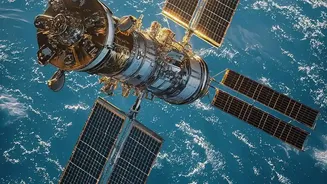
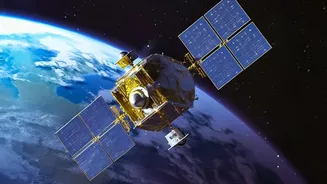
For satellite operators, this information is invaluable, providing critical lead time. Geomagnetic storms can damage sensitive electronics, disrupt communications, and even cause satellites to lose altitude. A major storm can heat and expand the upper atmosphere, increasing atmospheric drag on satellites in Low Earth Orbit (LEO). This can shorten their operational life or, in severe cases, cause them to re-enter the atmosphere prematurely. With advance warning from ground magnetometer data, operators can take protective measures like powering down non-essential systems, reorienting satellites to be less exposed, or planning manoeuvres to counteract drag.
Why This Matters for India
As a growing space power with critical infrastructure in orbit, India has a significant stake in space weather monitoring. Organisations like the Indian Institute of Astrophysics and the Indian Space Research Organisation (ISRO) operate observatories, such as the Kodaikanal Solar Observatory, and are expanding capabilities with new facilities. These efforts, combined with data from space-based observatories like Aditya-L1, contribute to the global network. Ensuring the safety of India's communication, navigation, and earth observation satellites is vital for national security, economic growth, and the continued expansion of the Digital India initiative.