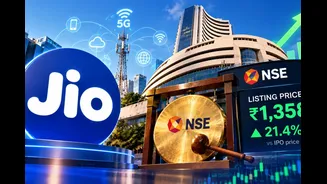







Jio Platforms' stunning 21% surge on its first day of trading is more than just a successful IPO. It’s a powerful statement from institutional investors about their confidence in not just one company, but the future of Indian telecommunications.
More Than Just a Telecom Play
The massive
institutional demand, which saw the IPO subscribed nearly seven times over with qualified institutional buyers bidding for over 14 times the shares reserved for them, wasn't just a vote for a telecom operator. Investors are backing an integrated digital ecosystem. Jio Platforms has successfully positioned itself not as a utility company that simply provides data, but as a comprehensive digital gateway for over 500 million customers. This ecosystem includes mobile and fixed broadband, but also extends into digital entertainment, cloud gaming, smart home solutions, enterprise services, and AI-powered applications. This strategy of layering high-value digital services on top of a massive connectivity base is what has captured the imagination of global finance.
The 5G and Data Dominance Bet
At the heart of this confidence is Jio's aggressive and widespread 5G rollout. With hundreds of millions of 5G subscribers already on its network, Jio has established itself as the largest 5G operator in a single country outside of China. This infrastructure is the foundation for future growth. Investors are betting on Jio's ability to monetize this network through higher average revenue per user (ARPU) as more Indians consume more data, which already stands at over 60% of India's total wireless data traffic. The focus on fixed wireless access (FWA) to expand home broadband into areas without costly fibre deployments is another key growth driver that promises to connect millions more households, further cementing Jio's market leadership.
A Profitable Growth Engine
For years, the story of Indian telecom was one of intense price wars and massive capital expenditure. The narrative that resonated with investors during the IPO is that Jio Platforms is now moving past its most capital-intensive phase. Recent financial data shows that while revenue and operating cash flow are increasing, capital expenditure on the network buildout is declining. This shift means the company is turning into a formidable cash-generating machine. The combination of a massive, locked-in subscriber base, declining capex, and the potential for steady tariff hikes presents a compelling financial model that promises profitability and long-term value creation.
A Bellwether for Digital India
The success of Jio's listing transcends the company itself; it acts as a powerful bellwether for the entire Indian technology sector. In a global environment where investors are sometimes cautious about tech stocks, the overwhelming demand for Jio Platforms signals a deepseated belief in the 'India Growth Story'. The country is the world's second largest telecommunications market, with over a billion internet users and rapidly expanding smartphone penetration. This successful mega listing demonstrates the Indian market's capacity to absorb large offerings and validates the government's 'Digital India' initiative, boosting confidence for other Indian tech companies aspiring to go public.
Pressure on the Competition
Jio’s successful IPO and fortified war chest will undoubtedly intensify the competitive landscape. With the Indian telecom market now largely consolidated between three major private players, Jio's ability to raise significant capital puts immense pressure on rivals like Bharti Airtel and Vodafone Idea. While a rising tide can lift all boats, Jio's aggressive expansion into enterprise services, home broadband, and other digital domains means the battleground is no longer just about mobile subscribers. The competition will need to innovate and invest strategically to keep pace with a rival that is now publicly validated and flush with capital, aiming to capture a huge share of India's projected $1.4 trillion digital economy.