


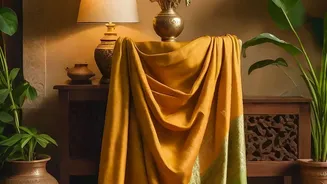
More Than Just Vintage Fashion
The trend of upcycling a grandmother's saree is fundamentally different from buying vintage clothing off a rack. This is not about anonymity; it's about deep personal history. When a Gen Z-er decides to transform an old Kanjivaram or Banarasi, they are choosing
to wear a story. It’s a conscious decision to carry forward a piece of their grandmother's life—her wedding day, a long-ago festival—into their own modern celebrations. This act transforms the garment from a forgotten relic into a living piece of family history, creating a tangible connection to their roots. The practice has become a unique way to celebrate one's heritage, moving beyond being a sign of frugality to a statement of valuing what you already possess.
A Narrative Woven in Silk
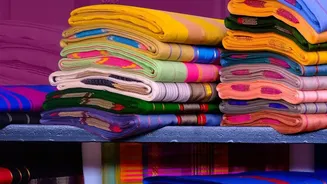
A grandmother's silk saree is an emotional artifact. The fabric holds the faint scent of sandalwood from an old trunk, the memory of family gatherings, and the texture of a handloom weave from a bygone era. For many, these sarees are priceless heirlooms wrapped in tradition and love. By repurposing them, the younger generation isn't just creating a new outfit; they are giving the memories woven into the fabric a new stage. It's an intimate act of preservation, ensuring the stories and blessings associated with the garment continue to be a part of the family's celebrations, just in a different form.
The Gen Z Spin on Tradition
So, why does this trend resonate so strongly with Gen Z? This generation is defined by its quest for authenticity, sustainability, and individuality in a world dominated by fast fashion. Upcycling a family heirloom checks all three boxes. It’s a rebellion against mass-produced festive wear, offering a one-of-a-kind outfit that no one else can replicate. Furthermore, Gen Z approaches tradition with fewer fixed rules, feeling empowered to mix heritage with contemporary styling. They see a six-yard drape not as a rigid costume, but as a canvas for self-expression, whether it's paired with sneakers or reworked into a completely new silhouette.
From Saree to Sharara and Beyond
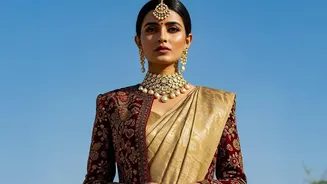
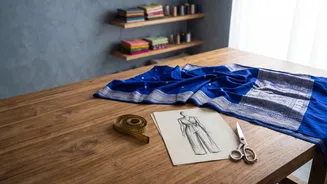
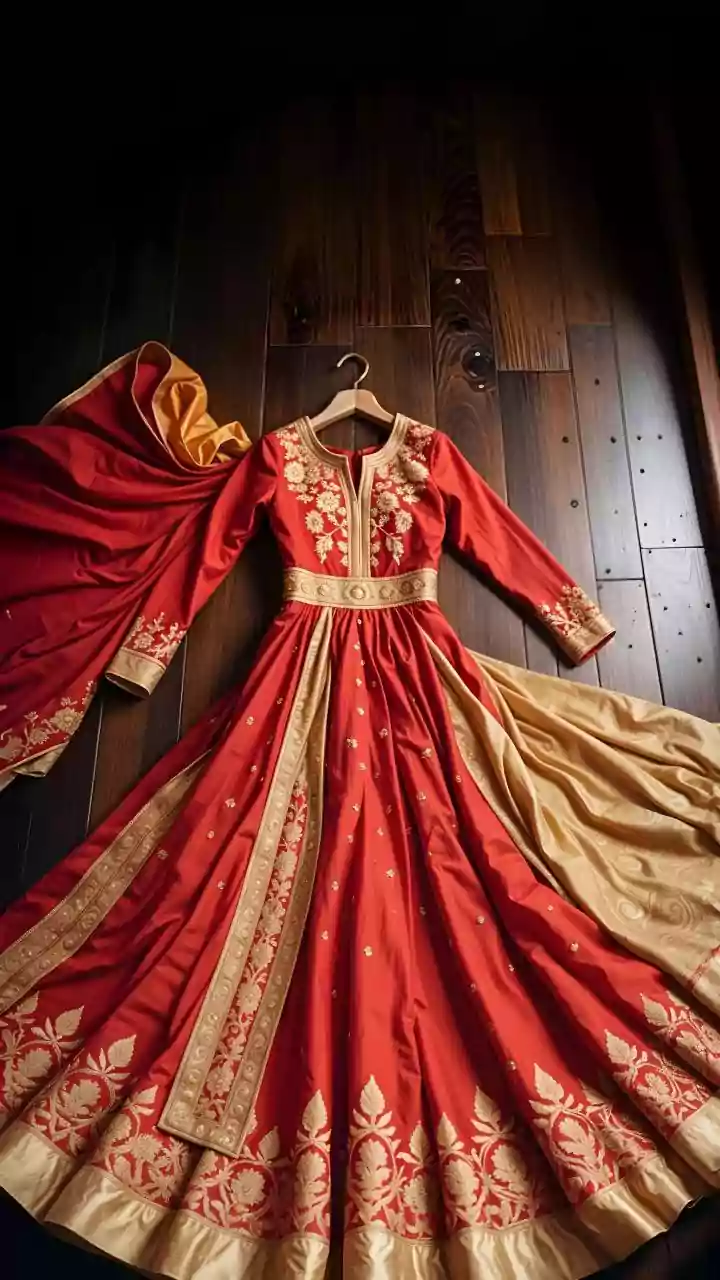
The creative possibilities are endless. That nine-yard wonder can be deconstructed and reborn into a stunning variety of modern festive wear. Old silk sarees are finding new life as elegant lehengas, chic co-ord sets, stylish jackets, flowing Anarkali dresses, and even sharp pantsuits. The intricate border of a saree might become the highlight on a new skirt's hem, while the richly decorated pallu could be transformed into a statement blouse or a stylish corset top. This process often involves collaboration with local tailors or specialized designers who understand how to honour the fabric's integrity while giving it a contemporary form, ensuring the final piece is both beautiful and wearable.
A Sustainable and Soulful Choice
Beyond the powerful emotional and cultural connections, upcycling is an inherently sustainable act. The Indian textile industry is one of the largest in the world, and the tradition of reusing fabric has always been a part of the culture. Today, this practice serves as a powerful antidote to the environmental waste generated by the fast fashion cycle, where festive outfits are often bought for a single occasion and then discarded. By choosing to repurpose an old saree, Gen Z is making an eco-conscious statement. They are reducing textile waste and preserving not just family memories, but also the precious resources and craftsmanship that went into creating the original garment.