






From Forced Remote Work to a Lifestyle Choice
What started as a necessity during the global pandemic has blossomed into a conscious movement. In the early 2020s, remote work was a crisis response. Today, it’s a strategic choice for many Indian professionals in sectors like tech, creative services,
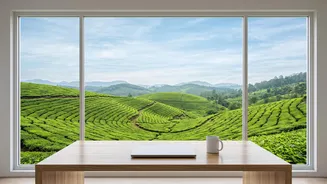
and freelancing. They are trading their fixed home offices for the fluid backdrop of mountains, beaches, and quiet towns. This shift is less about escaping the office and more about reclaiming work-life balance and avoiding urban burnout. Instead of waiting for annual leave, professionals are logging in for a full workday and then using their evenings and weekends to explore a new environment, whether it's a serene coffee estate in Coorg or a vibrant cafe in Goa.
The New Map of Workation Hotspots
While Goa and Manali remain popular for their established infrastructure and digital nomad communities, the map for workations has expanded significantly. Professionals are now exploring offbeat destinations that offer reliable connectivity without the crowds. Hill stations in Uttarakhand like Rishikesh and Lansdowne, and quieter corners of Himachal Pradesh such as the Tirthan Valley, are gaining traction. In the south, places like Varkala, Coorg, Wayanad, and Chikmagalur offer a tranquil setting amidst nature. The key criteria are no longer just a pretty view, but practicalities like stable Wi-Fi, power backup, and comfortable workspaces—factors that destinations are increasingly catering to. Even cities like Udaipur and Jaipur are becoming popular for those who want urban comforts with a change of scenery.
The Infrastructure Enabling the Trend
This evolution is supported by a growing ecosystem of services. The co-living and co-working market in India is booming, projected to expand significantly by the early 2030s. These spaces offer more than just a desk and a chair; they provide a community, networking opportunities, and hassle-free living with bundled amenities. In cities and tourist hubs, a surge in work-friendly cafes with high-speed internet has made it easier than ever to find a temporary office. For longer stays, homestays and service apartments are adapting, advertising stable Wi-Fi and dedicated workspaces to attract the workation crowd. The reliability of mobile networks, especially with widespread 5G access, also serves as a crucial backup, making even more remote locations viable.
The Corporate Perspective: A Spectrum of Acceptance
Indian companies are still navigating this new reality, with responses ranging from full-throated support to cautious tolerance. Many organisations, particularly in the IT and services sectors, have adopted formal hybrid models, giving employees the flexibility to split time between office and remote locations. These policies, however, are often distinct from a true 'work from anywhere' approach. While there isn't a specific law governing workations, company policies are paramount. Some businesses view workations as a tool for improving employee well-being and productivity, seeing a change of scenery as a way to boost creativity and reduce burnout. Others remain hesitant, citing concerns about productivity, data security, and the challenges of managing a dispersed team. As a result, many workations happen in a grey area, where employees use their remote work flexibility without a formal company policy sanctioning travel.
The Realities on the Ground
Despite the idyllic images on social media, a successful workation demands discipline and planning. The lines between work and leisure can blur, leading to a feeling of being 'always on'. Professionals must juggle deadlines and meetings while navigating the distractions of a new place. The financial aspect is also a key consideration. While some destinations can be affordable for long stays, with monthly costs ranging from ₹20,000 to ₹70,000, it requires careful budgeting. The most successful workationers are those who set clear boundaries, ensuring they deliver on their professional commitments while making the most of their new surroundings. The pretty view is a bonus, but reliable internet, a comfortable chair, and a quiet corner remain the true essentials of remote work.