





It’s a headline that stops you in your tracks: cancer becoming a 'relic of the past' in just 10 years. This bold prediction comes from Dario Amodei, the CEO of AI-powerhouse Anthropic. Is this the dawn of a new age of miracles, or just tech hype?
The Proclamation That Sparked Debate
In a
statement that captured global attention, Anthropic CEO Dario Amodei suggested that rapid advances in artificial intelligence could effectively solve some of humanity's most devastating diseases—including cancer, Alzheimer's, and heart disease—within a decade. His argument is that AI can supercharge biological research, drug discovery, and medical breakthroughs, compressing processes that normally take decades into a much shorter timeframe. This isn't a one-off comment; Amodei has consistently argued that if applied correctly, AI could usher in an 'age of miracles'. He’s not entirely alone in his optimism. Leaders at other major tech firms like Google DeepMind have echoed similar sentiments, pointing to AI's ability to tackle massive biological puzzles.
How AI Is Already Fighting Cancer
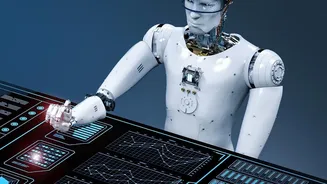
To understand the hope, we need to look at what AI is already doing. It's not science fiction; AI is a powerful tool in oncology today. In diagnostics, AI algorithms are being trained to read medical images like mammograms and CT scans with incredible accuracy, sometimes spotting signs of cancer that the human eye might miss. This is already improving early detection rates, which is one of the most critical factors for survival. Beyond imaging, AI is personalising treatment. By analysing a patient's unique genetic data and tumour profile, machine learning models can help predict how they will respond to certain drugs, moving away from a trial-and-error approach. This is the foundation of precision medicine, which aims to give the right treatment to the right patient at the right time.
Accelerating the Search for New Drugs
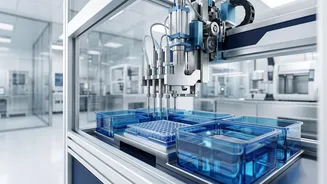
The most significant promise of AI lies in drug discovery, a process that is notoriously slow and expensive. AI models can analyse vast libraries of scientific literature and genetic data to identify new potential drug targets that humans might never find. A prime example is Google DeepMind's AlphaFold, which has predicted the structure of over 200 million proteins—a fundamental breakthrough for designing new medicines. Anthropic itself has partnered with biotech firms to accelerate research, using its AI to design molecules and improve potential drug candidates at a speed previously unimaginable. By identifying more promising candidates for testing, AI could dramatically reduce the failure rate and cost of developing new cancer therapies.
A Reality Check From Doctors and Scientists
However, the medical community has responded with considerable skepticism. Many oncologists and pharmaceutical executives argue that a 10 year timeline is wildly unrealistic. They point out that cancer is not one disease but hundreds of complex diseases, each with its own biology. While AI can speed up the initial 'discovery' phase, it cannot bypass the biggest bottleneck: clinical trials. Any potential cure must still go through years of rigorous testing in animals and humans to prove it is both safe and effective. As one pharmaceutical executive bluntly put it, such timelines are 'complete BS', highlighting that no AI designed drug has yet been fully approved for clinical practice. The consensus is that AI is a revolutionary tool for research, not a magic wand for an instant cure.
What This Means for India
In India, the potential impact of AI in oncology is immense, even without a 'cure'. India faces a significant cancer burden, compounded by challenges like late diagnosis and unequal access to specialists. Here, AI's immediate value is practical : making expertise scalable. AI powered diagnostic tools can support doctors in tier -2 and tier -3 cities , providing a reliable 'second opinion' on scans and reports . Several Indian hospitals and startups are already deploying AI to improve screening accuracy , automate workflows , and make care more efficient . For instance , a Bengaluru -based startup has developed an AI tool to detect oral cancer from smartphone images . This ability to democratise expertise and enable earlier detection could save countless lives across the country , representing a more immediate and tangible 'miracle' for Indian healthcare.