



The High Stakes of Human Spaceflight
Sending humans to space is exponentially more complex than launching a satellite. The core objective shifts from merely placing a machine in orbit to ensuring the crew returns home safely. This principle guides every step of the Gaganyaan programme, India's
flagship mission to demonstrate human spaceflight capability. The Indian Space Research Organisation (ISRO) has undertaken an exhaustive testing regime, recognising that a single failure is not an option. This meticulous approach involves thousands of ground tests, simulations, and validation exercises for every component, from the launch vehicle to the capsule's life support systems. This relentless focus on safety is why the first crewed flight will only happen after multiple uncrewed missions have proven the entire system is reliable.
Uncrewed Flights: The Ultimate Dress Rehearsal
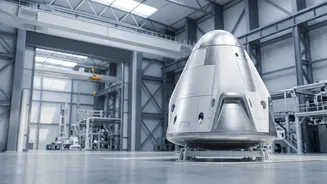
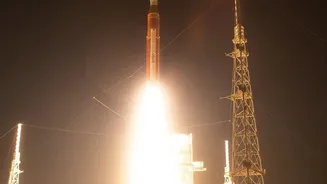
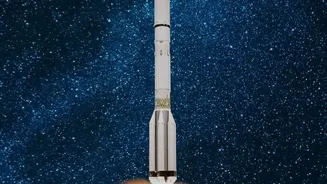
Before Indian astronauts, or 'Gaganauts', board the capsule, ISRO will conduct a series of uncrewed flights to validate every phase of the mission. The first of these, Gaganyaan-1 (G1), is targeted for late 2026. This mission will be a full dress rehearsal, testing the performance of the human-rated LVM3 rocket, the orbital module, and all re-entry and recovery procedures. Aboard the G1 mission will be Vyommitra, a humanoid robot designed to mimic crew activity, monitor cabin parameters, and provide valuable data on the conditions astronauts will experience. These uncrewed missions are non-negotiable steps to gain confidence in the technology and ensure that every system, from launch to splashdown, performs exactly as designed.
Testing the Parachutes: The Integrated Air Drop Tests
One of the most critical phases of any crewed mission is the safe return to Earth. To ensure this, ISRO has been conducting a series of Integrated Air Drop Tests (IADT) to validate the parachute-based deceleration system. In these tests, a crew module replica is dropped from a high altitude by an Indian Air Force Chinook helicopter to simulate its descent after re-entering the atmosphere. The system must then autononomously deploy a sequence of parachutes to slow the module for a safe splashdown in the sea. Successful completion of these tests, including IADT-01 and IADT-02 in 2025 and 2026 respectively, confirms the reliability of the recovery systems, which are essential for crew safety.
Ensuring a Safe Landing and Recovery
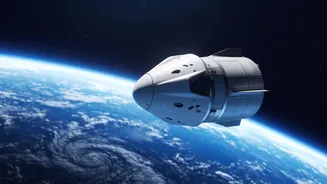
Beyond just slowing down, the crew module must be able to handle the final moments of the mission safely. ISRO recently completed several key qualification tests in July 2026 to validate these final-stage systems. One test focused on the Crew Module Up-righting System (CMUS), a flotation system using gas-inflated bags to ensure the capsule stays upright after splashing down in the ocean, regardless of sea conditions. Another validated the separation of the apex cover, a shield that protects the parachutes and must be jettisoned cleanly for them to deploy. A third test confirmed the clean disconnection of the umbilical cords connecting the crew module to the service module before re-entry. Passing these tests proves the mechanical systems will perform reliably when astronauts are not in control.
The Foundation for India's Future in Space
Successfully completing these safety milestones does more than just clear the path for the first crewed Gaganyaan flight, currently anticipated in 2027. It lays the technical and operational foundation for India's long-term space exploration ambitions. Each validated system is a building block for future, more complex missions. The experience gained from Gaganyaan is directly aimed at enabling the establishment of the 'Bharatiya Antariksha Station', India's own space station, by 2035. Looking further, these proven capabilities are essential for the ultimate goal of landing an Indian astronaut on the Moon by 2040. Therefore, every successful test is not just about one mission; it's a confident step towards securing India's place as a major power in global space exploration.