





A New Era for Indian Space
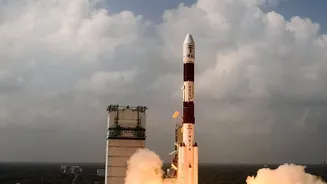
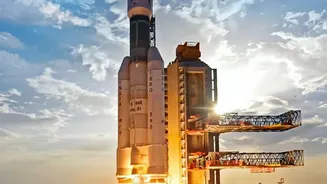
For decades, India's journey into space was synonymous with the Indian Space Research Organisation (ISRO). From its first sounding rocket launch to the celebrated Chandrayaan missions, ISRO has been the sole custodian of the nation's cosmic ambitions.
However, the landscape is undergoing a dramatic transformation. Historic policy decisions in recent years, particularly the establishment of the Indian National Space Promotion and Authorisation Centre (IN-SPACe) in 2020, have thrown open the doors to private enterprise. This single-window agency is designed to facilitate, authorise, and supervise the activities of non-governmental entities, effectively creating a partnership model where ISRO can focus on deep-space exploration and research, while private players drive commercialisation. The result has been an explosion in the country's space startup ecosystem, with around 440 new companies registered by mid-2026, all eager to build, launch, and operate their own space-based services.
The Race to Build India's Private Rovers
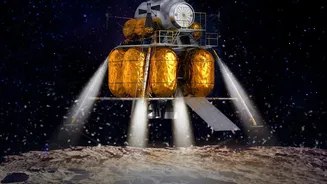
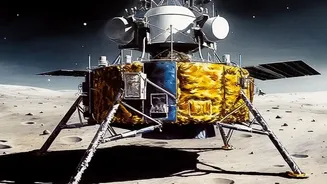
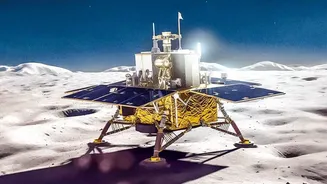
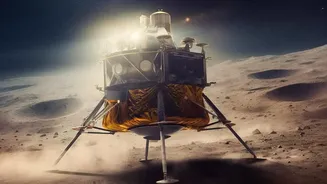
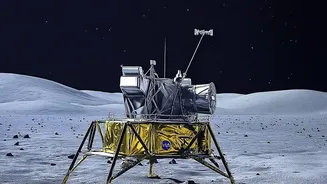
Among the most exciting new ventures is the push to develop privately-funded lunar rovers. While several companies are contributing components or working on satellite technology, a few are setting their sights directly on the Moon's surface. Bengaluru has emerged as a major hub for this activity. One of the pioneering names is TeamIndus, a company born from the Google Lunar XPRIZE competition. Though the prize ended without a winner, TeamIndus (operating as Axiom Research Labs) has continued to develop its lunar lander and a small rover, the ECA (Ek Choti Si Asha). More recently, companies like ORBITBeyond have established engineering centres in India, specifically to design and manufacture lunar rovers and landers, drawing on the expertise of former ISRO engineers. Other startups, while not exclusively focused on rovers, have founders with deep experience in the field. For instance, a co-founder of Kepler Aerospace, a startup that recently raised significant funding for a satellite constellation, was previously involved in a lunar nano-rover project. These companies represent the first wave of a commercial push to place Indian-built private hardware on the Moon.
What Makes a 'Budget' Lunar Rover?
The term 'budget' is relative, as any lunar mission is an expensive undertaking. However, Indian startups are leveraging the nation's reputation for frugal engineering, a principle famously demonstrated by ISRO's cost-effective Mars and Moon missions. The cost-saving strategies are multi-faceted. Firstly, these rovers are often much smaller and lighter, with payloads weighing as little as a few kilograms. This significantly reduces launch costs, the single biggest expense in any space mission. Secondly, many startups are adopting principles from the tech industry, using off-the-shelf components where possible and focusing on agile development and advanced software to reduce complexity. Furthermore, the goal is not to replicate the massive, multi-billion-dollar rovers of state agencies but to create smaller, fit-for-purpose vehicles. The business model itself, based on a 'collaborative consumption' or 'space-as-a-service' approach, spreads the cost across multiple clients who share a ride on the same mission.
The Lunar Logistics Business
So, who are the customers for these private lunar rovers? The market for 'commercial payloads' is diverse and growing. It includes universities and research institutions that want to conduct experiments on the lunar surface without the massive overhead of a national mission. It also includes other technology companies wanting to test their hardware—from new types of sensors to communication systems—in the harsh lunar environment. Foreign space agencies are also potential clients, using commercial services like NASA's Commercial Lunar Payload Services (CLPS) program to quickly and cheaply send instruments to the Moon. Essentially, these Indian startups are not just building rovers; they are building a lunar logistics service. Their product is the end-to-end delivery and operation of a payload on the Moon, a service that could become routine as the global space economy shifts towards a production-line model for lunar missions.
The Challenges Ahead
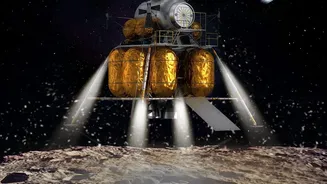
The path to the Moon is fraught with immense technical and financial challenges. Landing a spacecraft softly on another celestial body remains one of the most difficult feats in engineering, a fact underscored by the failures of several recent international missions. Securing funding for such capital-intensive projects is a constant hurdle, though private investment in India's space sector has seen a significant surge, reaching over $600 million by early 2026. Beyond funding, startups must navigate a complex regulatory environment and compete with established international players, many of whom are also targeting the commercial lunar market. The success of these ventures will depend not only on their technical innovation and business acumen but also on continued government support and a robust partnership with ISRO, leveraging the national agency's decades of experience to guide this new commercial chapter.