



What is a Superhabitable Planet?
In the cosmic lottery of life, Earth has long been seen as the grand prize winner. It has liquid water, a protective atmosphere, and a stable climate—all the ingredients we believe are necessary for life to emerge and thrive. But a growing number of scientists,
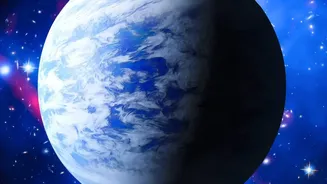
led by researchers like Dirk Schulze-Makuch, a geobiologist at Washington State University, are challenging this Earth-centric view. They propose the existence of 'superhabitable' planets, worlds that aren't just 'as good as' Earth, but potentially even better at fostering a rich and diverse biosphere. The concept, first detailed in a 2014 paper in the journal Astrobiology, shifts the goal from finding Earth’s twin to identifying worlds with characteristics that could lead to greater biodiversity and biomass. It’s a provocative idea: that our home, teeming with life, might only be 'good enough', not optimal.
The 'Better Than Earth' Recipe
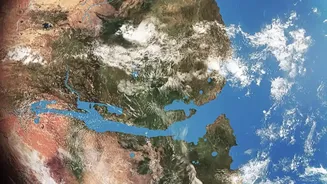
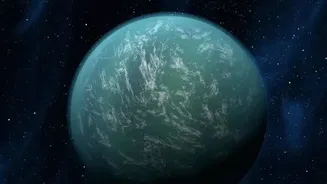
So, what does it take to be more habitable than Earth? Scientists have outlined several key criteria. A superhabitable world would likely be a bit older than Earth's 4.5 billion years, perhaps somewhere between 5 and 8 billion years old. This extra time provides a longer, more stable window for complex life to evolve. It would also be slightly larger and more massive—up to 1.5 times Earth's mass. This increased mass helps a planet retain its internal heat, driving geological activity like plate tectonics, and its stronger gravity helps it hold onto a life-sustaining atmosphere over cosmic timescales. The ideal candidate would also have a different layout, with water distributed across many shallow seas rather than vast, deep oceans, allowing more light to penetrate and fuel aquatic ecosystems.
Why a Warmer, Wetter World?
One of the most intriguing aspects of a superhabitable planet is that its average surface temperature would be slightly warmer than Earth's, perhaps around 25°C (77°F). While we grapple with the negative effects of rapid climate warming on our own planet, a consistently warmer and more humid global climate, established over billions of years, could be a major boon for life. On Earth, the greatest biodiversity is found in our warm, wet tropical rainforests. A planet that has these conditions on a global scale could theoretically support a much larger and more varied collection of life forms. A denser atmosphere would also help distribute heat more evenly, reducing harsh temperature swings between the poles and the equator and creating more stable, hospitable environments across the entire planet.
The Perfect Host Star
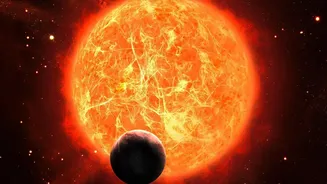
The star a planet orbits is just as important as the planet itself. Our Sun, a G-type star, is relatively short-lived in cosmic terms, with a total lifespan of about 10 billion years. The theory of superhabitability suggests that the ideal host would be a K-dwarf star, often called an 'orange dwarf'. These stars are cooler, smaller, and less luminous than our Sun, but they have a crucial advantage: they are incredibly long-lived, with lifespans ranging from 15 to 45 billion years. This provides a much longer, more stable period for life to arise and evolve into complex forms. K-dwarfs are also less prone to the violent stellar flares and intense UV radiation that can plague planets orbiting more active stars, offering a calmer and safer cosmic neighbourhood.
Are There Any Candidates?
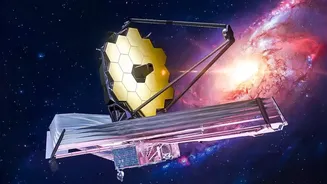
This isn't just a theoretical exercise. Scientists have scoured the catalogue of over 4,500 known exoplanets to find potential contenders. A 2020 study identified 24 top candidates that are promising for superhabitability, though none perfectly meet all the desired criteria. All of these potential worlds are more than 100 light-years away, meaning we cannot visit them with current technology. However, identifying them is a crucial first step. These planets will be prime targets for the next generation of powerful observatories, like the James Webb Space Telescope, which can analyse the atmospheres of distant worlds. By studying their atmospheric composition, scientists can search for biosignatures—gases that could indicate the presence of biological processes, bringing us one step closer to knowing if we are truly alone.