








What Exactly Is Physical AI?
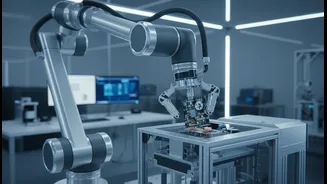
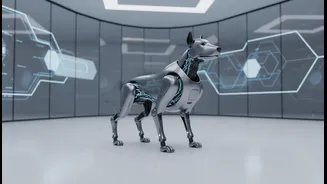
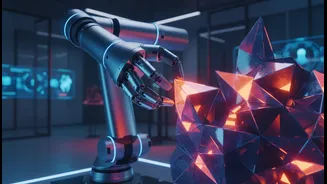
At its core, Physical AI refers to artificial intelligence systems that can perceive, reason about, and act within the physical world. Unlike generative AI models such as ChatGPT that exist purely in software, Physical AI gives machines the ability to interact
with their surroundings. This process involves a continuous loop: sensors like cameras and LiDAR perceive the environment, AI models process that information to make decisions, and actuators like motors and wheels carry out the resulting actions. The goal is to move beyond rigid, pre-programmed automation towards true autonomy, where a robot can adapt to changing conditions in real time. Think of warehouse robots navigating dynamic floor plans, self-driving cars responding to unexpected road conditions, or surgical robots assisting with complex procedures.
The Promise of Embodied Intelligence
The potential applications are vast and transformative. In manufacturing and logistics, Physical AI could power collaborative robots, or 'cobots', that work safely alongside humans, boosting productivity and handling dangerous tasks. Tech giants are investing heavily in this vision. NVIDIA's Project GR00T, for instance, is a foundation model designed to help humanoid robots learn skills by observing human actions. Similarly, Google DeepMind is developing its Gemini Robotics models to allow robots of various forms to solve complex, multi-step tasks autonomously. These efforts aim to create general-purpose robots that can understand natural language and adapt to a wide range of jobs, from material handling in factories to assistance in healthcare. The market for Physical AI is projected to grow significantly, reflecting the enormous economic potential in bridging digital intelligence with physical work.
The Sobering Reality: Why Evidence Matters
For all the exciting demonstrations, a fundamental challenge remains: the real world is infinitely more complex and unpredictable than any simulation. This is the “sim-to-real” gap, where a system that performs perfectly in a controlled virtual environment fails when it encounters real-world variability. Objects have different weights and textures, lighting conditions change, and unexpected obstacles appear. Unlike a digital AI making a recommendation, a mistake by a Physical AI system can have serious physical consequences, creating risks for people and equipment. This is why the headline’s caution—that evidence still matters—is so critical. The history of robotics is filled with impressive lab demos that couldn't survive the chaos of a production environment. Scaling from a single successful task to reliable performance over thousands of hours requires a different level of proof.
Building a Bridge of Proof
So, what does compelling evidence look like? It goes far beyond a single, flashy video. It means collecting massive amounts of real-world data, not just simulated scenarios. It involves demonstrating near-perfect reliability and safety over extended periods. For a robot performing hundreds of actions per hour, achieving even one month of operation without a safety incident requires an almost unfathomable level of confidence in every single action. This demands a system-wide approach to security and trust, from the data used for training to the hardware and the software that runs the models. Vulnerabilities can be introduced at any stage, such as through manipulated training data or compromised sensors, leading to catastrophic failures in the field. True progress is therefore measured not by a robot's peak performance, but by its consistency, safety, and reliability in the messy, unpredictable conditions of the real world.