






Why Humidity Is the Real Culprit
We often focus on the temperature, but during the monsoon, humidity is the critical factor that intensifies heat stress. Your body's primary cooling mechanism is sweating. As sweat evaporates from your skin, it draws heat away from the body. However,
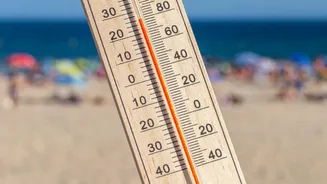
when the air is already saturated with moisture — as it is during periods of high humidity — sweat cannot evaporate efficiently. This leaves your body unable to cool itself, causing your internal temperature to rise even if the thermometer reading doesn't seem excessively high. This phenomenon explains why a 35°C day in a humid city can feel far more dangerous than a 40°C day in a dry climate.
Understanding the 'Real Feel' Temperature
Meteorologists use terms like 'heat index' or 'wet-bulb temperature' to describe the perceived heat stress on the human body. The heat index combines air temperature and humidity to give a 'feels like' temperature, assuming you're in the shade. Wet-bulb globe temperature (WBGT) is an even more comprehensive measure used for occupational and athletic safety, as it also accounts for direct sunlight, cloud cover, and wind. These metrics reveal that when humidity is high, the stress on your body is much greater than the air temperature alone would suggest. A wet-bulb temperature above 32°C can be life-threatening with prolonged exposure, a threshold some parts of South Asia are approaching.
Recognising the Danger Signs: Heat Exhaustion vs. Heat Stroke
It is crucial to recognise the symptoms of heat-related illnesses, which occur on a spectrum. Heat exhaustion is the first stage. Symptoms include heavy sweating, cool and clammy skin, a fast but weak pulse, nausea, muscle cramps, dizziness, and headache. At this stage, the person can usually recover by moving to a cool place, resting, and hydrating. However, if left untreated, heat exhaustion can progress to heat stroke, which is a life-threatening medical emergency. The biggest warning sign of heat stroke is a change in mental state, such as confusion, slurred speech, or loss of consciousness. The skin may become hot and dry as the body loses its ability to sweat, and the body temperature can rise above 104°F (40°C). Heat stroke requires immediate medical attention.
Practical Steps for a Safer Monsoon
Protecting yourself from monsoon heat stress involves a combination of awareness and simple, proactive measures. First, stay hydrated by drinking plenty of water, even if you don't feel thirsty. Drinks like coconut water, buttermilk (chaas), and lemon water (nimbu pani) can help replenish electrolytes lost through sweating. Whenever possible, avoid strenuous activity during the hottest parts of the day, typically between noon and 4 p.m. Wear lightweight, loose-fitting cotton clothing in light colours that reflect sunlight rather than absorb it. To keep your home cool, use curtains or shades during the day and open windows at night or in the early morning to let in cooler air. Pay close attention to your body and the people around you, especially children and the elderly, who are more vulnerable.