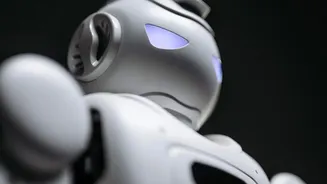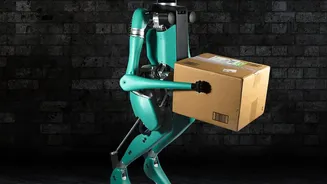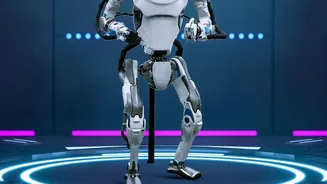






The future of manufacturing has arrived, or so it seems. Humanoid robots are walking off the stage and onto factory floors. But as firms begin real-world tests, the sci-fi dream is meeting the practical realities of productivity and repairs.
The New Wave of Robotic Workers
A new generation
of humanoid robots has captured the corporate imagination. Companies like Figure AI, Apptronik, and Tesla are developing machines designed to work alongside humans in environments built for people. This means they can potentially be integrated into existing factories and warehouses without costly redesigns. Automakers have been among the first to explore this potential. BMW Group is collaborating with Figure AI, deploying its robots in its Spartanburg plant in the US. Similarly, Mercedes-Benz has entered an agreement to pilot Apptronik's Apollo robot for logistics tasks, such as delivering parts to the assembly line. These partnerships aim to automate physically demanding and repetitive jobs that are increasingly hard to staff. The promise is a flexible, trainable workforce that can tackle labour shortages and improve efficiency.
The Productivity Question Mark
While impressive in demonstrations, the productivity of these robots is under intense scrutiny. The central question is whether they can perform tasks as efficiently and reliably as their human counterparts or even simpler, specialised automation. For instance, an 11-month deployment of a Figure robot at BMW involved loading sheet metal parts. While the company hailed it as a success, analysis showed the robot's cycle time was slower than both the target and a trained human worker. Experts note that current AI struggles with the unpredictability of real-world environments, like handling a slightly damaged box or adapting to minor changes in a workflow. This lack of flexibility in unstructured settings remains a significant hurdle. Industrial customers expect uptime of 95-99%, but many current humanoids can only operate for short periods before needing intervention or recharging, making sustained, high-speed work a major challenge.
The Maintenance and Durability Hurdle
Perhaps the largest hidden cost is maintenance. A humanoid robot is not a simple appliance; it is a complex machine with thousands of precision parts, sensors, actuators, and a sophisticated software stack. When one breaks down, it cannot be fixed by a general mechanic. Early deployments have already revealed hardware weak points, such as the forearm assembly, which can be prone to failure due to its complexity and thermal constraints. Even manufacturing the robots at scale is proving difficult. Reports suggest Tesla has faced bottlenecks in producing the intricate hands for its Optimus robot, with each hand containing over 100 tiny parts requiring manual assembly. This complexity not only slows production but also points to future repair challenges. Downtime for repairs and the need for a highly specialised maintenance workforce are significant economic factors that companies must weigh against potential labour savings.
The Unproven Return on Investment
Ultimately, the decision to adopt humanoid robots comes down to economics. With high upfront costs and unproven longterm reliability, the return on investment is far from clear. Battery life is a key constraint; most current models cannot complete a full 8hour shift, with runtimes often limited to between one and four hours before needing a recharge. This directly impacts a robot's productive hours and overall value. Furthermore, there are significant integration costs related to software and safety certification, which can take months. To mitigate these risks, some firms are exploring a 'RobotasaService' (RaaS) model, which converts a large capital purchase into a more manageable monthly operating expense, with the vendor retaining responsibility for maintenance and upgrades.