






The Challenge of Martian Air
For any long-term human presence on Mars, one of the biggest hurdles is the air itself. The Martian atmosphere is incredibly thin—about 100 times less dense than Earth's—and is composed of roughly 95% carbon dioxide, with only trace amounts of oxygen.
This presents a dual problem for future astronauts: they can't breathe the air, and they can't use it to burn the propellant needed for a return journey. Historically, the solution was to pack all the necessary oxygen, a heavy and expensive proposition for a multi-year mission. The concept of using local Martian resources, known as In-Situ Resource Utilization (ISRU), has long been the holy grail for making Mars missions feasible and sustainable. The goal is simple in theory but complex in practice: live off the land.
From Toaster-Sized Test to Oxygen Factory
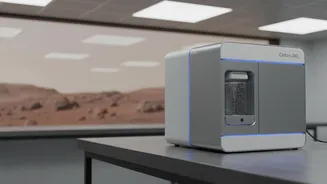
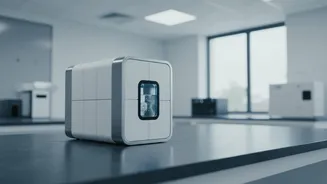
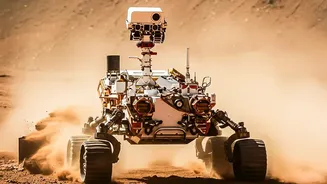
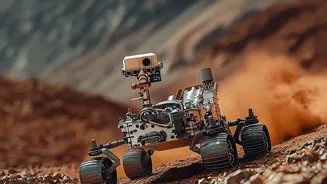
The foundation for this breakthrough was laid by NASA's Mars Oxygen In-Situ Resource Utilization Experiment, or MOXIE. Tucked inside the Perseverance rover, the toaster-sized device repeatedly proved it could extract small amounts of pure oxygen from the carbon dioxide atmosphere. MOXIE successfully produced about 6 to 12 grams of oxygen per hour—roughly the rate of a small tree. While a monumental success, it was always a technology demonstration, not a full-scale production plant. The new breakthrough involves advanced, scaled-up reactors that build on MOXIE's success. Companies like OxEon Energy, which developed parts of MOXIE, have created newer systems that are vastly more powerful. One such design is 33 times the scale of the original MOXIE device, capable of producing nearly 675 grams of oxygen per hour—a massive leap in capacity.
How to Make Air From Thin Air
The core technology behind this process is called solid oxide electrolysis (SOXE). Think of it as a high-tech filter that works at extreme temperatures. First, the Martian atmosphere is drawn in, compressed, and heated to around 800 degrees Celsius. This superheated gas is then fed into the reactor, which is made of special ceramic materials. When an electrical current is applied, the carbon dioxide molecules (CO2) are split apart. The oxygen atoms are collected, while the leftover carbon monoxide is vented back into the atmosphere. The latest reactors not only scale up this process but also improve its efficiency, aiming for systems that are over 90% efficient, a huge improvement on MOXIE's 10% efficiency. Alternative methods using plasma are also being explored, which could operate at lower pressures and potentially be even more efficient.
More Than Just Breathing
While breathable air is vital for astronauts' habitats and spacesuits, the sheer volume of oxygen needed for a Mars mission is driven by another factor: rocket propellant. A rocket escaping Mars' gravity for the journey home is estimated to require about 25 to 30 metric tons of liquid oxygen to burn its fuel. Launching all that oxygen from Earth is a logistical nightmare. By producing it on Mars, a mission can drastically reduce its launch mass and cost. A system of scaled-up reactors, likely powered by a small nuclear fission unit, could work continuously for over a year to produce the tens of tons of oxygen needed to refuel a Mars Ascent Vehicle (MAV) for the return trip. This capability completely changes the architecture of a Mars mission, making it more akin to establishing a remote base than a one-off visit.
What's Next for Martian Oxygen
This scaling breakthrough is a critical step, but it's not the final one. The next phase involves building and testing these full-scale reactors on Earth in simulated Martian conditions to ensure they are durable and reliable enough for a multi-year mission. Challenges remain, including managing the fine Martian dust that could clog intakes and ensuring the systems can withstand the planet's extreme temperature swings. However, the path is clear. By sending an oxygen-generating plant to Mars ahead of the first human crew, space agencies can create a breathable outpost and a refuelling station millions of kilometres from Earth. This technology doesn't just support exploration; it enables it, turning the science fiction of Martian colonization into a tangible engineering roadmap.