


When thick smog blankets the city, our homes feel like the last safe refuge. But with a dizzying array of advice on air purifiers, plants, and other fixes, what truly protects your family? We cut through the noise with evidence.
The Gold Standard: HEPA Purifiers
When it comes to clearing
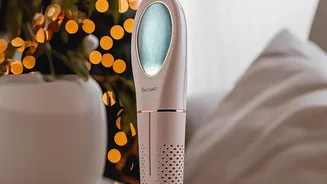
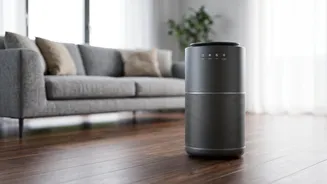
the microscopic dangers of smog, mechanical filters are the most proven solution. The key technology to look for is a High-Efficiency Particulate Air (HEPA) filter. True HEPA filters are certified to capture at least 99.97% of particles that are 0.3 microns in size—a benchmark for trapping the most difficult-to-catch particles. This is crucial for smog, which is dense with fine particulate matter known as PM2.5 (particles smaller than 2.5 microns) that can penetrate deep into the lungs and bloodstream. Studies consistently show that using a portable air purifier with a HEPA filter significantly reduces indoor PM2.5 levels. For best results, choose a purifier with a Clean Air Delivery Rate (CADR) appropriate for your room size. Many effective units also include an activated carbon filter, which is necessary to trap gases and volatile organic compounds (VOCs) that HEPA filters alone cannot.
The Plant Question: Green But Clean?
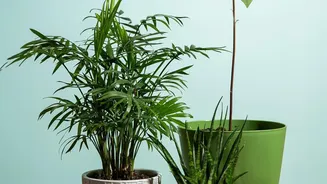
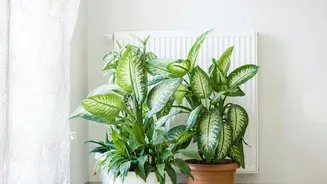
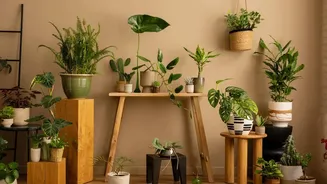
The idea that a few houseplants can purify a room is a persistent and appealing one, largely stemming from a 1989 NASA study. That research showed plants could remove certain chemicals from the air, but it was conducted in small, sealed chambers—an environment that doesn't resemble a typical home with natural airflow. When scientists replicated the math for real-world conditions, the conclusion was clear: you would need a forest-like density of plants, somewhere between 10 and 1,000 plants per square meter, to match the air-cleaning effect of a standard ventilation system or a couple of open windows. While plants are wonderful for mental well-being and aesthetics, they have a negligible effect on the fine particulate matter (PM2.5) that defines dangerous smog. For air purification during a smog event, they are not a substitute for mechanical filtration.
Popular But Unproven: Salt Lamps and Candles
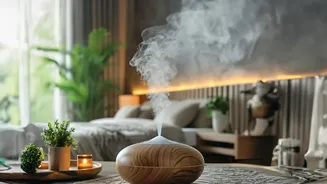
Himalayan salt lamps and beeswax candles are often marketed as natural air purifiers. The claim for salt lamps is that they release negative ions which neutralize pollutants. However, there is no robust scientific evidence to support this; any ions generated are in negligible amounts. Their primary effect is creating a calming ambiance with their warm glow, not cleaning the air. Similarly, claims that beeswax candles purify air by releasing negative ions are considered a myth by atmospheric chemists. While pure beeswax and soy candles burn cleaner and release fewer pollutants than paraffin candles, they still add some particulate matter to the air—they do not remove it. If you're concerned about indoor air quality, avoiding candles altogether is the safest bet, but choosing beeswax over paraffin is a better option if you do light them.
The DIY Option: Box Fan Filters
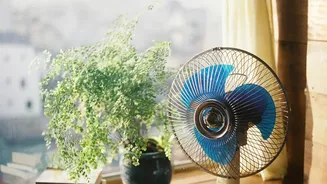
For a budget-friendly and surprisingly effective alternative, do_it_yourself air purifiers have gained credibility. The most well_known design is the Corsi_Rosenthal Box, which consists of four high_quality furnace filters (MERV_13 or better) taped together to form a cube, with a standard box fan on top pulling air through them. Multiple studies, including research conducted by the U.S. Environmental Protection Agency (EPA), have found these DIY units to be highly effective at reducing airborne particles, including virus aerosols and other pollutants. One EPA test showed a CR box could remove over 99% of infectious aerosols within an hour. While they may be noisier and less sleek than commercial models, they provide a powerful, low_cost way to significantly improve indoor air quality, making protection more accessible.
Simple Habits That Actually Matter
Beyond technology, your daily habits play a huge role in protecting your indoor air. The most effective strategy is source control—eliminating pollutants at their origin. During severe smog, keep windows and doors closed to prevent outdoor pollution from entering. Use exhaust fans in kitchens when cooking and in bathrooms to vent moisture and pollutants outside. Avoid activities that generate indoor pollution, such as burning incense, frying foods, or smoking. While it may seem counterintuitive, you should not increase ventilation by opening windows when outdoor air quality is poor. Instead, focus on sealing your home and cleaning the air that's already inside. These simple, no_cost actions are a foundational part of any indoor air protection plan.