






Mandu, Madhya Pradesh: The City of Joy
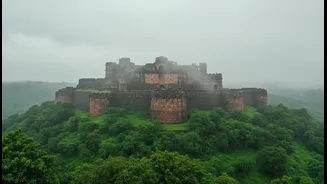
Perched on the Vindhya Range, the ruined city of Mandu is arguably at its most enchanting during the monsoon. So much so that Emperor Jehangir nicknamed it ‘Shadiabad’ (City of Joy) after witnessing its rainy season splendour. The landscape transforms
into a paradise of verdant hills and overflowing lakes. The famous Jahaz Mahal, a 120-metre-long 'ship palace' situated between two artificial lakes, appears to float on the water when the Munj and Kapur tanks fill to the brim. The rainwater harvesting systems, an architectural marvel, become fully active, with water travelling through spiral channels and hollow pillars. The love story of the poet-prince Baz Bahadur and his consort Roopmati feels ever-present, especially at Roopmati's Pavilion, which offers breathtaking views of the rain-washed Narmada valley below. The entire fortress complex, with its Afghan-style architecture, gets draped in a mystical ambiance, with mist rolling through its grand gateways and domed pavilions.
Sinhagad, Maharashtra: The Lion's Fortress
A favourite for trekkers from Pune and Mumbai, Sinhagad becomes a different world during the monsoon. The trek to the top, which is considered relatively easy, takes you through lush green trails, thick shrubs, and past seasonal waterfalls. Once at the summit, you are often literally walking in the clouds, with visibility dropping due to the dense fog, creating a thrilling experience. The fort, originally known as Kondhana, holds immense historical importance from the Battle of Sinhagad in 1670. The panoramic views of the Khadakwasla dam and the surrounding Sahyadri hills draped in fifty shades of green are spectacular. A trip to Sinhagad is incomplete without savouring the local delicacies like hot 'kanda bhaji' (onion fritters) and 'pithla bhakri' served by stalls at the top, which taste even better in the cool, rainy weather.
Mehrangarh Fort, Jodhpur: The Citadel of the Sun
While Rajasthan is often pictured as a desert state, the monsoon brings a surprising and welcome transformation. Mehrangarh Fort, perched on a 400-foot cliff, offers a dramatic spectacle as clouds gather over the Blue City. The burnished red sandstone of the colossal structure provides a stunning contrast to the fresh greenery that emerges in the surrounding Rao Jodha Desert Rock Park. The fort, which Rudyard Kipling called “the work of giants,” feels less crowded during this season, allowing for a more peaceful exploration of its intricate palaces and courtyards. From its ramparts, you can witness the rain washing over Jodhpur, with panoramic views made even more mystical by the monsoon mist. The cooler temperatures make exploring this massive, well-preserved fort a much more pleasant experience than during the scorching summer months.
Jaigarh & Nahargarh, Jaipur: The Twin Sentinels
Overlooking the Pink City, the twin forts of Jaigarh and Nahargarh become prime destinations for locals and tourists alike when the rains arrive. The drive up to these forts, located in the Aravalli hills, becomes a scenic journey through revitalised green landscapes. Nahargarh Fort, in particular, offers sweeping views of a rain-washed Jaipur and the shimmering Man Sagar Lake with its famous Jal Mahal. As clouds hover over the hills, the rugged stone structures of Jaigarh Fort, home to the world’s largest cannon on wheels, stand out dramatically against the softened, green background. The atmosphere is cool and breezy, providing a perfect escape from the city's hustle. Viewing the city lights from Nahargarh after a spell of rain is a quintessential Jaipur monsoon experience.
Lohagad, Maharashtra: The Iron Fort
Another gem in the Sahyadris near Lonavala, Lohagad or the 'Iron Fort', is a classic monsoon trek, especially for beginners. During the rainy season, the plateau at the top turns into a vivid green carpet, and the fort's stone ramparts often disappear into low-hanging clouds. The trek itself becomes an adventure, with small streams of water sometimes flowing down the steps. The fort's famous 'Vinchukata' or scorpion’s tail-shaped spur offers magnificent, misty views of the Pavana reservoir below. Historically significant as a strategic location for the Maratha empire, the fort’s architecture and natural defenses are a sight to behold when enveloped in the monsoon’s ethereal beauty.