



More Than Just a Walk With Sticks
At first glance, you might mistake Nordic walking for hiking with trekking poles, but it's a distinct fitness discipline. Originally developed in Finland as a summer training method for cross-country skiers, it’s a specific technique designed to turn
a simple walk into a total-body workout. Unlike trekking poles which are used mainly for stability on uneven terrain, Nordic walking poles are actively used to propel you forward. This engages your upper body—including the arms, shoulders, chest, and back—in a way that regular walking does not, activating up to 90% of your body's muscles compared to about 50% with a standard walk.
The Full-Body Fitness Boost
The benefits of adding poles and proper technique are significant. Research shows Nordic walking can burn up to 67% more calories than regular walking, with most studies finding an average increase of around 20%. This is achieved without a proportional increase in how hard you feel you're working, a phenomenon known as the “perceived exertion gap.” Beyond calorie burn, it helps build upper body strength, improves posture by engaging back and shoulder muscles, and increases cardiovascular fitness. The poles also provide added stability, reducing stress on lower body joints like knees and hips, making it an excellent low-impact option for many fitness levels.
Mastering the Basic Technique
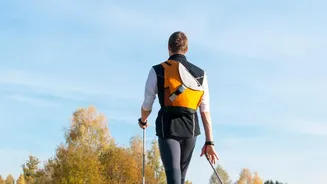
The core of Nordic walking is a rhythmic, coordinated movement. It’s based on the natural swing of your arms and legs—as your right leg steps forward, your left arm swings forward with the pole. The key is to plant the pole tip on the ground between your front and back foot. As you move past the planted pole, you push off it to propel yourself forward. The movement should come from the shoulder, with a long, straight arm swing. A crucial part of the technique involves the hand motion: grip the pole as you plant it, and then open your hand to release the grip as you push off, letting the strap do the work.
Common Mistakes to Avoid
Proper form is what separates an effective Nordic walking session from a simple stroll with poles. A frequent error is planting the poles too far in front of the body, which acts as a brake rather than a propeller. Another is using bent elbows instead of a full arm swing from the shoulder, which limits muscle engagement and can tire your arms quickly. Many beginners also keep a constant, tight grip on the poles, preventing the proper push-off motion and fluid movement. Finally, some new walkers fall into an unnatural rhythm, moving the arm and leg on the same side together; the fix is to drop the poles, walk naturally to reset, and then re-engage.
Choosing the Right Gear
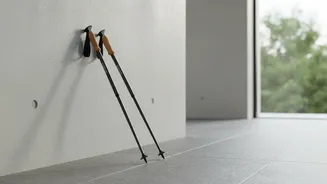
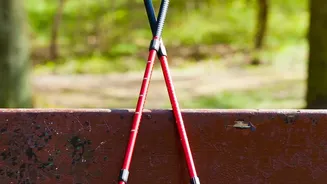
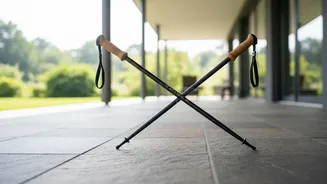
Your most important pieces of equipment are your poles. They are not the same as trekking or ski poles. Look for poles specifically designed for Nordic walking, which are lightweight and feature a glove-like strap system that allows you to perform the push-and-release technique correctly. Pole length is also critical; too short and you’ll hunch over, too long and you’ll strain your shoulders. A common formula to determine the right size is to multiply your height in centimetres by 0.68. For beginners, adjustable poles can be a good option to fine-tune the length. Investing in poles with a good carbon content (at least 50%) can also help absorb vibrations.