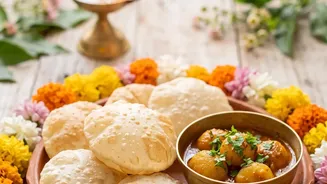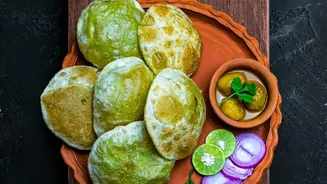





There are few sights more deeply satisfying than a plate of hot, puffy puris. But this prompts a delicious debate: what is the perfect accompaniment? While many sabzis compete for the spot, one clear winner emerges for both textural and taste reasons.
A Perfect Marriage of Texture
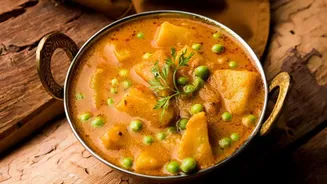
The magic of the aloo puri combination begins with a fundamental principle of food science: textural contrast. A well-fried puri is a marvel of contradictions. It’s shatteringly crisp at the edges, yet soft and airy within. When you tear a piece and use it to scoop up the sabzi, you need a partner that complements this structure, not one that fights it. A tangy aloo sabzi, with its yielding, semi-liquid gravy and soft, hand-crushed potatoes, provides the perfect counterpoint. The gravy ever-so-slightly softens the puri, allowing it to absorb the flavours without becoming soggy. Each bite delivers a dynamic experience: the crispness of the bread gives way to the tender potato, all held together by a flavourful sauce. It's a pairing where each component makes the other better.
Why Tang and Spice Are Essential
The headline specifies a 'tangy, spiced' sabzi, and for good reason. Puris, being deep-fried, are inherently rich. A curry that is merely creamy or heavy would result in a meal that feels monotonous and overwhelming. The tanginess, often derived from tomatoes, amchur (dry mango powder), or even a hint of tamarind, cuts through that richness brilliantly. This acidic note cleanses the palate, making each subsequent bite as exciting as the first. The spices in iconic versions like 'Bhandare Wale Aloo' or 'Mathura ke Dubki Wale Aloo' are aromatic and earthy—think cumin, coriander, asafoetida (hing), and ginger—but typically don't rely on onion or garlic, creating a clean, vibrant flavour profile that doesn't weigh down the dish. This specific flavour combination is what makes the curry feel both comforting and refreshing.
The Case Against Dry Curries
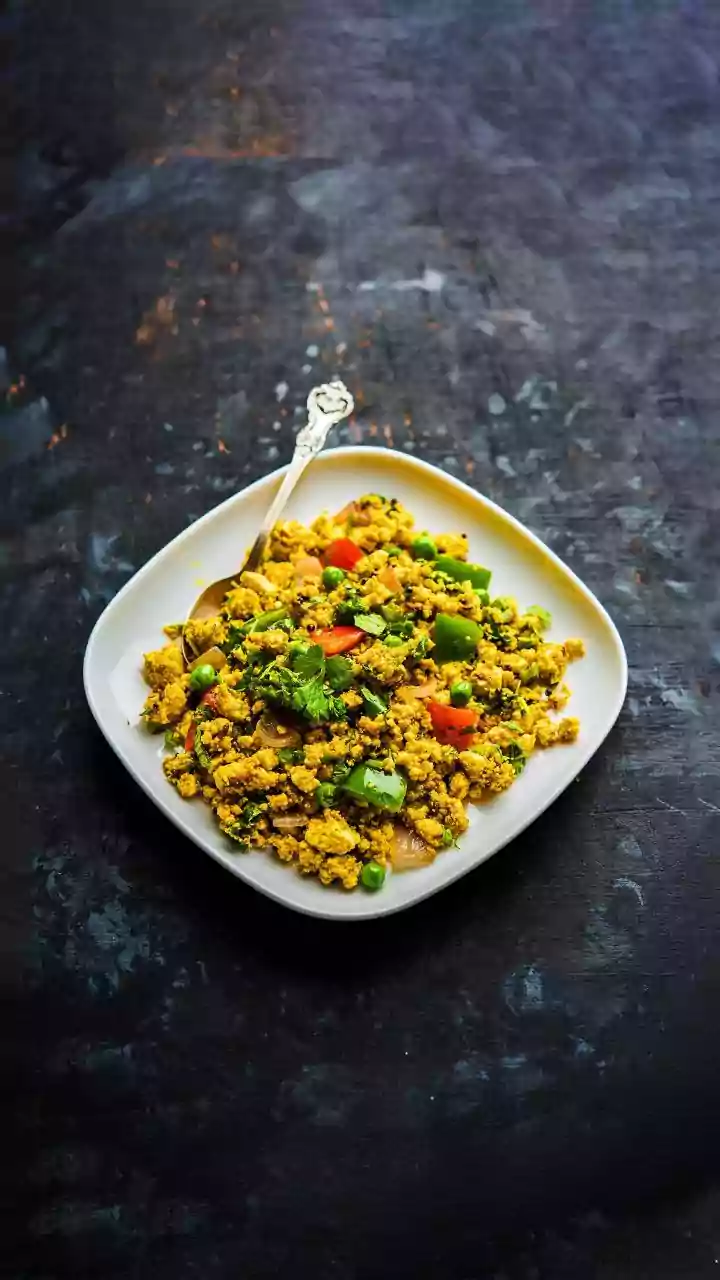
Now, let's consider the alternative: a dry curry, such as a simple 'sookha aloo' (dry potato stir-fry) or perhaps a bhurji (scramble). While delicious in their own right, especially with roti or as part of a larger thali, they fail to create the same synergy with a puri. A dry sabzi requires you to eat 'alongside' the puri, rather than 'with' it. There is no gravy to scoop, no sauce to soak into the bread. The experience becomes disjointed; a bite of crispy bread, followed by a separate mouthful of spiced vegetables. It lacks the cohesive magic that a gravy provides. The very purpose of a puri, in this context, is to be a vehicle for a luscious curry. Without that curry, it’s like having a spoon with nothing to scoop.
An Experience Steeped in Nostalgia
Beyond the culinary science, the pairing of a flowing aloo sabzi and puris is embedded in cultural memory. It’s the quintessential Sunday breakfast, the highlight of a community feast (bhandara), and a comforting meal on a long train journey. The 'Bhandare Wale Aloo' is specifically named for these community meals, often served after a pooja, and its distinctive taste—simple, sattvic, yet deeply flavourful—is designed for mass appeal and easy eating with puris. This shared nostalgia adds a layer of satisfaction that a simple dry curry cannot replicate. It’s a taste that feels like celebration, community, and home, all in one bite.