




The Springtime Thirst
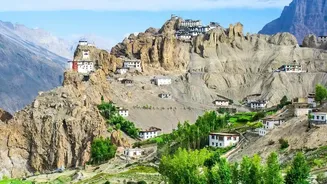
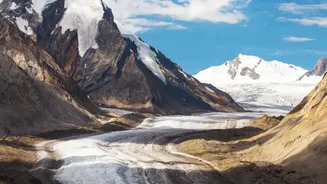
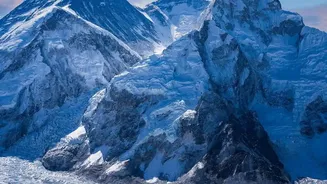
Ladakh is a region defined by extremes. With annual rainfall often less than 100mm, its communities have traditionally relied on the seasonal meltwater from vast Himalayan glaciers to sustain life and agriculture. However, climate change is disrupting
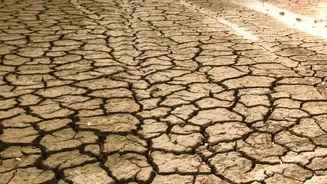
this ancient rhythm. Glaciers are receding, and weather patterns have become erratic. The crucial problem is one of timing. The region’s primary water sources are locked away in ice during the critical spring planting months of April and May. By the time the natural glaciers melt under the intense summer sun, it is often too late for the sowing season, leading to crop failures and threatening livelihoods.
An Idea Born from Simple Physics
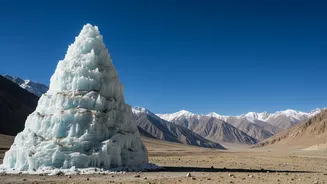
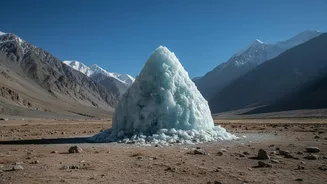
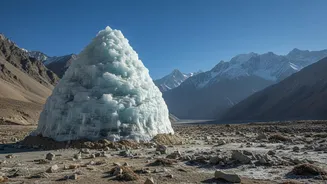
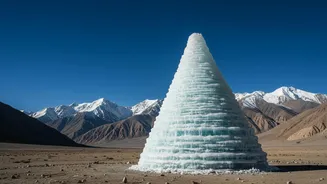
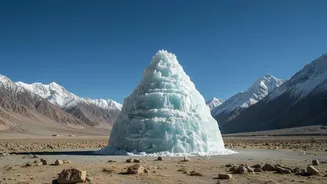
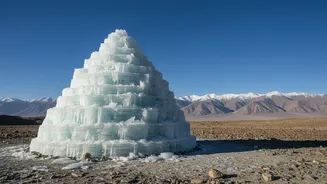
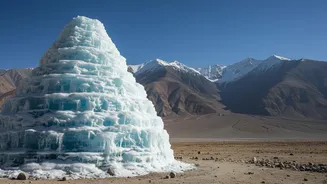
The solution came from engineer and innovator Sonam Wangchuk, who observed a simple natural phenomenon. He noticed that ice under a bridge, shielded from the sun, could last well into the summer. The challenge was that shading vast quantities of ice wasn't practical. The insight was to change the shape of the ice itself. Wangchuk realised that a cone shape exposes the minimum possible surface area to the sun for a given volume of water. This geometric trick would allow a large mass of ice to survive the warmer spring months, melting slowly and releasing water exactly when farmers needed it most. He named these artificial glaciers "ice stupas" after the conical Buddhist monuments that are iconic to the region.
How to Build a Mountain of Ice
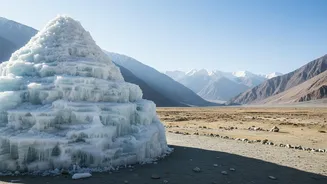
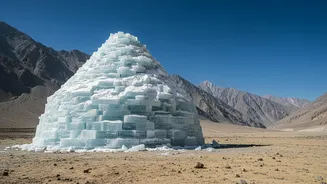
The technology behind the ice stupa is remarkably simple and elegant, using gravity as its primary engine. A pipe is laid to carry water from a glacial stream at a higher altitude down to a village during the winter months, when the water would otherwise flow away unused. Due to the height difference, the water flows down the pipe and, when released through a vertical sprinkler, shoots high into the frigid winter air. The spray freezes almost instantly as it falls, gradually forming a massive, cone-shaped mountain of ice. A single ice stupa can store millions of litres of water. Because of their conical shape, they melt slowly, releasing a steady stream of water for irrigation throughout the dry spring season.
More Than Just Water
Since the first prototype was built in 2013, the concept has proven to be a resounding success. Dozens of ice stupas have been constructed across Ladakh, often by the village communities themselves, transforming barren spring fields into green oases. The project, largely driven by Wangchuk's NGO, the Students' Educational and Cultural Movement of Ladakh (SECMOL), has become a symbol of community-led climate adaptation. The impact goes beyond agriculture. The availability of water helps prevent forced migration from villages, fosters local entrepreneurship, and has become a powerful symbol of hope. It demonstrates how traditional knowledge and modern science can combine to create powerful, sustainable solutions for the world's most vulnerable ecosystems.