



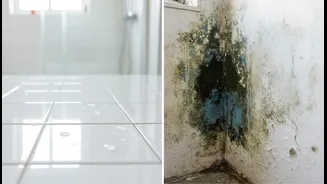



The Hidden Water Culprit
Moisture accumulation behind a kitchen sink is a common but often unnoticed problem. The primary causes are surprisingly simple: frequent splashes from washing dishes and hands, slow leaks from pipes or faucet bases, and deteriorating caulk or sealant
around the sink's edge. When the seal between the sink and the countertop is cracked or old, even small amounts of water can seep through the gap. This moisture then gets trapped in the dark, enclosed space of the sink cabinet, which is typically made of porous materials like particleboard or drywall that readily absorb and hold water. Adding to the issue, condensation can form on cold water pipes, especially in humid kitchens, leading to constant dripping onto the cabinet floor. Because these areas have limited airflow, the moisture has no chance to evaporate, creating a persistently damp environment perfect for fungal growth.
From Dampness to Fungal Growth
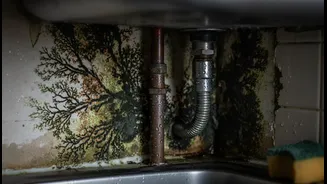
Fungi, including common indoor moulds like Aspergillus and Penicillium, need three things to thrive: moisture, a food source, and the right temperature. The space behind and under your sink provides all three in abundance. The trapped water is the key ingredient, but the cabinet itself—made of wood or particleboard—serves as an organic food source. Dust, food debris, and even soap scum that accumulate in these hidden corners also provide ample nutrition for mould spores. It only takes 24 to 48 hours for mould to begin colonizing a damp surface. Once established, it forms a network of roots that can invade materials deeply. The visible fuzzy or discoloured patches you might see are just the surface; the underlying network, or mycelium, is often far more extensive. This growth releases microscopic spores into the air, allowing the mould to spread to other areas of the kitchen.
A Direct Threat to Food Safety
While mould hidden behind a sink might seem contained, it poses a significant risk to food cleanliness. Airborne spores released from the fungal colony can easily travel and settle on countertops, cutting boards, utensils, and even fresh produce left out nearby. This cross-contamination can lead to premature food spoilage. More seriously, some types of mould produce mycotoxins, which are poisonous substances that can cause illness if ingested. These toxins are often stable and may not be destroyed by cooking. Even without toxic mould, exposure to high concentrations of spores can trigger allergic reactions, asthma attacks, and other respiratory issues in sensitive individuals. The constant presence of a mould source in the kitchen undermines the very hygiene you try to maintain, turning a space for food preparation into a potential source of contamination.
Your Prevention and Cleaning Plan
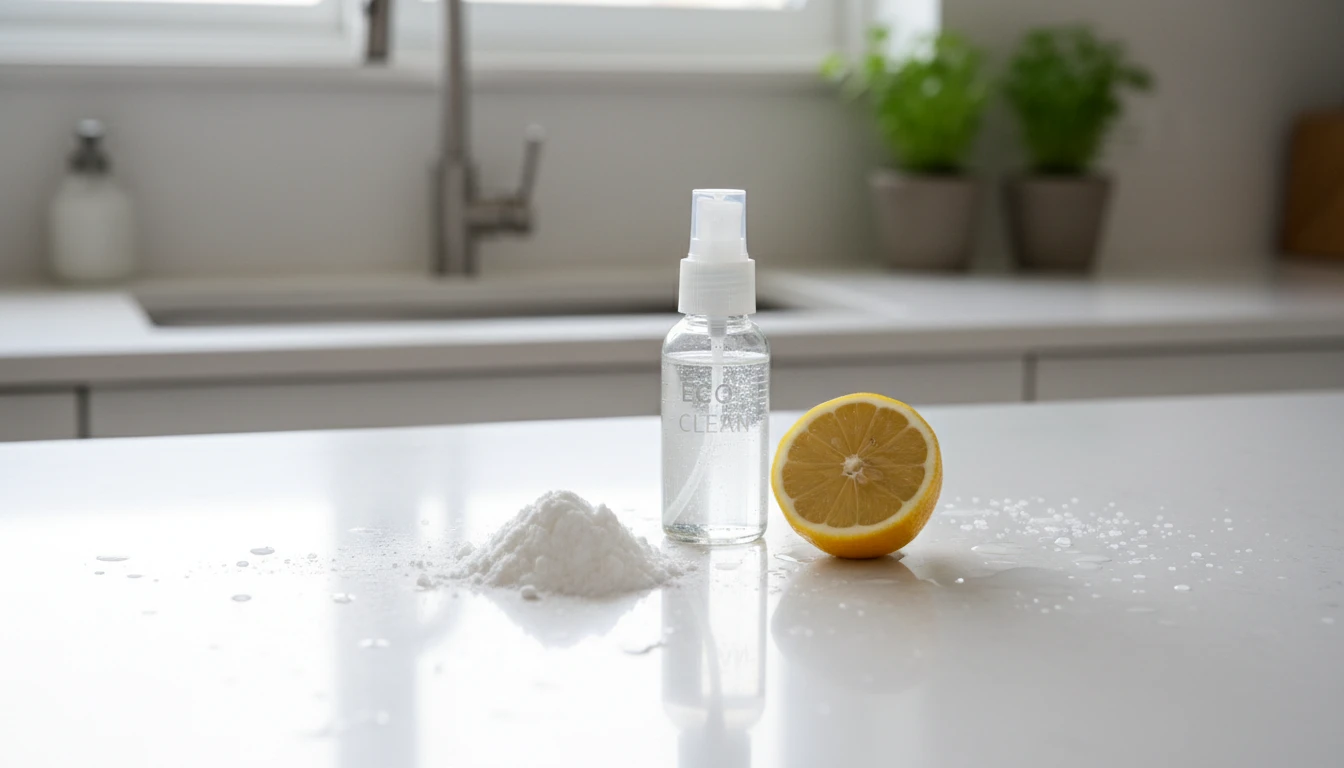
Preventing mould is far easier than removing it. Start by regularly inspecting the caulking around your sink for any cracks or gaps and reseal it annually with high-quality, waterproof silicone. Promptly wipe up any splashes or spills around the sink area to keep it dry. Periodically check under the sink for any signs of leaks from pipes or the garbage disposal; even a slow drip needs immediate attention. Improving ventilation by using an exhaust fan or opening a window can also help reduce overall kitchen humidity. If you already spot mould, you can often handle small areas yourself. For non-porous surfaces, a solution of one part bleach to ten parts water or undiluted white vinegar can be effective. Apply the solution, let it sit for about 10-15 minutes, then scrub with a brush and rinse thoroughly. For mould on sealant, a paste of baking soda and water can also work wonders. Always wear gloves and ensure good ventilation when cleaning.