
The Resilient Stowaways
Recent findings published in the journal Science Advances have shed new light on the surprising resilience of life. A study led by NASA scientists simulated the harsh conditions of the Moon's south pole and discovered that certain microorganisms, commonly
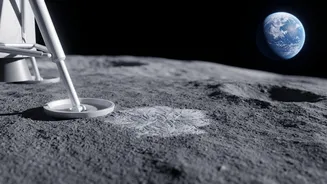
found hitching rides on spacecraft, could temporarily survive. The research looked at five species, including fungi like Aspergillus niger (a common black mould) and bacteria such as Deinococcus radiodurans, known for its incredible resistance to radiation. The simulations, based on data from NASA's Lunar Reconnaissance Orbiter, showed that these microbes could find 'survivable niches' in shadowed regions, lasting for days or even weeks. This doesn't mean they are thriving; rather, they enter a dormant, inactive state called cryptobiosis, pausing all cellular activity until conditions potentially improve.
A Brutal Lunar Welcome
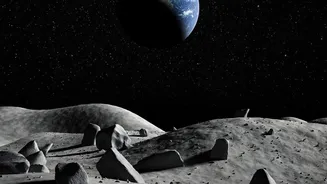
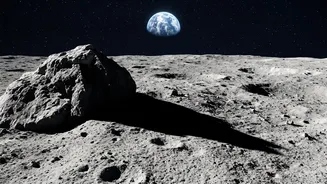
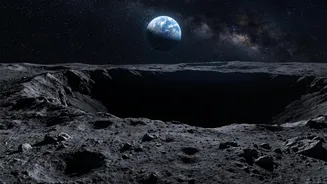
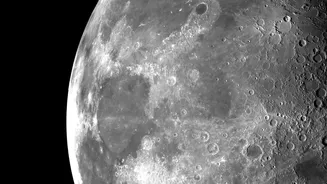
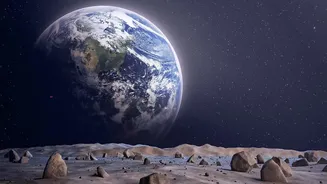
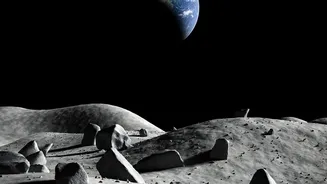
To appreciate this feat of survival, it’s important to understand just how inhospitable the Moon is. With virtually no atmosphere, its surface is a shooting gallery for galactic cosmic rays and intense solar ultraviolet (UV) radiation, which is lethal to most life forms. Temperatures swing wildly from a scorching 127 degrees Celsius in the daytime to a frigid -173 degrees Celsius at night. However, the Moon's slight axial tilt means that at its poles, the sun's light comes in at a very low angle. This creates permanently shadowed regions inside craters and even behind small rocks or ridges, which remain perpetually cold and are shielded from the worst of the radiation. It's within these dark, freezing pockets that microbes have the best chance of survival.
Survival vs. Growth
The key distinction in the study is between surviving and growing. The microbes are not reproducing, eating, or spreading across the lunar landscape. For growth, life as we know it requires key ingredients like liquid water, nutrients, and more moderate temperatures, none of which are readily available on the lunar surface. Instead, these organisms endure by entering a deep state of suspended animation. Think of it like a seed that can lie dormant for years, only sprouting when it encounters soil and water. The study found that while some bacteria survived, the fungal species were particularly tough, with Aspergillus niger showing a remarkable ability to withstand even scattered UV light. This suggests that even outside the darkest shadows, some hardy life can persist for a time.
Implications for Future Missions
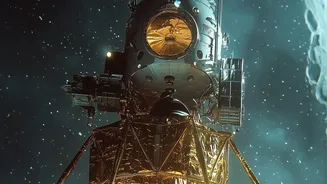
These findings have significant implications for the future of space exploration, particularly as India's Chandrayaan program and NASA's Artemis missions target the lunar south pole. The primary concern is 'forward contamination'—the risk of introducing Earth microbes to other celestial bodies. Every time humans go to space, they inevitably bring billions of microbes with them on their skin, in their breath, and inside their habitats. If these microbes can survive, they could potentially contaminate samples and complicate the search for any signs of native lunar chemistry or, however unlikely, indigenous life. This has led to a renewed focus on planetary protection protocols, the international guidelines designed to prevent cross-contamination between worlds. While robotic spacecraft can be sterilised at high temperatures, this isn't an option for crewed missions, making microbial stowaways an unavoidable reality of human spaceflight.